
Quick Answer
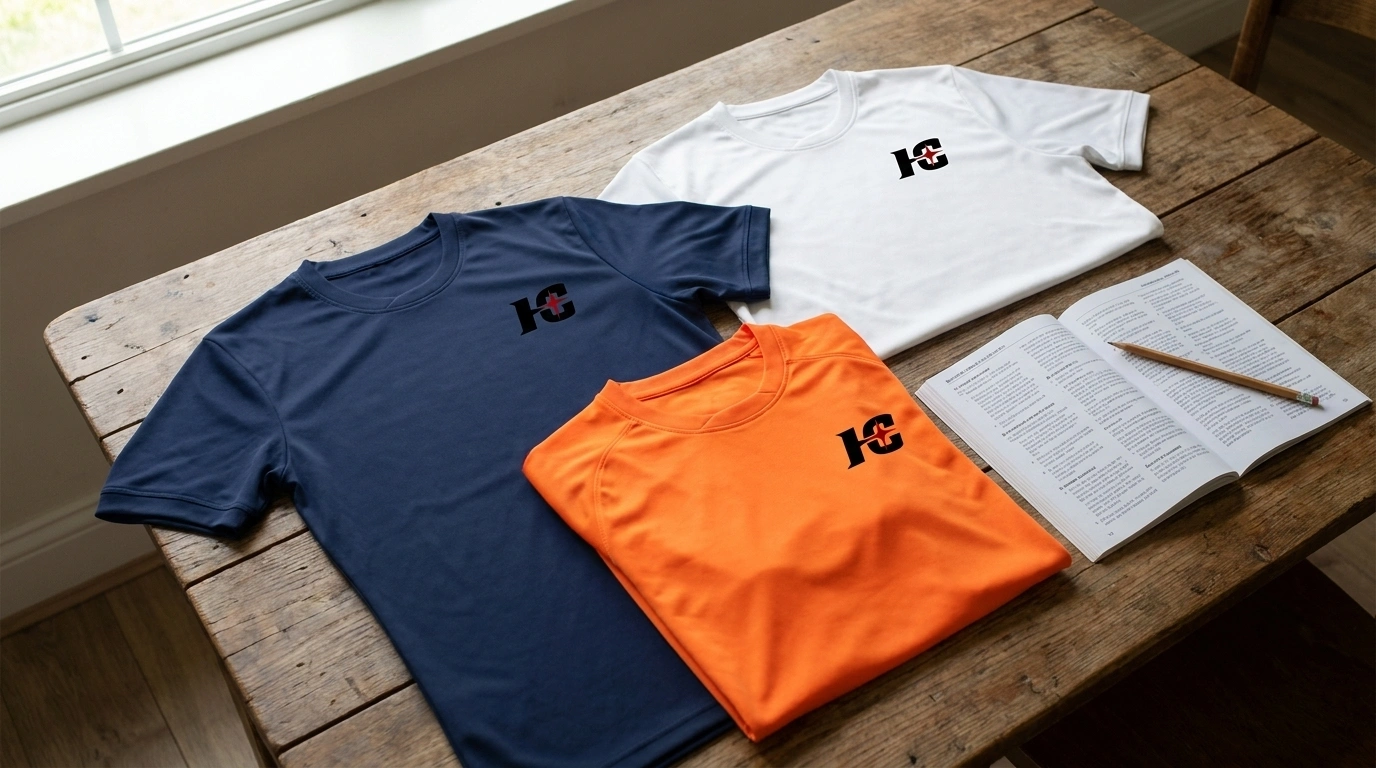
Good soccer jersey design starts with the rulebook, not the artwork. Under NFHS high school rules the home team wears a dark jersey and the visitor wears solid white with no colored trim. Back numbers are at least 6 inches and front numbers at least 4 inches. Only school marks are allowed, so no sponsor logos. Club and adult play follows IFAB Law 4: the two teams and the goalkeeper must be told apart from each other and the officials. Inside those limits, pick one base color and one accent. Put the crest on the left chest, keep numbers in a contrasting block font, and test the mockup at a distance. A soccer jersey designer service turns that into a free mockup within 12 hours. Published 2026 prices are $44.99 per jersey and $79.99 per jersey and shorts set on small orders, names and numbers included.
A lot of soccer jersey design goes wrong in the same two places. The kit breaks a rule nobody checked, or it looks great on a screen and unreadable from the touchline. This guide is the order of decisions that avoids both. It covers the rules that set the canvas and the five design choices that matter. It also covers soccer jersey ideas that clubs keep wearing and the cuts and prices in 2026. Then it shows how a soccer kit designer turns a sketch into a mockup. Color theory has its own guide, so for palette choice read our soccer kit colors guide and come back here for everything else.
One thing up front. Hamco builds soccer kits. The prices, fabric weights, and process described as ours come from our own product pages, starting with the custom soccer uniforms page. The rules come from the NFHS soccer uniform sheet and IFAB Law 4, and the history comes from Wikipedia, all linked where they appear. Where a claim is our design opinion rather than a published fact, we say so.
What Are the Rules for Soccer Jersey Design?
Two rulebooks cover almost every team in the United States. NFHS governs high school. IFAB Law 4 governs club, adult, and everything that follows FIFA. They agree on the goalkeeper and disagree on almost everything else, so check which one your league adopts before you pick a color. The NFHS sheet is strict. The home team wears a dark jersey that contrasts with white. The visiting team wears solid white with no colored trims. Every jersey, including the goalkeeper's, carries a number. It is at least 4 inches on the front of the jersey or shorts and at least 6 inches on the back. The color must contrast with the jersey[1]. Only names, patches, emblems, logos, or insignias referencing the school are allowed on the jersey. The manufacturer's logo may not exceed 2¼ square inches[1]. That last line is the one clubs miss. A high school kit cannot carry a sponsor logo.
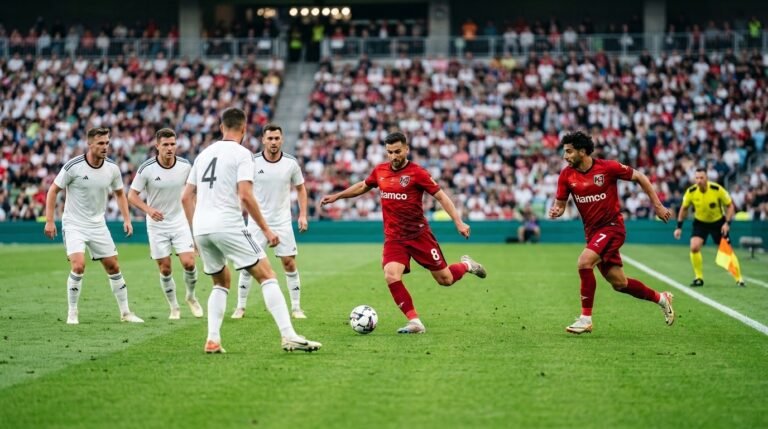
IFAB Law 4 is looser. The two teams must wear colors that distinguish them from each other and the match officials. Each goalkeeper must wear colors distinguishable from the other players and the officials[2]. Undershirts must be a single color matching the main color of the shirt sleeve, or exactly replicate the sleeve[2]. Equipment must not carry political, religious, or personal slogans, statements, or images[2]. Law 4 sets no number size, so youth clubs and adult leagues write their own. Ask for that number in writing before the mockup. On a color clash the away team changes, a custom that dates to a 1921 rule change in England[3].
| Element | NFHS high school | IFAB Law 4 (club, adult, FIFA) | Source |
|---|---|---|---|
| Home and away colors | Home dark, contrasting white; visitor solid white, no colored trims | Two teams distinguishable from each other and the officials; Law 4 sets no home or away colors | NFHS soccer uniforms; IFAB Law 4 |
| Number size | At least 4 inches front (jersey or shorts), at least 6 inches back, contrasting color, no duplicates | Not set in Law 4; competition rules decide | NFHS soccer uniforms; IFAB Law 4 |
| Goalkeeper | Distinctly different color from teammates and the opposing team | Distinguishable from the other players and the match officials | NFHS soccer uniforms; IFAB Law 4 |
| Sponsors and logos | Only marks referencing the school; manufacturer logo up to 2¼ square inches | Allowed as competition rules permit; no political, religious, or personal slogans | NFHS soccer uniforms; IFAB Law 4 |
| Undershirts and sleeves | Solid color, all alike for the team, school marks only | Single color matching the main sleeve color, or an exact replica of the sleeve | NFHS soccer uniforms; IFAB Law 4 |
| Socks | Home dark single dominant color; visitor solid white; both socks the same | Tape on socks must match the sock color it covers | NFHS soccer uniforms; IFAB Law 4 |
Verified September 21, 2026 against the NFHS soccer uniform sheet (dated 8/7/2024, current on nfhs.org) and the IFAB Laws of the Game, Law 4. State associations and individual leagues can add rules on top of these. NCAA has its own book and is not covered here.
The Five Decisions in Soccer Jersey Design
1. One base color, one accent, then stop
The kits that clubs keep wearing for a decade are simple. Wikipedia's kit history notes that as crowds grew, the lurid early colors gave way to simple combinations of primary colors. Spectators had to tell the players apart[3]. That lesson still holds. Pick one base color for the body and one accent for the collar, cuffs, and side panels. A third color belongs on the crest, not the fabric. If your program is choosing its colors from scratch, our colors guide covers the psychology. It also lists the pairings that read well on grass and on camera.
2. Crest on the left chest, and make it the only graphic
The left chest is where our jerseys carry the embroidered crest[6]. It is the placement players and referees expect from professional kits. Keep it one crest. A crest plus a wordmark plus a mascot on the same front reads as clutter from 30 yards. If the club has no crest yet, build one first. A jersey designed around a placeholder gets redesigned the day the real logo arrives.
3. Numbers people can read from the far touchline
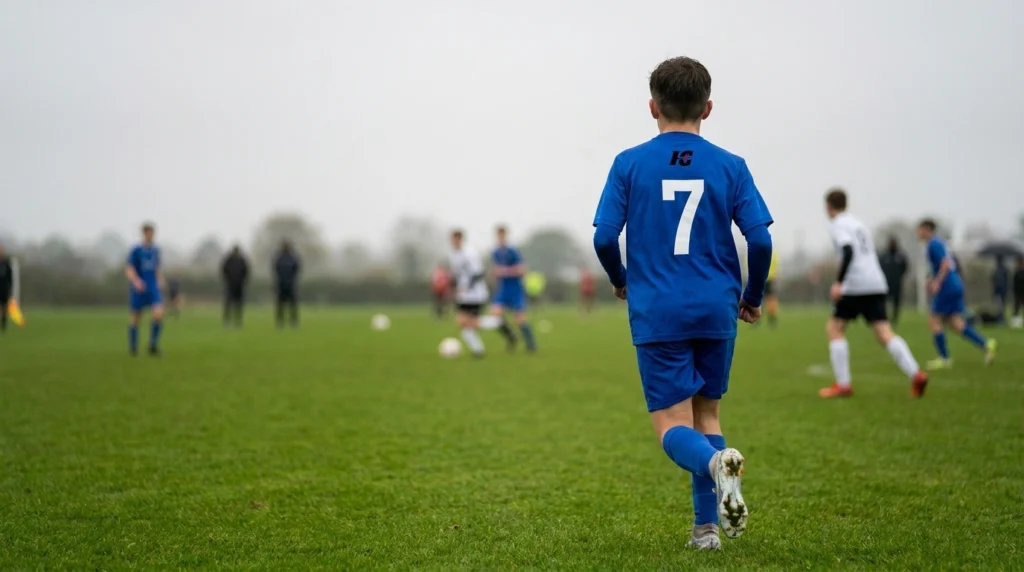
Numbers were first worn in a major match at the 1933 FA Cup Final. Everton wore 1 to 11 and Manchester City wore 12 to 22. They became standard around the Second World War[3]. They exist to be read at distance, and that is where a lot of soccer jersey design fails. A thin serif number, a metallic outline, or a number close in tone to the base color all vanish on a wet evening. Use a heavy block font, a solid fill, and a contrasting color. Size it to the rule: 6 inches on the back and 4 on the front for NFHS[1]. Our guide to the best jersey number fonts ranks the block fonts that survive fabric and distance. It ends with a test worth running on every mockup.
4. Pick the cut for the way your team plays, not the catalog photo
Three field cuts cover most clubs. The round neck is the traditional collar and the cleanest canvas for sublimation, on a ~160 GSM polyester knit with mesh back panels[5]. The V neck soccer jersey runs the same fabric with an open collar. It frames the crest and gives more chest space for a sponsor[6]. The polo style adds a structured collar and button placket for clubs that want the jersey to work off the pitch too[7]. All three share one published price table[6]. The goalkeeper jersey is a different garment: ~180 GSM, long sleeves, and padded elbow panels for diving[8]. Design it in the same graphic language as the field kit but in a color that clears both teams and the referee.
5. Decide where the sponsor goes before the artwork starts
Sponsor logos have been on shirts since the 1970s, and today most professional clubs carry one on the front[3]. For a club kit the front chest is the standard slot, with sleeves as the second. For a high school kit the answer is none, because NFHS allows only school marks[1]. Settle this first. A sponsor added after the crest and stripes are placed usually forces one of them to move.
Soccer Jersey Ideas That Clubs Keep Wearing
Cool soccer jerseys are usually old ideas done cleanly. Halves go back to the founding years of the club game. Blackburn Rovers adopted a halved shirt from the team of Malvern College old boys[3]. Stripes are older still: an 1867 handbook suggested striped jerseys of one color so the two sides could be told apart[3]. Hoops and a single diagonal sash work for the same reason. Each one reads at distance and prints cleanly across a sublimated panel. Pinstripes and shadow prints arrived in the 1980s[3], and they suit clubs that want detail without a second loud color. What ages badly is the 1990s pattern: gradients over patterns over a third color. Wikipedia notes many designs from that era came to be regarded as among the worst of all time[3]. One pattern, two colors, and a crest is the version your players will still wear in three seasons.
A cautionary tale on color that no color theory guide should skip. In 1996 Manchester United introduced a grey away strip designed to look good with jeans. They abandoned it at halftime of a match they were losing 3 to 0. The manager claimed his players could not see each other on the pitch[3]. Whatever the truth of the excuse, the design lesson is real. A kit is judged on the field first. Test any mockup against green grass and a grey sky, not a white screen.
Soccer jersey ideas by program
Youth recreation. One solid color per team with a contrasting number is the whole design, and it is the right one. Kids change teams every season, so the crest matters less than a number a parent can read from the far sideline. Reversible jerseys with two complete designs cover scrimmage sides without a second set[10].
High school. Design the dark home kit first, then derive a solid white visitor kit from it with the same crest and number font[1]. Skip the sponsor slot. Cool soccer jerseys at this level come from a strong crest and a clean stripe or sash, not from color count.
Club and adult. This is where a sponsor, a sash, or a halved design earns its place. Keep the goalkeeper in the same graphic language with a contrast base color[8]. Order home, visitor, and keeper kits in one batch so the crest embroidery and the dye match across all three.
How Much Does a Custom Soccer Kit Cost in 2026?
Published prices from our product pages, per piece, with names, numbers, crest, and free mockup included and no minimum order. Round neck, V neck, and polo share one table, so the cut choice above is free. The goalkeeper jersey costs $5 more at the small tier for the heavier fabric and padding[8]. The standard uniform set prices jersey and shorts together[9], and the reversible carries two complete sublimated designs in one jersey[10].
Chart: published price per piece by cut and order size, from each Hamco product page price table, read September 21, 2026. Darker cells are higher prices. The From price on category cards is the 101+ tier, so a small club should read the 1 to 24 column.
Take a 16 player club side at the 1 to 24 tier. Fifteen field jerseys and one goalkeeper jersey come to 15 × $44.99 + $49.99 = $724.84. The same roster in full sets is a different number. Price the set page before assuming the jersey math scales. What each price tier includes and where cheaper quotes cut corners is covered in our guide to cheap custom soccer jerseys.
How Does a Soccer Jersey Designer Work?
There are two kinds of custom soccer jersey maker. The first is a self serve 3D configurator: you click through templates and colors and place your logo. It is fast and shows a result in minutes. It also limits you to the templates on offer and puts the rule checking on you. The second is a design team model, which is what we run. You send colors, crest, roster, and league, and a designer builds the mockup by hand and returns it within 12 hours[4]. Revisions are unlimited before approval, and production runs about three weeks from the approved proof[5]. The trade off is patience: the first look takes hours, not seconds.
Whichever custom soccer kit maker you use, the checklist at approval is the same. Confirm the home and visitor colors against your rulebook. Confirm number heights on the proof. Confirm the goalkeeper color clears both field kits. Confirm every roster number is unique. Confirm the sponsor slot is legal for your level. Then order jerseys, shorts, and socks in one batch, because two dye runs of the same royal blue rarely match.
Six Mistakes That Leave the Kit in the Bag
These come from the mockup rounds we see every week. None of them are hard to fix, and all of them are expensive after production.
Numbers that match the base tone. A navy number on a royal jersey passes on a monitor and fails at 40 yards. Use a contrasting color and a solid fill.
A white visitor kit with colored trim. Under NFHS the visiting jersey is solid white, and colored trim makes it illegal on the day it arrives.
A sponsor on a high school jersey. Only school marks are allowed, so the sponsor comes off or the kit sits out.
Goalkeeper in a color that clashes with an opponent. Choose a color that clears your home kit, your visitor kit, and black.
A third and fourth color on the fabric. Every added color halves the chance the kit still looks right in three seasons.
Guessing sizes. A kit players find tight or long gets left in the bag no matter how it looks. Run a size set before the roster order.
If you are ready to design your own soccer jersey, the process is short. Send colors, crest, roster, and league, and a free mockup comes back within 12 hours with unlimited revisions before anything is produced[4]. Before you send, our guide to ordering team uniforms covers roster collection and the timeline. If the club has no crest yet, our free sports logo maker builds one you can print. Programs that need a keeper kit in the same order should start with the custom goalkeeper jersey page. That locks the contrast color before the field mockup.
Frequently Asked Questions
What makes a good soccer jersey design?
One base color, one accent, and a single crest on the left chest. Numbers go in a heavy block font that contrasts with the fabric. Good designs read from the far touchline and pass the league rulebook before the artwork starts. Detail belongs on the crest, not spread across the shirt.
How do I design my own soccer jersey?
Confirm your league's rules first, then choose colors, crest, and cut. Send those with your roster to a soccer jersey designer service and review the free mockup, which returns within 12 hours at Hamco. Test it against grass and a grey sky, check number heights, then approve.
What are the rules for numbers on a soccer jersey?
NFHS high school rules require a back number of at least 6 inches and a front number of at least 4 inches. The color must contrast with the jersey, with no duplicates on a team. IFAB Law 4 sets no size, so club and adult leagues publish their own. Check yours before the mockup.
What color should a goalkeeper jersey be?
One that stands apart from both teams and the referee. NFHS requires a distinctly different color from teammates and the opposing team, and IFAB Law 4 says the same. Keepers usually wear a bright contrast color that clears the club's home kit, visitor kit, and black.
How much does a custom soccer kit cost in 2026?
Published small order prices are $44.99 per field jersey in round neck, V neck, or polo cut. A goalkeeper jersey is $49.99 and a jersey and shorts set is $79.99, with names, numbers, and crest included. Prices fall to $34.99, $39.99, and $69.99 at 101 or more pieces.
Sources
- NFHS, Soccer Uniforms rule sheet (PDF)
- IFAB, Laws of the Game, Law 4: The Players' Equipment
- Wikipedia, Kit (association football)
- Hamco Sports, Custom Soccer Uniforms
- Hamco Sports, Custom Soccer Round Neck Jerseys
- Hamco Sports, Custom Soccer V Neck Jerseys
- Hamco Sports, Custom Soccer Polo Style Jerseys
- Hamco Sports, Custom Soccer Goalkeeper Jerseys
- Hamco Sports, Custom Soccer Standard Uniforms
- Hamco Sports, Custom Soccer Reversible Jerseys

2 thoughts on “Soccer Jersey Design: How to Design a Kit Your Club Will Actually Wear (2026)”