
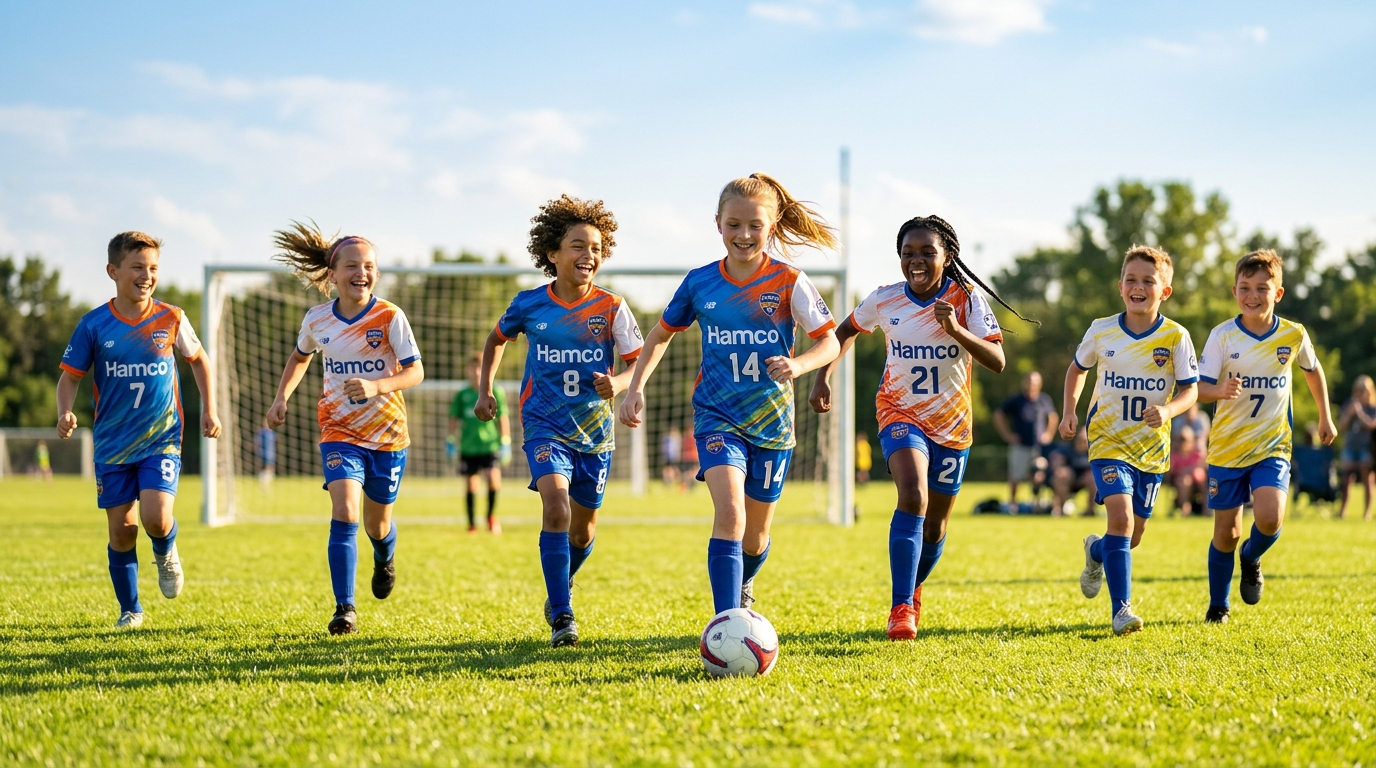
Quick answer: A beginner needs five things to play soccer: cleats, shin guards, long soccer socks, a correctly sized ball (size 3 for U8 and under, size 4 for U9 to U12, size 5 from U14 up), and athletic shorts with a moisture-wicking shirt. Goalkeepers add gloves and a padded jersey. At September 2026 list prices, a bare-bones kit runs about $110 to $140 and a standard starter setup about $280 to $330, before sales. Everything else (bags, cones, agility ladders, premium match balls) can wait.
Buying soccer equipment for beginners is more confusing than it should be. Walk into any sporting goods store and you’re hit with six different types of cleats, shin guards in five styles, balls in four sizes, and a wall of accessories nobody mentioned at signup. Most new players end up either buying everything (and wasting money on stuff they don’t need) or buying nothing (and showing up to the first practice unprepared).
This guide cuts through the noise. It lays out exactly what soccer equipment for beginners actually looks like, what to skip until later, what to expect to spend in 2026, and the buying mistakes that cost most new players money in their first season. There is also a youth soccer equipment checklist by age group for parents, since a U6 player and a U14 player do not need the same kit.
Whether you’re a new player gearing up for your first season, a parent shopping for a child joining a youth soccer team, or someone returning to the sport after years away, the recommendations here are based on what’s actually required to safely play and enjoy the game. No upsells, no hype, just a practical breakdown.
The Soccer Equipment Checklist for Beginners (Quick Reference)
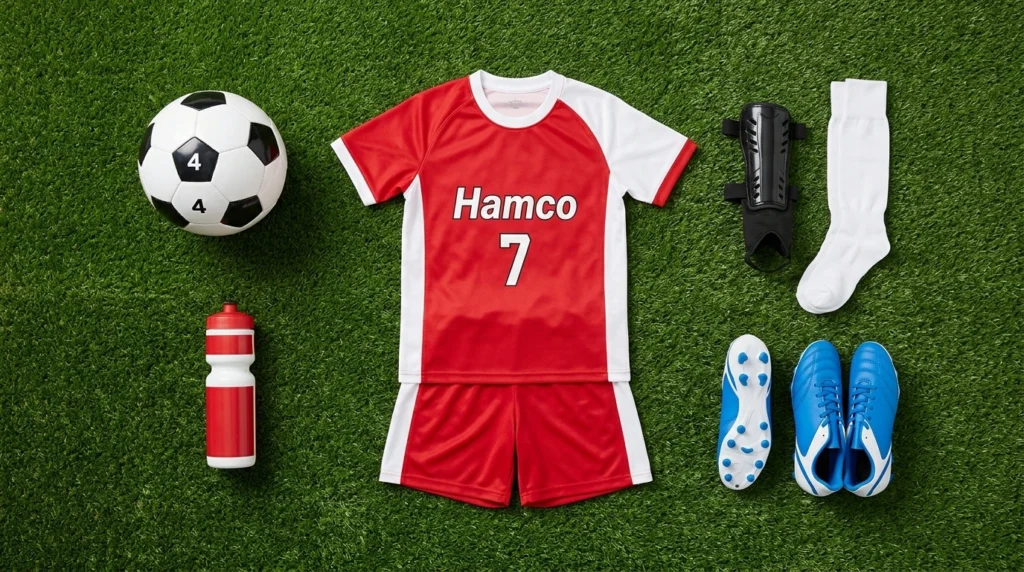
If you only read one section, read this. Here’s the complete soccer equipment checklist for beginners, in priority order:
The five essentials (must have for first practice):
- Soccer cleats
- Shin guards
- Long soccer socks
- Properly sized soccer ball
- Athletic shorts and a comfortable t-shirt or jersey
Strongly recommended (within first month):
- Reusable water bottle
- Soccer bag or backpack
- Slides or sandals (to wear before and after games, protects your cleats)
Optional but useful as you progress:
- Cones for at-home practice
- Training jersey or pinnies
- Foam roller or recovery tools
- Rain or cold weather gear
Goalkeeper only:
- Goalkeeper gloves
- Padded goalkeeper jersey
- Padded goalkeeper shorts or pants
That’s it. Everything else is a nice-to-have, not a need-to-have.
If you already own football cleats and are wondering whether they’ll work, read our guide on the difference between soccer and football cleats before you step on the field.
What Equipment is Needed for Soccer? The Five Non-Negotiables
Soccer is one of the cheapest team sports to start playing because the essential gear list is genuinely short. Five items will get any beginner safely onto the field. Skip any one of them and you’re either uncomfortable, unsafe, or unable to play at all. Four of the five are not just good advice, they are written into the Laws of the Game: Law 4 lists a shirt with sleeves, shorts, socks, shinguards and footwear as compulsory equipment.[1]
1. Soccer cleats
Cleats are the single most important piece of soccer equipment a beginner can buy. They give you the traction needed to run, cut, and turn on grass or turf without slipping. Regular sneakers or running shoes won’t grip the field properly, which is both a performance problem and an injury risk.
The challenge with cleats is that there are six sole types, each designed for a specific playing surface. Buy the wrong type and you’ll either tear up the field or tear up your ankles. Here’s the simple breakdown, most common first:
Firm Ground (FG): The most common type. Designed for natural grass fields, which is what most beginners and youth players will play on. If you only buy one pair of cleats, make it FG. They have molded plastic studs.
Artificial Ground (AG): Built for modern artificial turf. The studs are shorter and more numerous than FG cleats to distribute pressure evenly across the synthetic surface.
Multi Ground (MG): A hybrid that works on both natural grass and artificial turf. Worth considering if you’ll be playing on both surfaces and don’t want to buy two pairs.
Turf (TF): Dozens of small rubber nubs for older, short-pile artificial turf and hard dirt fields. Very common in US rec programs that play on turf.
Soft Ground (SG): Long, often screw-in studs for wet, muddy grass. Overkill for beginners. Metal studs are allowed in many youth leagues as long as the referee inspects them for burrs, but most youth programs never need them.[6]
Indoor (IN): Flat rubber soles for indoor courts and futsal. Not actually cleats. More like specialized indoor sneakers.
For your first pair, prioritize fit over brand. A well-fitted entry-level cleat will outperform an expensive one that doesn’t fit your foot shape. Try several brands before committing. The entry-level adult tier from Adidas and Nike (Predator Club, Mercurial Vapor Club) lists at $65 to $70 and regularly drops to $45 to $55 on sale.[7] Youth versions of the same models list at $40 to $75.
One more thing parents ask: do kids even need cleats? In AYSO, “regulation soccer shoes, gym shoes, or sneakers (with or without cleats)” are all permitted, subject to the referee’s approval.[6] Cleats are still the safer choice on grass, but a first-season U6 player will not be turned away in sneakers.
2. Shin guards
Shin guards are required by virtually every soccer league in the world, from youth recreational up through professional. The shin bone has very little natural protection, and a single hard kick can fracture it. Shin guards prevent that. The rule itself is simple: they must be made of a suitable material, be an appropriate size to give reasonable protection, and be covered by the socks.[1]
Two main styles exist:
Slip-in shin guards are smaller, lighter, and held in place by your sock or a separate sleeve. Most adult and competitive players prefer these.
Ankle guard shin guards include built-in ankle protection and a strap system. Better for younger players (under 10) who are still developing coordination and benefit from extra ankle support.
Fit them so the top sits about two inches below the kneecap and the bottom sits just above the ankle. Anything shorter leaves your shin exposed, and anything longer restricts movement. A hard plastic or composite shell over foam is the standard build. Youth leagues accept any major-brand guard, but high school players have a stricter rule: NFHS requires shin guards to meet the NOCSAE standard and carry the NOCSAE seal permanently marked on the front, and guards without it are illegal in high school play.[5] If your child is in 8th grade, buy NOCSAE-marked guards now so you are not buying again next year.
3. Long soccer socks
These get overlooked in most soccer equipment for beginners lists, but they matter for two reasons. First, your shin guards have to go underneath them, which means you need socks long enough to fully cover the guards. Second, they prevent friction inside your cleats, which means fewer blisters during long practices and games.
Standard soccer socks reach mid-calf or just below the knee. They’re typically made from a synthetic blend that wicks moisture and holds shape. For your first season, two or three pairs are enough. Match the color to your team’s primary uniform color if possible. If the team has not settled its colors yet, our soccer team colors guide explains which combinations work on the field and on camera.
Some beginners try to use regular athletic socks under their shin guards. It works for a practice or two, but the socks bunch up, your guards slide around, and you’ll end up buying real soccer socks anyway.
4. Soccer ball (in the right size)
Beginners often skip buying their own ball, assuming the team provides one. Teams provide balls for practice, but you’ll never improve without practicing on your own time. A personal ball is what separates players who develop quickly from players who don’t. Once you have one, our soccer drills for beginners give you a 20 minute backyard routine to use it.
Ball size depends on the player’s age division, not their birthday. US youth leagues group kids by birth year into “U” divisions, and this is the chart AYSO and most leagues use:[3]
- Size 3: U8 and under (roughly ages 4 to 8)
- Size 4: U9 to U12 (roughly ages 8 to 12)
- Size 5: U14 and up (roughly ages 13+, also the official adult and professional size)
U13 is the gray zone. Since fall 2023, U.S. Soccer has recommended a size 4 or a lighter size 5 ball for U13, and MLS NEXT plays all U13 matches with a size 4.[4] Ask your league which one it uses before you buy for a 12 or 13 year old.
Within those sizes, balls come in three tiers for most buyers: club or training balls (most durable, best for beginners practicing at home), match balls (lighter, built for game performance, more expensive), and cheap recreational balls (fine for the backyard but they lose shape fast). Balls that pass FIFA testing carry a “FIFA Quality” or “FIFA Quality Pro” mark; there is no such thing as a “FIFA-approved” ball, so ignore that phrase on a product listing.
For a first ball, a brand-name club ball in the right size lists at about $25, and the next tier up (a FIFA Quality league ball) at about $45, often $30 to $35 on sale.[8] Either will last several seasons of regular use.
5. Athletic shorts and a jersey or t-shirt
For your first practice, any pair of athletic shorts and a moisture-wicking t-shirt will work. Clothing is often the most flexible category in any soccer equipment for beginners checklist, since you don’t need to buy a full uniform until your team or league assigns one, which most do for game days.
Cotton t-shirts are not ideal because they hold sweat and get heavy. Polyester or polyester-blend athletic shirts breathe much better and dry quickly. Shorts should be loose enough to allow full leg movement but not so baggy that they get caught on cleats during slide tackles or quick turns.
Once your league assigns a uniform, you’ll usually receive jerseys and shorts as part of registration or at an additional cost. Some programs require parents to order through specific suppliers, so wait for guidance before buying a competitive uniform on your own. Coaches and team managers who are the ones placing that order usually go with a single supplier so colors and sizing stay consistent across the roster, which is where custom soccer uniforms come in. For practice days, a plain training shirt and soccer shorts in team colors are enough.
Youth Soccer Equipment Checklist by Age Group
A first grader and an eighth grader both “play soccer,” but their kits are different. This is the checklist most parents actually need, split the way youth leagues split their divisions.
| Age group | Ball size | Cleats | Shin guards | Extras that matter |
|---|---|---|---|---|
| U6 to U8 (ages 4 to 8) | Size 3 | FG, velcro closure, fit today not next year | Ankle guard style with straps | Water bottle with a name on it, snack, sunscreen. AYSO allows sneakers at any age with referee approval, but cleats are still safer on grass. |
| U9 to U12 (ages 8 to 12) | Size 4 | FG, MG or TF depending on the home field | Slip-in or ankle style, whichever the child will actually keep on | Own ball for home practice, soccer backpack, slides for after the game |
| U13 (ages 12 to 13) | Size 4 or lighter size 5 (ask the league) | FG or MG matched to the home field surface | Slip-in with a sleeve | Two pairs of socks, a light rain jacket |
| U14 and up (ages 13+) | Size 5 | FG or MG matched to the home field surface | Slip-in with a sleeve; NOCSAE seal if playing high school | A duffle for tournament weekends |
| Goalkeeper (any age) | Same as age group | Same as field players | Same as field players | Gloves, padded goalkeeper jersey, padded shorts for competitive play |
Two things to check with the league before you buy anything. First, jewelry and hair accessories: the 2026/27 Laws of the Game now allow accessories that are not dangerous and are safely covered, but US youth and high school programs still ban jewelry outright, and many AYSO regions ban hard barrettes and beads in hair.[2] Prescription glasses and sports goggles are fine; Law 4 explicitly permits sports spectacles. Second, whether the league supplies game jerseys. Many rec leagues, including AYSO, include the jersey and socks in the registration fee, so you may only need shorts. Our guide to kids soccer jersey rules and regulations covers what youth leagues usually require on the shirt itself, from numbers to sleeve length.
Soccer Equipment for a Child Joining a Youth Soccer Team
If you’re a parent shopping for a child joining their first youth soccer team, the gear requirements are essentially the same as the adult list above, with a few specific considerations:
Sizing for growth: Kids grow fast. For cleats, fit them properly now rather than buying a size up. Loose cleats cause blisters and ankle problems. Most growing kids need new cleats every season; go by fit, not the calendar.
Ball size matters more than you think: A child playing with the wrong ball size will struggle to develop proper technique. Use the chart in the previous section and don’t move them to a size 5 ball until they reach the U14 age group (many U13 leagues now use a size 4).
Velcro closures help younger players: For kids under 8, cleats with velcro straps or elastic closures are far easier to manage than full lace systems. Most major brands offer velcro options in youth sizes.
Bring extras to first practice: A spare water bottle, a small snack, sunscreen, and a hair tie if needed. First practices often run longer than expected as coaches assess players.
Don’t over-invest in the first season: Many kids try soccer for one season and decide it’s not for them. A $300 cleat purchase becomes a regrettable lesson. Start with mid-range gear and upgrade later if your child stays committed to the sport.
And if the team is brand new and still needs an identity, the kit is the easy part. Picking a name is harder. Our list of soccer team names has a whole section for youth and kids teams.
Soccer Goalkeeper Equipment for Beginners
Goalkeepers need extra gear that field players don’t. If you or your child is volunteering or being assigned the goalkeeper position, plan to add three additional items:
Goalkeeper gloves: The single most important piece of goalkeeper equipment, even though the Laws of the Game do not actually require them. Gloves provide grip on the ball during catches and protect the hands from impact. Youth and beginner gloves from the big brands list at $25 to $40 (adult versions $60 to $75) and use latex palms that grip well in dry conditions. Skip the no-name gloves under $15; the thin latex wears through fast.
Padded goalkeeper jersey: Long-sleeved with foam padding on the elbows and shoulders. Protects against the regular impacts of diving for balls. A basic long-sleeve goalkeeper jersey lists at about $60, and a properly padded one (Storelli style) at $60 to $80. The keeper’s jersey also has to be a different color from both teams and the referee, so when a team orders uniforms it usually orders a custom goalkeeper jersey at the same time in a contrasting color.
Padded shorts or pants: Foam padding on the hips. Optional for casual recreational play, useful for competitive play where diving is more frequent. Padded goalkeeper shorts can be made in team colors so the keeper still looks like part of the squad.
Goalkeepers also benefit from a separate, more durable pair of socks since the wear pattern from constant kneeling and diving is different from a field player’s.
Beyond the Essentials: Optional Soccer Equipment Worth Buying
Once you have the five essentials and a few weeks of practice under your belt, the soccer equipment for beginners conversation shifts from “what do I need” to “what will actually help me improve.” Certain optional items can genuinely accelerate your development. Others are sold heavily by sporting goods retailers but offer minimal benefit at this stage. Here’s the honest split.
Worth buying (good return on investment)
Cones: A set of 10 to 20 plastic cones costs about $15 and lets you set up dribbling drills, passing patterns, and agility exercises in any open space. Easily the highest-value optional purchase a beginner can make.
Soccer bag: A dedicated soccer bag with a separate shoe compartment keeps your cleats from contaminating your other gear with dirt and grass. Brand-name soccer backpacks with a ball pocket list at $57 to $65; store brands and sale prices land at $30 to $45. Worth it once you’re playing regularly. Teams often order a matching soccer backpack for every player, and a bigger soccer duffle bag for tournament weekends.
Reusable water bottle: Hydration matters more in soccer than most beginners realize. A 32-ounce insulated bottle is enough for most practices: about $20 for a store brand, $40 to $45 for Hydro Flask or Owala. Games run longer than people expect once you add halftime and stoppage time, so see how long a soccer match really is before you pack a small bottle.
Slides or sandals: Wearing your cleats off the field shortens their lifespan dramatically. A cheap pair of slides to change into after practice will pay for themselves in extended cleat life.
Light rain jacket: Youth soccer does not stop for drizzle. A packable lightweight rain jacket in the team color keeps players warm on the bench and saves parents from buying a new hoodie every wet weekend.
Skip until later (not worth it for beginners)
Agility ladders: Useful at intermediate levels, but beginners benefit more from basic ball work than ladder drills. Skip until your second season.
Wearable tech (GPS trackers, smart insoles, etc.): Genuinely cool technology, but the data is meaningless until you have a baseline of skill to improve on. Wait at least one full season.
Multiple pairs of cleats: One good pair of FG or MG cleats handles every situation a beginner will encounter. Don’t buy two pairs until you’re playing on multiple distinct surfaces regularly.
Premium match balls: The official World Cup match ball lists at $170, and a FIFA Quality Pro competition ball at about $65.[8] Both are overkill for a beginner. A $25 club ball will help you improve faster because you’ll be willing to use it on rough surfaces without worrying about damage.
Soccer Equipment Budget for Beginners (2026 Prices)
One of the things competitor articles consistently fail to address is what beginners should actually expect to spend. Here’s a realistic budget based on September 2026 list prices at Adidas, Nike, Dick’s and Academy. Sales of 20 to 30 percent are common, so treat these as the ceiling, not the floor.
| Item | Bare-bones setup | Standard setup |
|---|---|---|
| Cleats | $50 to $65 (entry level, sale to list) | $70 to $90 (entry to mid range) |
| Shin guards | $12 to $15 | $26 (with compression sleeve) |
| Soccer socks | $15 (2-pack) | $25 to $36 (3 brand-name pairs) |
| Ball | $25 (club ball) | $45 (FIFA Quality league ball) |
| Shorts and shirt | $0 to $25 (use what you own) | $40 (skip if the league supplies the jersey) |
| Soccer bag | skip | $45 to $65 |
| Water bottle | skip | $20 to $45 |
| Total | $110 to $140 | $280 to $330 |
Goalkeeper add-on (additional $100 to $165): youth gloves $25 to $40, padded goalkeeper jersey $60 to $80, optional padded shorts about $45.
The standard setup is what we recommend for most new players. Bare-bones works if budget is a concern, but the cheapest gear in each category tends to fail or wear out within the first season, which means you’ll spend more replacing it than you would have spent on quality items upfront.
Common Mistakes Beginners Make When Buying Soccer Equipment
After years of advising new players, the same buying mistakes show up again and again. Avoiding these will save you money and frustration.
Buying cleats that are too big. Parents often buy a size up “to grow into,” which creates blisters, reduces control, and increases injury risk. Buy the size that fits today and replace as needed.
Choosing cleats based on the player’s favorite pro. Pro player signature cleats are designed for elite-level performance, not beginner foot development. Stick with brands’ standard models for your first pair.
Skipping shin guards for casual practices. Even informal practices involve stray kicks. A bruised shin from one careless tackle can sideline a beginner for two weeks.
Buying the wrong ball size. This is the single most common error in youth soccer. Adult-sized balls are too heavy for kids under 13 and lead to bad technique and frustration.
Going all-in on equipment before the first season. Soccer is enjoyable for some people and not for others. Spend modestly the first season. Upgrade in the second.
Ignoring fit on shin guards. Guards that are too short leave your shin exposed. Guards that are too long restrict your stride. Both are easy to avoid by measuring before buying.
Buying generic cotton athletic clothing. Cotton holds sweat, gets heavy, and chafes. Synthetic athletic fabrics are dramatically more comfortable for the price difference.
How to Care for Your Soccer Equipment
A few habits will double the lifespan of your gear and save you a couple hundred dollars per season.
Air dry cleats after every use. Stuff newspaper inside damp cleats to absorb moisture, then leave them in a ventilated area. Never put cleats in a hot car or near a heater. The leather and synthetic uppers will warp.
Wash jerseys in cold water. Hot water breaks down moisture-wicking fabric and fades sublimated team colors. Air dry when possible.
Remove shin guards from your bag after every practice. Sweat-soaked guards left inside a closed bag develop a smell that’s almost impossible to remove. Wipe them down with a damp cloth and let them air dry.
Inflate your soccer ball to the recommended pressure. Underinflated balls play poorly and put strain on the seams. Overinflated balls become rigid and lose their bounce. Check the recommended PSI printed near the valve.
Clean cleats with a soft brush after muddy games. Dried mud accelerates breakdown of the upper material. A 30-second brush-off after each muddy practice extends cleat life by months.
What to Bring to Your First Soccer Practice
A simple final checklist for your first day on the field:
- Cleats (already laced and broken in if possible)
- Shin guards
- Long soccer socks
- Athletic shorts and moisture-wicking shirt
- Full water bottle
- Soccer ball (with your name on it in permanent marker)
- Slides or sandals to change into afterward
- Small towel
- Snack for after practice (especially for younger players)
Arrive 10 to 15 minutes early. Coaches appreciate it, and it gives you time to put on your shin guards properly, which always takes longer than expected the first few times.
Gear is only half of showing up ready. If the rules are new too, two quick reads before the first game: what offside means in soccer and how substitutions work, since youth leagues often use their own rolling sub rules.
FAQ: Soccer Equipment for Beginners
What is the basic soccer equipment list every beginner needs?
The complete soccer equipment list for beginners includes five essentials: soccer cleats, shin guards, long soccer socks, a properly sized soccer ball, and athletic shorts with a moisture-wicking shirt. Goalkeepers also need gloves and a padded jersey. Optional but useful additions include a water bottle, soccer bag, and slides for off-field wear.
What soccer gear is essential for a child joining a youth soccer team?
A child joining a youth soccer team needs the same five essentials as any beginner, plus a couple of age-specific considerations. Cleats should be sized to fit now, not to grow into. The soccer ball should match the age division (size 3 for U8 and under, size 4 for U9 to U12, size 5 from U14 up). Velcro-closure cleats are easier for younger children to manage independently.
How much should I spend on soccer equipment for beginners?
At September 2026 list prices, a standard beginner setup costs about $280 to $330, covering cleats, shin guards, socks, ball, athletic clothing, bag, and water bottle. A bare-bones setup can be assembled for around $110 to $140, less if you catch cleats on sale. Goalkeepers should budget an additional $100 to $165 for gloves and padded gear.
Are shin guards required for soccer beginners?
Yes. Shinguards are compulsory equipment under Law 4 of the Laws of the Game, and virtually every organized league, from youth recreational up through professional, enforces it for practices and games. They prevent serious injury to the shin bone, which has minimal natural protection.
What size soccer ball should a beginner buy?
Ball size depends on age division. Size 3 for U8 and under, size 4 for U9 to U12, and size 5 from U14 up (the standard adult and professional size). U13 leagues now often use a size 4 or a lighter size 5 per U.S. Soccer’s recommendation, so ask the league. Using the wrong size affects technique development and is one of the most common mistakes in youth soccer.
What type of soccer cleats should beginners buy?
Firm Ground (FG) cleats are the right choice for most beginners because they’re designed for natural grass fields, which is the most common playing surface for youth and recreational soccer. If you’ll be playing on both grass and artificial turf, Multi Ground (MG) cleats work for both.
Do I need different soccer equipment for indoor versus outdoor play?
Mostly the same, with one key exception: indoor soccer requires flat-soled indoor shoes rather than studded cleats. Studs damage indoor courts and provide no traction on the smooth surface. All other gear (shin guards, ball, socks, clothing) is identical.
Can I use regular running shoes instead of soccer cleats for beginners?
You can, but you should not for long. Running shoes lack the lateral support needed for the cutting and turning movements in soccer, and they have little grip on wet grass. Rules-wise, AYSO permits sneakers with or without cleats at any age if the referee approves them, so a first-week beginner will not be sent home. Buy cleats before the second week.
What soccer equipment do beginners NOT need to buy?
Beginners don’t need expensive match balls, multiple pairs of cleats, signature pro player gear, agility ladders, wearable tech, or premium goalkeeper equipment unless they’re committed long-term. Start with the basics, play for a season, then upgrade based on actual interest and need.
What does a youth soccer team need to order as a team?
Players buy their own cleats, shin guards, socks and ball. The team or club usually orders the matching pieces: game jerseys and shorts, a goalkeeper jersey in a contrasting color, and optionally training shirts, backpacks and rain jackets in team colors. Ordering these together from one supplier keeps colors and sizing consistent across the roster.
Conclusion
Soccer is one of the most accessible sports in the world. The starter equipment list is short, the budget is manageable, and the same five essentials carry you from your first practice to advanced play. When it comes to soccer equipment for beginners, focus on getting the basics right, take care of your gear, and let your skill development justify any future upgrades.
One honest note: cleats, shin guards and balls are things you buy at a sporting goods store, and we do not sell them. What Hamco Sports makes is the team side of the kit. If you are the coach or parent organizing the order, our custom soccer uniforms cover jerseys, shorts, goalkeeper gear, training shirts, bags and jackets in your exact colors, fully sublimated, with no minimums and delivery in about 3 weeks.
Sources
- ^ Laws of the Game, Law 4: The Players’ Equipment, IFAB. Compulsory equipment list, shinguard and goalkeeper colour requirements, sports spectacles.
- ^ Law changes 2026/27, IFAB. Accessories permitted if not dangerous and safely covered.
- ^ Size of Ball and Field by Age Division, AYSO. Size 3 through 8U, size 4 for 10U and 12U, size 5 from 14U.
- ^ U.S. Soccer 13U ball recommendation, Cal North; and MLS NEXT Technical Standards (size 4 for all U13 matches).
- ^ Soccer Points of Emphasis 2025-26, NFHS. NOCSAE seal required on shin guards.
- ^ Player equipment rules, Corvallis AYSO, and AYSO Referee FAQ. Sneakers permitted with referee approval; metal studs acceptable after inspection.
- ^ adidas Predator Club FG/MG, adidas.com, $65 list, September 2026.
- ^ adidas Trionda League ball ($45 list) and Trionda Pro ($170 list), adidas.com, September 2026.


2 thoughts on “Soccer Equipment for Beginners: The Essential 2026 Guide”