
Quick Answer
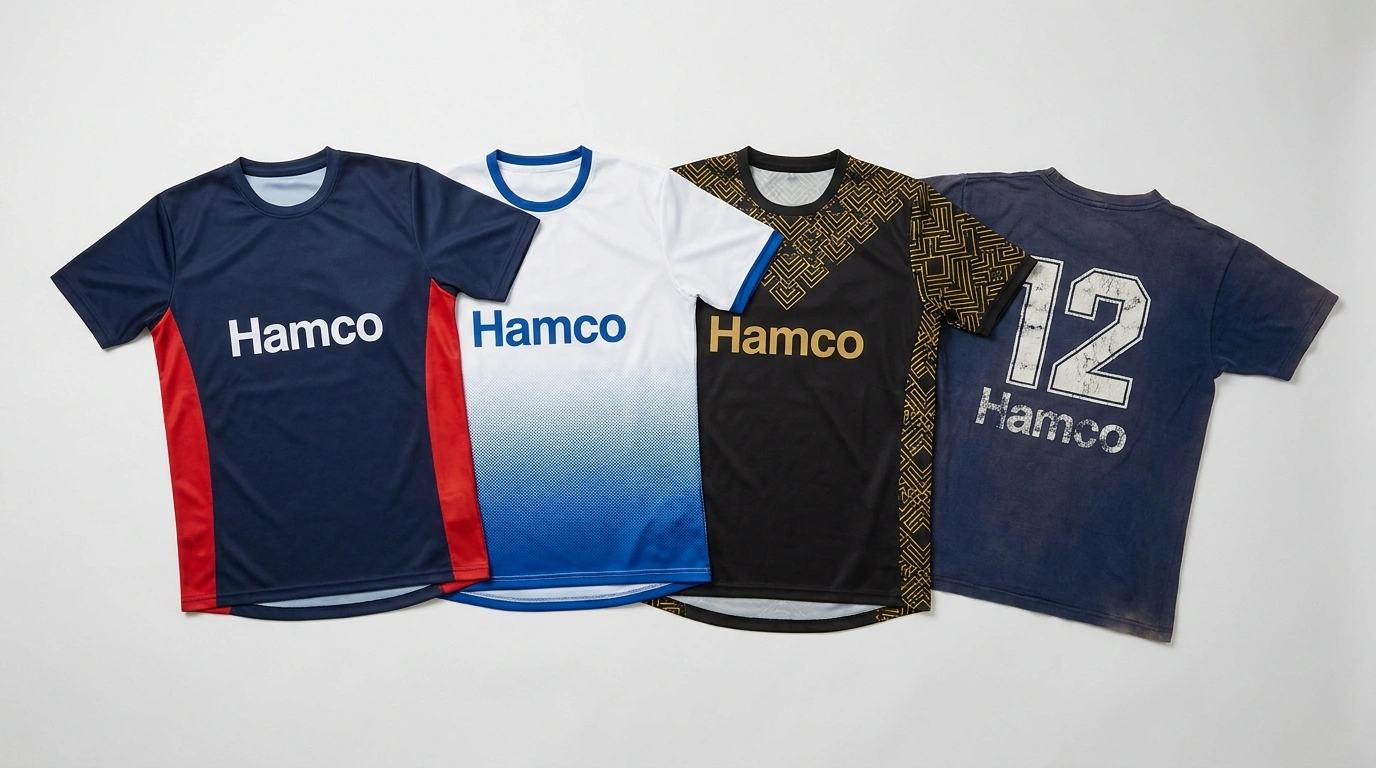
Sublimated jerseys are polyester uniforms with the design dyed into the fabric by heat. There is no ink layer to crack, peel, or fade. Teams are switching because sublimation prints unlimited colors at one flat price and adds no weight to the garment. It also outlasts screen print through a season of washing. Screen printing still charges per ink color. Published rates add about $1 to $2 per garment for each added color on small runs. Embroidery and tackle twill are not replaced by sublimation. They still supply the raised crest and sewn numbers that many leagues and coaches want, and good vendors combine all four. The limits are real too. Sublimation only works on polyester and cannot print a lighter color onto dark fabric. Some vendors still charge $50 to $125 in art fees for custom graphics. Published sublimated jersey prices in 2026 run $41.99 to $44.99 each on small orders and $49.99 at vendors that add art fees.
Not long ago a typical team jersey was a polyester blank with numbers pressed on top. Today many team orders are sublimated jerseys, and the reason is not marketing. The economics changed, the durability changed, and the design ceiling changed. This guide covers the switch itself. That means sublimation vs screen printing, sublimation vs embroidery, what sublimated uniforms cost in 2026, and when sublimation is the wrong call. For the chemistry of how the dye enters the fiber, read our guide to what sublimation printing is. It covers the process step by step, so this article does not repeat it.
One thing up front. Hamco builds sublimated uniforms. The prices and specs marked as ours come from our own product pages, such as our custom basketball uniforms page. Competitor prices come from their published pages, and the technical claims come from Wikipedia, all linked where they appear. Every figure was checked in September 2026. Where something is our opinion rather than a published fact, we say so.
What Are Sublimated Jerseys?
A sublimated jersey is a polyester garment whose colors, logos, names, and numbers were transferred into the fabric with heat. Nothing is printed on top of it. The design is printed in reverse on transfer paper, then pressed against the fabric with a heat press. The dye passes into the polyester at the molecular level. Wikipedia describes the result as a nearly permanent print that will not crack, fade, or peel under normal conditions[2]. The recommended press range is 380 to 420 degrees Fahrenheit[2].
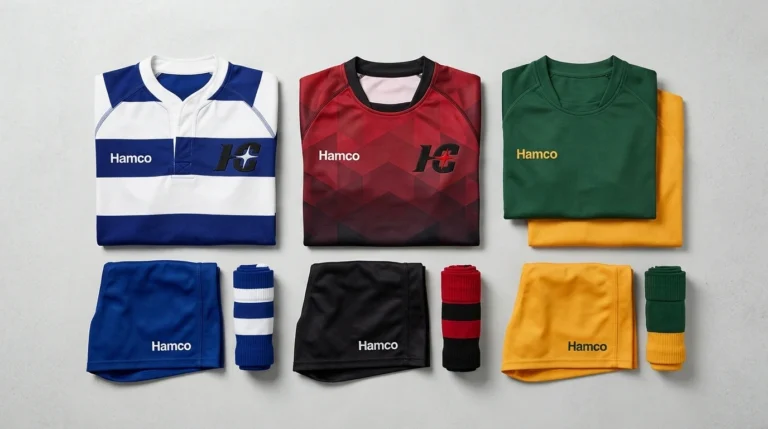
Three terms get mixed up in searches. Dye sublimation jerseys and sublimation jerseys mean the same thing. Full sublimation jerseys means every panel was printed before the garment was sewn, so the design runs edge to edge across seams. That is different from a single sublimated patch on a plain blank. Sublimated uniforms means the same method applied to the whole kit, including shorts, pants, and socks. One dye batch keeps the colors matched. When a vendor says a jersey is sublimated, ask which of these they mean. A blank jersey with one sublimated number is a very different product from a full sublimation jersey.
Sublimation vs Screen Printing: Where the Money Goes
Screen printing pushes ink through a stencil on a mesh screen, one color at a time. A design with several colors needs several screens[3]. That single fact drives the cost. French Press Custom is a Los Angeles print shop with a public price table. On runs of 24 pieces it charges $25 per screen and $15 in film for each ink color, plus a $25 press setup[5]. Its print rate at 24 to 47 pieces is $7.04 per shirt for one color, $7.48 for two, and $7.92 for three[5]. The garment is extra. Team package vendors bake the same logic into a simpler fee. Blue Chip Wrestling's Under Armour package is priced for a one color print. It adds $1.00 per additional ink color per garment, capped at three colors, and requires 20 sets[6].
Sublimation has no screens. One color and twelve colors take the same pass through the press. That is why our product pages list no per color charge and unlimited colors at the flat per jersey price[8]. The chart below puts those published numbers side by side. It shows what each extra ink color adds per garment, with the French Press screen and film fees spread over a 24 piece run.
Chart: added cost per garment versus a one color design. French Press Custom published tier for 24 to 47 pieces plus $25 screen and $15 film per extra color, spread over 24 shirts. Blue Chip Wrestling Under Armour package, $1.00 per additional ink color. Hamco product pages, no per color charge. Verified September 2026.
Read the chart with care. Screen printing is not expensive per shirt on large single color runs. French Press drops to $3.52 per shirt for one color at 100 pieces and waives setup above 24 pieces[5]. The gap opens when the design has several colors, gradients, or a full body pattern, and when the order is small. A 14 player travel team with a four color crest is exactly the order where screen printing quotes climb and sublimation stays flat. Screen printing also has one clear win. Wikipedia notes plastisol ink gives good color opacity on dark garments[3], which keeps it the method for dark fan tees and hoodies.
Sublimation vs Embroidery and Tackle Twill: They Are Not Rivals
The search phrase sublimation vs embroidery suggests a choice. In team uniforms it is rarely one. Machine embroidery stitches thread through the fabric from a digitized file. Wikipedia notes that creating that file can take hours, depending on the complexity of the design[4]. Tackle twill is a cut fabric letter or number sewn onto the jersey with a stitched edge. Both are raised, dimensional finishes. Sublimation is flat by nature, because the dye is inside the fiber and there is nothing on the surface.
That is why a finished jersey from a full service vendor usually carries several methods at once. On our softball V neck jersey page, for example, sublimation builds the colorway and side panels. Tackle twill holds the raised back numbers, embroidery supplies the chest crest, and screen printing handles opaque sponsor marks. All four are included in the per jersey price[9]. Our full button baseball page says numbers ship in sewn on tackle twill, or sublimated if you prefer[10]. The switch teams are making is not away from embroidery. It is away from a plain blank with pressed on numbers, toward a sublimated base with sewn accents where a raised look is wanted.
There is one product where sublimation is the only option: reversibles. Our soccer reversible jersey page explains why. Twill stitch knots and embroidery bobbin thread would show on the opposite face when the jersey is flipped. So both faces are sublimated before the two layers are bonded[13]. Wash care follows the method too. Our how to wash a jersey guide rates sublimation the most durable method in the wash. The print is part of the fabric rather than sitting on it[14].
The Four Decoration Methods Compared
How each method works, what it costs to add colors, where it holds up, and where it fails. The Source column links to the page each row is drawn from. The Holds up column mixes published facts with our judgment from building uniforms with all four methods.
| Method | How it works | Cost of colors | Holds up / fails | Source |
|---|---|---|---|---|
| Sublimation | Dye pressed into polyester with heat; becomes part of the fiber | No per color charge; unlimited colors at one flat price | Will not crack, fade, or peel under normal conditions; polyester only; cannot put a light color onto dark fabric | Wikipedia, dye sublimation; Hamco basketball page |
| Screen printing | Ink pushed through a stencil on a mesh screen, one color per screen | $25 screen plus $15 film per color on 24 piece runs; $1 per extra color on team packages | Good opacity on dark garments; ink layer sits on top of the fabric; most orders use 1 to 3 colors | Wikipedia, screen printing; French Press Custom; Blue Chip Wrestling |
| Embroidery | Thread stitched through fabric from a digitized file | Digitizing can take hours per design; included at Hamco, quoted elsewhere | Raised, premium crest; not suited to large areas or reversibles; adds weight and stiffness | Wikipedia, machine embroidery; Hamco softball V neck page |
| Tackle twill | Cut fabric letters and numbers sewn on with a stitched edge | Included at Hamco; ask other vendors whether names and numbers are priced separately | Raised numbers that read from the stands; not offered on reversibles because stitching shows on the flip side | Hamco full button baseball page; Hamco soccer reversible page |
Verified September 2026. Screen print fees are French Press Custom's published rates for runs of 24 pieces and under; the shop waives setup on larger runs. Blue Chip's $1 per color applies to its Under Armour team packages. Embroidery and twill are included in the per jersey price on the Hamco pages linked; other vendors quote them separately.
Why Teams Are Switching to Sublimated Uniforms
1. The color bill disappears
A gradient, a camo pattern, a sponsor wall on the back, and a three color crest all cost the same as a solid jersey. That is what sublimation changes. Our basketball page puts it in one line. Multi color sublimation costs the same as single color sublimation, with no setup fees and no per color upcharges[8]. Under screen printing, that same design is priced by screen count[3].
2. The print outlasts the season
The dye is infused into the fiber rather than applied on top. Wikipedia states the print will not crack, fade, or peel under normal conditions, and the fabric can be washed without damaging the image[2]. Our own published test is narrower and is quoted here as ours. Sublimated jerseys are wash tested to 50 cycles, a typical high school season. They retain more than 95 percent of color saturation at cycle 50[8]. Treat any vendor's wash claim, including that one, as their claim until you have washed a sample yourself.
3. Nothing is added to the garment
A sublimated panel weighs what the blank weighs. There is no plastisol layer, no stiff patch across the chest, and no heat transfer film. On a 160 GSM volleyball racerback[11] or a 160 to 180 GSM basketball interlock[8], that matters. The whole point of the light fabric is airflow. Wikipedia lists the same advantage in plainer words: the dye does not build up on the fabric[2].
4. Small orders stop being penalized
Screen printing needs a run to justify the screens. French Press does not run silkscreen below 24 pieces at all[5], and Blue Chip's package requires 20 sets[6]. Sublimation runs one file per garment, so direct manufacturers can publish no minimum order. Our product pages list a 1 to 24 tier at the top of the price table and accept single jerseys[9]. Boombah's full dye volleyball page starts its tiers at 1 to 5 pieces[7].
5. Reversibles and full body designs become possible
A two sided jersey with a complete design on each face only works when the print lives inside each layer. That is a sublimation only product by mechanics, not by preference[13]. The same is true of side panels, pinstripes, and edge to edge patterns that cross seams. Once a program wants those, the switch has already been made.
The Honest Limits of Sublimated Jerseys
Polyester only. Sublimation transfer works with polyester and polymer coated substrates[2]. On cotton the ink has nothing to grip[1]. In our view, a cotton fan tee or a cotton blend hoodie still belongs to screen printing. If a vendor offers sublimation on a blend, ask for the polyester percentage in writing.
No lighter color onto dark fabric. Sublimation dye is transparent, so it tints the fabric rather than covering it. Our own sublimation guide explains that a red printed onto navy fabric nearly vanishes[1]. Full sublimation solves this by printing the dark color itself onto a white blank before cutting. A sublimated logo added to an existing dark garment will not work. That is the job screen printing's opaque plastisol was built for[3].
Flat finish. If a league or coach wants raised numbers, sublimation cannot supply them. Tackle twill can, and the two are combined on the same jersey[10].
Fees still exist at some vendors. Sublimation removes the per color charge, not every charge. Boombah's full dye page lists two charges under Custom Graphics. A $125 design fee applies if Boombah draws a custom graphic, or a $50 setup fee if you supply your own artwork. Its pricing note also says full dye shirts have no setup fees. So those charges apply only when you go beyond its stock graphics library. Fluorescent colors add $5 per garment[7]. Blue Chip asks for 6 to 8 weeks from art approval on sublimated items[6]. Compare that with the published 2 to 3 week full dye lead time at Boombah[7] and about three weeks from approval at Hamco[8]. Sublimation is not automatically fast. The vendor's production flow decides that.
Screen color versus fabric color. Boombah's page states that colors in a mockup are for display purposes only and the garment may not resemble the color on your screen[7]. That caution applies to every sublimation vendor. Give a PMS code or a physical swatch. Order the full kit in one batch so jersey, shorts, and socks come from the same dye run[9].
What Sublimated Uniforms Cost in 2026
Published prices only, at the smallest tier a small team would pay. Volume tiers lower every Hamco and Boombah figure below. Blue Chip is listed for its fees, since its page does not print a package price.
| Item | Small order price | Volume price | Source |
|---|---|---|---|
| Hamco softball V neck jersey, ~180 GSM, four methods included | $41.99 | $29.99 at 101+ | Hamco softball V neck page |
| Hamco full button baseball jersey, ~165 GSM | $44.99 | $39.99 at 101+ | Hamco full button baseball page |
| Hamco volleyball racerback tank, ~160 GSM | $42.99 | $36.99 at 101+ | Hamco volleyball racerback page |
| Hamco soccer round neck jersey, ~160 GSM | $44.99 | $34.99 at 101+ | Hamco soccer round neck page |
| Hamco soccer reversible jersey, two full designs | $79.99 | $69.99 at 101+ | Hamco soccer reversible page |
| Boombah full dye volleyball jersey; add $50 or $125 only for custom graphics, stock graphics carry no fee | $49.99 at 1 to 5 | $39.99 at 10+ | Boombah full dye page |
| Blue Chip UA package: sublimated singlet, tee, and shorts, one color print | Not published; call or email for pricing | 20 set minimum; $1 per extra ink color | Blue Chip Wrestling |
Verified September 2026 against each linked page. Hamco small order prices are the 1 to 24 tier on the product page price table. The From price on category cards is the 101+ tier. Boombah prices exclude custom logos and provided art, which carry the $125 or $50 charge; its page also notes an extra $2 for 2XL. Blue Chip adds $2 to $5 for 2XL through 5XL sizes and prices the package by phone or email.
The arithmetic for a 14 player team makes the switch concrete. At the Hamco 1 to 24 tier, 14 volleyball racerback jerseys are 14 × $42.99 = $601.86[11]. Names, numbers, crest, and sponsor mark are included, with no separate decoration line. At Boombah, 14 full dye jerseys fall in the 10+ tier: 14 × $39.99 = $559.86. Add $50 if you supply finished art or $125 if Boombah draws it, so $609.86 or $684.86[7]. If the team uses a stock Boombah graphic, no art fee applies and the order stays at $559.86. Boombah's garment price is lower before fees and higher after them. The fee structure is what separates the quotes.
How to Check a Sublimated Jersey Before You Approve It
Five things to confirm on the mockup and the product page, in the order they usually go wrong.
Polyester content and fabric weight in writing. Look for a GSM figure on the product page. Ours publish it per cut, for example ~180 GSM on the softball V neck[9] and 160 to 180 GSM interlock on basketball game jerseys[8]. A vendor that will not state either is asking you to guess.
Cut and sew, not post sew. Ask whether panels are printed before assembly. If the answer is no, expect design breaks at the seams[1]. Treat that product as a decorated blank rather than a full sublimation jersey.
What is included in the price. Names, numbers, crest, mockup, revisions, and shipping should each be answered yes or with a figure. Our pages include all of them at the per jersey price with a free mockup within 12 hours and unlimited revisions before production[9]. Other vendors publish art fees for custom graphics instead[7], which is fine as long as you saw the fee before the invoice.
Raised numbers if your league or coach wants them. Confirm twill is offered on the cut you are buying. It is offered on standard jerseys and not on reversibles[13].
Lead time from approval, not from order. Published windows in 2026 run from about three weeks[8] to 6 to 8 weeks[6] for sublimated items. The clock starts when you approve the proof, so a slow roster is the usual cause of a late delivery.
If your program is ready to switch, the process is short. Send colors, logo, and roster, review a free mockup within 12 hours, and approve it. Production runs about three weeks from approval with no minimum order and free US shipping[8]. Before you send anything, our guide to ordering team uniforms covers sizing runs, roster collection, and the timeline. Our jersey color combinations guide will save you a revision round on the palette. Programs that scrimmage often should look at a sublimated reversible jersey before buying two sets. The wider design principles are in our team uniform design guide.
Frequently Asked Questions
What are sublimated jerseys?
Sublimated jerseys are polyester uniforms whose design was transferred into the fabric with heat and pressure. The color is inside the fiber rather than printed on top. The result will not crack, fade, or peel under normal conditions. Full sublimation jerseys are printed panel by panel before sewing, so the design runs edge to edge.
Is sublimation better than screen printing for team jerseys?
For multi color designs on polyester, yes. Sublimation has no per color charge and no ink layer to crack. Screen printing needs one screen per color, and published shops charge $25 per screen plus film on small runs. Screen printing still wins for cotton fan gear and for opaque prints on existing dark garments.
Sublimation vs embroidery: which should a team choose?
Usually both. Sublimation builds the base colorway and patterns at no extra cost, and embroidery supplies a raised crest that sublimation cannot produce. Full service vendors combine sublimation, embroidery, tackle twill, and screen printing on one jersey, each where it holds up best.
Do sublimated jerseys fade or peel?
Not under normal conditions, because the dye is infused into the polyester rather than applied to the surface. Wash them cold on a gentle cycle and skip the dryer to protect the fabric itself. Our basketball care notes also say to avoid bleach, which washes out color saturation.
How much do sublimated uniforms cost in 2026?
Published sublimated jersey prices run $41.99 to $44.99 each at the 1 to 24 tier on Hamco product pages. Names, numbers, crest, and mockup are included. Boombah lists $49.99 at 1 to 5 pieces, plus a $50 or $125 art fee only if you want a custom graphic. Reversibles with two full designs run $79.99. Volume tiers lower every figure.
Sources
- Hamco Sports, What Is Sublimation Printing? A Guide for Sports Teams
- Wikipedia, Dye-sublimation printing
- Wikipedia, Screen printing
- Wikipedia, Machine embroidery
- French Press Custom, How Much Does Screen Printing Cost in 2026
- Blue Chip Wrestling, Under Armour Pack #4 (singlet, shirt, shorts)
- Boombah, Custom Full Dye Volleyball Uniforms
- Hamco Sports, Custom Basketball Uniforms
- Hamco Sports, Custom Softball V Neck Jerseys
- Hamco Sports, Custom Full Button Baseball Jerseys
- Hamco Sports, Custom Volleyball Racerback Tank Top Jerseys
- Hamco Sports, Custom Soccer Round Neck Jerseys
- Hamco Sports, Custom Soccer Reversible Jerseys
- Hamco Sports, How to Wash a Jersey the Right Way

1 thought on “Sublimated Jerseys & Uniforms: Why Teams Are Switching (Complete Guide 2026)”