

Your jersey just survived a full game. Grass stains, sweat, maybe mud. The last thing you want is to ruin it in the laundry room after everything it went through on the field. One wrong setting and you are staring at cracked numbers, a shrunken collar, or colors that went from crisp to dull in a single wash.
Knowing how to wash a jersey the right way saves you money and keeps your team looking sharp. Here is the complete guide covering every sport, every situation, and every mistake most people make without realizing it.
How to Wash a Jersey
Short version: Turn inside out. Use cold water. Gentle or delicate cycle only. No fabric softener. Air dry in the shade or tumble dry on low. Skip high heat.
For stains: Pre-treat with cold water and a mild detergent or baking soda paste before the wash cycle. Let it soak for 20 to 30 minutes. For blood stains specifically, use cold water only because hot water permanently sets blood into fabric fibers.
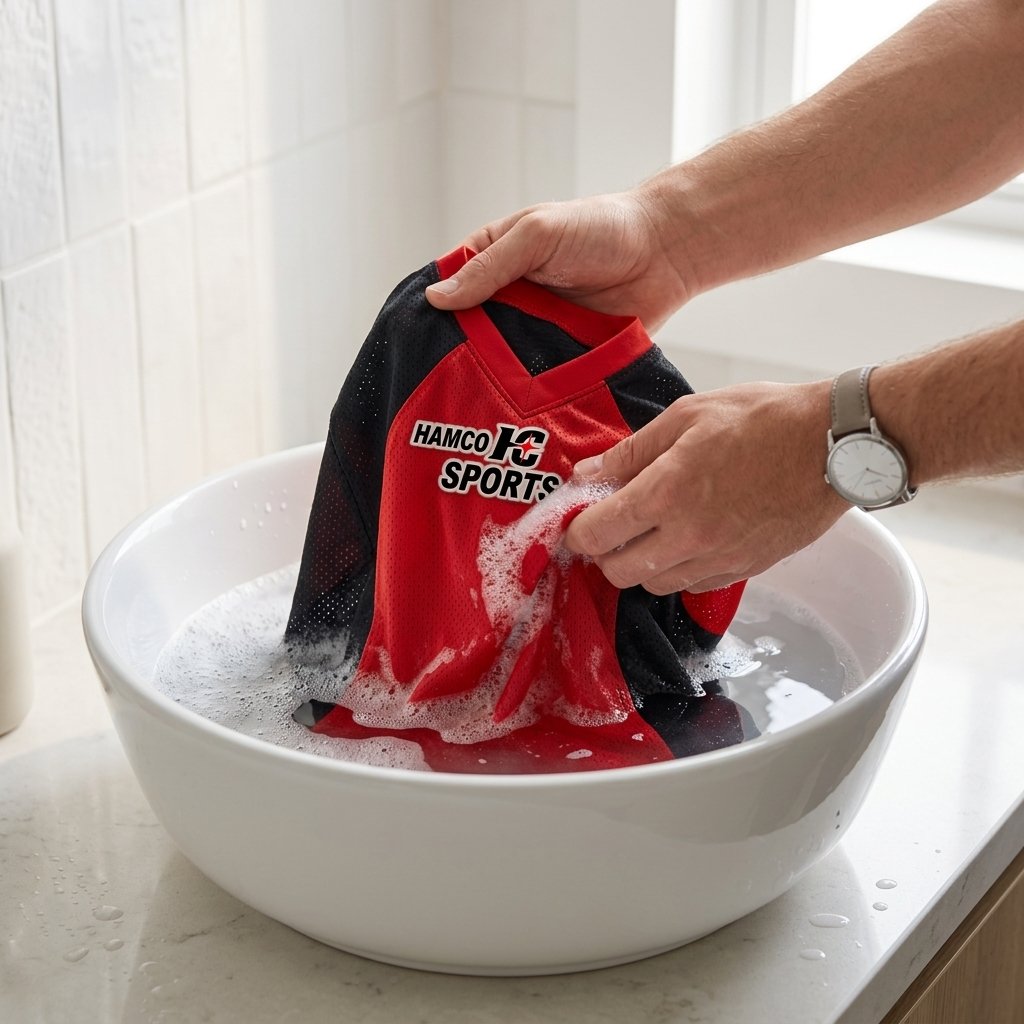
For hand washing: Fill a basin with cold water and a small amount of mild detergent. Gently turn the jersey in the water for 5 to 10 minutes. Rinse completely clean. Press water out gently, never wring.
Before You Wash: Two Steps That Protect Every Jersey
Read the Care Label First
That small tag sewn into the side seam of your jersey is the maker telling you exactly what the fabric can and cannot handle. A lightweight sublimation-printed soccer jersey needs different handling than a heavy tackle twill NHL replica. Knowing how to wash a jersey starts with two minutes reading that care label. If the care label and this guide ever conflict, the label wins.

Pre-Treat Stains Before They Have Time to Set
This is the step most people skip and the main reason jerseys get permanently damaged. Right after the game, sweat, grass, and mud are already starting to bond with the fabric.
As soon as the jersey comes off, rinse any stained areas under cold water immediately. Hot water cooks stains into the fibers. Then apply a small amount of mild detergent, a baking soda paste, or a sports-safe enzyme stain remover directly to the stain. Work it gently with your fingers or a soft-bristled brush. Let it soak for 20 to 30 minutes before putting the jersey in the machine.
Blood stains need cold water only. Even warm water will set blood permanently into polyester or mesh fabric. Always rinse blood with cold water first, then pre-treat and wash cold.
Jerseys in Washing Machine: The Complete Step-by-Step
Step 1: Turn the jersey completely inside out. This protects numbers, names, logos, and printed graphics from friction against the drum and other garments. It also allows the wash water to hit the inner fabric surface more directly, where sweat and body oils actually sit.
Step 2: Place the jersey inside a mesh laundry bag. This single step reduces friction during the spin cycle and protects stitching, embroidery, and any hardware. No mesh bag? A pillowcase tied at the top works well.
Step 3: Wash with similar lightweight fabrics only. Never mix jerseys with heavy items like jeans, towels, or hoodies. The weight difference creates friction that wears down jersey fabric over time and damages lettering and printed details.
Step 4: Set your machine to cold water and the gentlest cycle available. Whether your machine labels it delicate, hand wash, or gentle does not matter. Pick the lowest agitation setting and keep the spin speed low.
Step 5: Use a mild detergent designed for colored or activewear fabrics. Use slightly less than the recommended amount. More soap does not mean cleaner. Excess detergent traps inside the fibers, reduces breathability, and attracts more dirt on the next wear.
Step 6: Skip the fabric softener completely. Fabric softener coats the microfibers of athletic fabric, destroys moisture-wicking performance, and reduces breathability over time. If your jersey has ever felt damp and clammy shortly after a wash, fabric softener is almost certainly the reason.
Step 7: Remove the jersey from the machine immediately after the cycle finishes. Wet fabric folded against itself in the drum for even 30 minutes starts developing permanent creases and creates conditions where bacteria multiply in the folded sections.

Keep wash cycles short. A 12 to 20 minute cycle is enough for jerseys. Long cycles put unnecessary stress on the fabric and applied graphics without cleaning any better.
How to Wash NFL Jersey Without Damage
NFL jerseys, both authentic and replica, use tackle twill lettering and woven patches. The lettering is stitched on, but the backing adhesive beneath the twill can soften under heat and aggressive machine cycles.
Wash NFL jerseys alone or with very similar lightweight items only. The mesh laundry bag is especially important for jerseys with sleeve and collar patches. Check the patch edges before every wash. If any backing has started to lift, a small piece of fabric-safe tape applied before washing prevents it from peeling further during the spin cycle. This small step saves patches that would otherwise be unrecoverable after one wash.
How to Wash NFL Jerseys in the Washing Machine
Keep the load small. A single jersey or two with a few lightweight items is the right load size. Shake the jersey out gently after the cycle ends and hang to air dry on a padded hanger away from heat and direct sunlight.
Wash a Jersey Football Style: What Game-Used Jerseys Actually Need
Football jerseys deal with more ground-level abuse than almost any other uniform. Grass, mud, blood, clay, and concentrated sweat at the collar and underarms are all part of a typical game. Before loading into the machine, pre-treat the collar, underarms, and any visibly stained areas. These spots carry the highest concentration of bacteria and are the first to develop permanent discoloration or odor if skipped even once.
Remove any removable padding before washing the jersey itself. Shoulder pads should be pre-treated with the baking soda and water mixture, then washed separately in warm water on a gentle cycle. Warm water for pads is acceptable because padding foam holds odor-causing bacteria more stubbornly than jersey fabric, and cold water alone will not clear it properly. The jersey itself still gets cold water only.
Never pack a football jersey and wash the load tightly. The jersey needs room to move freely in the water. A stuffed machine prevents proper rinsing and increases friction damage on every cycle.
Wash Football Jerseys in the Washing Machine: Settings That Work
On most home washers, use these settings for football jerseys:
- Temperature: Cold
- Cycle: Delicate or Gentle
- Spin speed: Low or Extra Low
- Load size: Small, never overfill
- Cycle length: 12 to 20 minutes maximum
How to Wash a Football Jersey Without Ruining It: The Mistakes to Avoid
The three things that ruin football jerseys in the laundry are high heat drying, fabric softener, and washing with heavy fabrics. High heat in the dryer can crack screen-printed numbers and shrink the collar. Fabric softener kills the breathability of the fabric. Washing with heavy items like hoodies or jeans creates friction that wears down jersey fabric over multiple washes. Avoid all three and you avoid the most common laundry damage.
How to Wash a Hockey Jersey
When you wash a jersey designed for hockey, three things make it different from any other uniform on wash day.
First, remove the laces from the collar before washing. Laces left in during the spin cycle will tangle, pull at the collar seam, and can damage the machine drum as well. Wash them separately inside a small mesh bag.
Second, secure any hook-and-loop straps, including fight straps sewn into the inside hem, before placing the jersey in the machine. An open strap grabs onto the jersey fabric and other items in the wash, causing pilling, snagging, and thread pulls that cannot be repaired.
Third, hockey jerseys made from heavier knit fabric hold persistent odors more stubbornly than lighter jerseys. If odor is your main issue, add half a cup of white vinegar to the rinse cycle. The vinegar goes in the fabric softener dispenser or manually added during the rinse stage, not mixed with detergent. Adding vinegar at the same time as detergent cancels the effectiveness of both. Rinse cycle only.
That is how to wash a jersey built for hockey. Cold water, gentle cycle, mesh bag. Air dry flat or on a padded hanger away from direct heat and sunlight.
Can Hockey Jerseys Go in the Dryer?
Yes, on low heat. Air drying works too, flat or on a padded hanger. Hockey socks take the same care. Hamco Sports hockey socks are fully sublimated 160 GSM polyester mesh, the same type of mesh as our hockey jerseys in a lighter sock weight, so they go in the same cold, gentle load and hang to dry. Tackle twill names and numbers are sewn on, so wash a twill jersey inside out on a low spin to keep the edges from catching on the drum. Our custom hockey jerseys come sublimated, in tackle twill, or both on one jersey; twill lettering is $5 per name and $5 per number.
Wash Baseball Jersey in the Washing Machine: The Right Process
Baseball jerseys, especially white ones, take clay and dirt staining as part of every game. Unbutton all buttons completely before washing. Buttons under tension in the wash cycle put stress on the thread and can crack or snap plastic buttons over repeated washes.
For white baseball jerseys with clay or red dirt staining, soak the jersey in cold water with half a cup of baking soda for 30 to 45 minutes before the machine cycle. This lifts the red mineral pigment from clay significantly before the detergent even works on it.
Do not use chlorine bleach on any baseball jersey, even all-white ones. Chlorine bleach attacks polyester fibers, weakens them over repeated use, and fades any colored stitching or piping. If you need extra whitening power, use an oxygen-based bleach instead. It is far gentler and will not cause the yellowing that chlorine bleach creates over time.
How to Clean White Baseball Pants
White baseball pants pick up the same clay as the jersey, plus grass on the knees and seat from every slide. Clean them the same night, in this order:
- Let the clay dry, then take the pants outside and brush off as much dirt as you can, because wet clay only smears deeper into the fabric.
- Rinse each stain from the inside out under cold water, since hot water sets dirt and grass.
- Rub a little liquid detergent into the stain, and treat the grass only after the dirt is out. For heavy clay, use the baking soda soak from the jersey steps above, and follow the bleach rule there too.
- Wash the pants as the care label says and let them air dry. Check the knees before any heat touches them, and if the stain is still there, treat it and wash again.
If your team is still playing in jerseys that bleed, shrink, or stain too easily, it is time for an upgrade. Browse custom baseball jerseys made in sublimated polyester, with the design dyed into the fabric
How to Wash a Jersey by Hand
Washing a jersey by hand is the safest method for any uniform with significant value, collector status, or heavy embroidery and patches. It takes more time but puts zero mechanical stress on the fabric or graphics.
Fill a clean basin or sink with cold water. Add a small amount of mild detergent and mix it into the water before adding the jersey. Turn the jersey inside out, submerge it, and let it soak for 15 to 20 minutes.
After soaking, gently work the fabric between your hands in areas with staining. Do not scrub over printed numbers, logos, or embroidered areas. Drain the soapy water, refill with clean cold water, and rinse until the water runs completely clear. Press water out gently by folding the jersey and applying light, even pressure. Never wring, twist, or ring it.
Drying time after hand washing: a high-performance authentic jersey made from thin lightweight polyester will dry in about 2 hours. A thicker replica jersey can take 4 hours or more. Factor this into your pre-game laundry schedule.
Does the Print Type on Your Jersey Change How You Wash It?
Yes. Here is what changes by print type before you wash any jersey.
Sublimation printing dyes the design directly into the fabric fiber. Cold water, gentle cycle, then air dry or use low heat. The print is part of the fabric itself, not sitting on top of it, so there is no print layer to crack or peel. Hamco Sports sublimates custom uniforms and also offers tackle twill and other decoration methods.
Screen printing applies ink to the surface of the fabric. It is vulnerable to high heat and friction. Always turn these jerseys inside out. A low dryer setting is fine, but high heat can crack and peel the ink.
Tackle twill and embroidery uses stitched lettering and numbers. The threads are durable but the backing adhesive underneath the twill edges can lift from repeated washes. Low agitation and a mesh bag protect these the most.
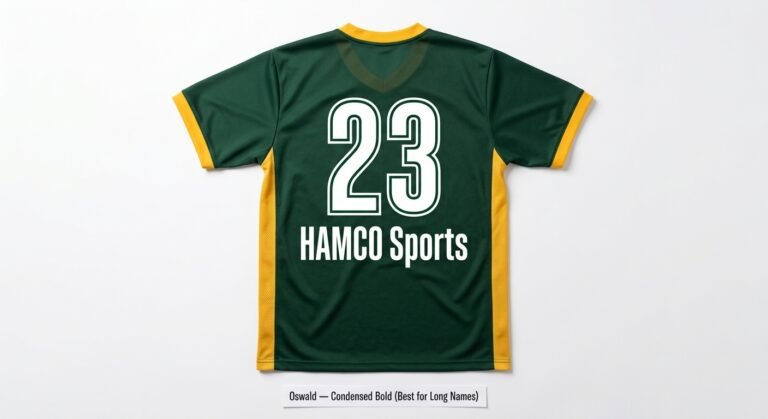
If you are still choosing lettering styles for your team, check out our guide on the best jersey fonts before placing your order.
Heat transfer vinyl (HTV) sits on top of the fabric, so keep it away from high heat. Wash it cold on a gentle cycle, inside out, then dry it on low or lay it flat.
How Often Should You Actually Wash a Jersey?
Over-washing degrades jersey fabric, print quality, and moisture-wicking performance faster than most people realize.
Game jerseys worn in active play: wash after every use. Sweat and bacteria left in the fabric between wears degrade fibers and creates odors that become harder to remove with each missed wash.
Fan jerseys worn casually: wash every 2 to 3 wears, or when it visibly needs it. Frequent machine washing of a jersey you have not broken a sweat in wears it out well before its time.
Brand new jerseys before first wear: wash once before wearing. Jerseys go through multiple hands and machines during production. A single cold water gentle cycle before first use removes any production residue and is better hygiene practice.
My Jersey Still Smells After Washing. Now what?
If a jersey comes out of the machine and still has a persistent odor, the cause is almost always bacteria embedded deeper into the fibers through multiple wears without proper pre-treatment. Regular detergent does not break down the protein-based compounds in sweat that cause lingering athletic odor.
The fix is an enzyme-based laundry detergent or a pre-soak with an enzyme-based stain remover for 30 to 60 minutes before the wash cycle. Enzyme cleaners specifically break down the sweat compounds that regular detergent leaves behind. Between washes, a sports-specific antibacterial spray applied to the inside of the jersey and allowed to air dry reduces bacterial buildup between game days significantly.
Tips for Coaches and Team Managers Washing Multiple Jerseys at Once
If you are a coach or team manager washing 15 to 20 jerseys after a game day, here is what changes.
Never wash an entire team set in one load. Jersey fabric needs room to move freely in the water for proper rinsing and to reduce friction. Overloaded machines leave detergent residue in the fabric and increase friction that wears jerseys out faster. Split team sets into loads of 5 to 8 jerseys maximum.
Sort by color before loading. Whites with lights, darks together. One bleeding jersey in a shared load can damage multiple uniforms at the same time.
Pre-treat every jersey before loading, even the ones that look clean. Light grass contact and sweat are invisible but present on every game jersey.
If you have access to a commercial front-loading machine, use it. Front-loaders use far less agitation than top-loading machines with a center agitator and are significantly gentler on athletic fabric over a full season of washing.
Ready to outfit your whole team? Visit the team uniform ordering page to get your squad set up with custom jerseys in sublimated polyester, with the color dyed into the fabric.
Drying Your Jersey: Air Dry or Low Heat
You have two good options: tumble dry on low or air dry. The mistake is high heat, which can soften the adhesive on heat transfer graphics and shrink polyester. Here is how to air dry.
After removing the jersey from the machine, shake it out gently and reshape it with your hands. Hang it on a plastic or padded hanger. Wire hangers stretch the shoulder seam permanently over repeated use. You can also lay the jersey flat on a clean dry towel or a mesh drying rack.
Keep jerseys out of direct sunlight when drying. UV exposure accelerates color fading, especially in bold or dark colors. Dry in a well-ventilated indoor area or a shaded outdoor space.
Do not dry jerseys on a heater, radiator, or near a heat vent. Extended direct heat causes the same damage as a hot dryer, just more slowly.
How to Shrink a Jersey Without Ruining the Graphics
If a jersey fits too large and you want to bring it down slightly, here is how to do it without destroying the print.
Wash it in warm water instead of cold, one time only, then air dry as normal. Warm water causes polyester fibers to contract slightly. Do not use hot water because it is too aggressive and will crack screen-printed graphics in addition to shrinking the fabric. Do not use the dryer to force shrinkage. The heat required to shrink a polyester jersey in the dryer will destroy any printed logos and numbers in the process, even if the shrinkage works.
This method works on polyester and polyester-blend jerseys. Cotton-blend jerseys will shrink more noticeably per warm wash.
For a meaningful size reduction, a tailor who works with athletic fabric is a more reliable option than trying to shrink a jersey at home.
Storing Jerseys the Right Way
Between games: Hang jerseys on padded hangers in a cool, dry space after each wash and dry cycle. Never leave a jersey folded in a sealed gym bag after a game. The damp, closed environment of a sports bag after competition is the fastest path to permanent mildew odor that no detergent will fully remove.
Between seasons: Fold jerseys flat and store them in a sealed breathable garment bag or a plastic bin. Do not fold repeatedly along the same crease lines on printed or embroidered areas. Repeated pressure on the same fold cracks screen-printed graphics over time.
For collector or fan jerseys stored long-term, place a sheet of soft acid-free tissue paper between jerseys to prevent color bleed and reduce surface friction. Store in a cool, dry location. Garages, hot closets, and basements experience temperature and humidity swings that degrade fabric and cause yellowing.
5 Mistakes That Ruin Jerseys
1. Leaving the jersey in a wet gym bag after the game: Bacteria in a sealed, damp bag multiplies within hours. Jerseys left in a closed bag overnight regularly develop permanent mildew odor that repeated washing will not fully remove. Take the jersey out immediately after every game.
2. Mixing vinegar with detergent in the same cycle: Several popular guides recommend adding vinegar to the wash along with detergent for odor control. The acid in vinegar and the alkaline compounds in detergent cancel each other out when combined. Add vinegar through the fabric softener dispenser or manually during the rinse stage only. Then it works.
3. Washing jerseys with heavy fabrics: One pair of jeans or a towel in the same load is enough to cause friction damage over repeated washes. Wash jerseys only with similar lightweight fabrics.
4. Skipping pre-treatment on the collar and underarms: These two areas accumulate the most concentrated sweat. Without pre-treatment before every wash, discoloration and odor become permanent within a single season.
5. Ironing directly over numbers or logos: Use a garment steamer held 6 to 8 inches from the surface instead. If ironing is necessary, use the lowest heat setting with a cloth barrier between the iron and the jersey, and work only on plain fabric areas. Never apply direct heat to any printed, vinyl, or embroidered section.
FAQs
Q: How do you wash an NFL jersey in the washing machine without ruining it?
Turn the jersey completely inside out and place it in a mesh laundry bag. Use cold water and a delicate or gentle cycle with a small amount of mild detergent. Check patch edges before washing and secure any that are lifting. Skip fabric softener. Tumble dry on low, or air dry on a padded hanger away from direct sunlight.
Q: Can you put jerseys in the washing machine?
Yes. Knowing how to wash a jersey in the machine comes down to the right settings. Cold water, gentle or delicate cycle, and a mesh laundry bag are non-negotiable. Wash jerseys with similar lightweight fabrics only and never overfill the machine. Keep the cycle to 12 to 20 minutes. Remove immediately when the cycle finishes.
Q: How do you wash a hockey jersey without damaging it?
Remove the collar laces first and wash them separately in a small mesh bag. Secure all hook-and-loop straps before placing the jersey in the machine. Use cold water and a gentle cycle with mild detergent. Add half a cup of white vinegar to the rinse cycle, not the wash cycle, if odor is an issue. Air dry flat or on a padded hanger away from heat.
Q: How do you wash a football jersey without ruining it?
Pre-treat the collar, underarms, and stained areas before loading the machine. Remove all padding. Use a mesh laundry bag, cold water, and a gentle cycle. Do not overfill the machine. Skip fabric softener. Dry it on low heat or hang it to air dry.
Q: How do you shrink a jersey?
Wash it in warm water one time and air dry. This causes a small, controlled amount of shrinkage in polyester fabric. Do not use the dryer to shrink a jersey because the heat required will damage any printed graphics before meaningful shrinkage occurs. Cotton-blend jerseys shrink more noticeably than pure polyester ones. For a significant size reduction, a tailor who works with athletic fabric is the more reliable option.
When It Is Time for New Uniforms
If your team’s jerseys have seen better days, it might be time to replace them.
At Hamco Sports, we design custom sports uniforms in the USA and make them in our own factory overseas, using sublimation printing, a process that dyes color directly into the fabric, so there is no print layer to crack or peel. No iron-on, no adhesive on the sublimated design.
Visit hamcospo.com to start your custom order and get your squad outfitted right.



10 thoughts on “How to Wash a Jersey the Right Way: Machine, Hand Wash and Drying”
Comments are closed.