Quick Answer
Little League baseball uses league age, which is a player’s age on August 31 of the current year. Majors (league age 9 to 12) play six innings on a 60 foot diamond with a 46 foot pitching distance. Daily pitch limits are 50 for ages 6 to 8, 75 for 9 to 10, 85 for 11 to 12, and 95 for 13 to 16. Rest runs from 0 to 4 days based on the count. Every player must play six defensive outs and bat once in regular season games. Jewelry is allowed, metal cleats are not until Intermediate 50/70.
Little League is the largest organized youth sports program in the world. It has about 2 million players in more than 80 countries, according to Little League International. Your child may be starting a first season, or you may be a first time coach stepping into the dugout. Either way, the rule book can feel like a lot. Base distances change by division. Pitch counts have daily limits with required rest days. Some divisions use coach pitch and others let kids pitch. This guide puts the little league rules that matter most in plain language, with a link to the official Little League page for each one. If you are building a program from scratch, start with our how to start a youth baseball league guide.
One note before the rules. Little League updates its rule books every year, and several rules repeated on other websites are years out of date. Every number below was checked against littleleague.org on October 1, 2026. For the gear side, our youth baseball equipment checklist covers what each player needs before the first practice.
Little League Rules at a Glance
| Division | League age | Base paths | Pitching distance | Daily pitch limit | Metal cleats |
|---|---|---|---|---|---|
| Tee Ball | 4 to 7 | 60 ft (50 ft local option) | No pitching | None | No |
| Minor League (coach pitch, machine pitch, player pitch) | 5 to 12 | 60 ft | 46 ft | 50 (age 6 to 8), 75 (9 to 10), 85 (11 to 12) | No |
| Little League (Majors) | 9 to 12 | 60 ft | 46 ft | 75 (age 9 to 10), 85 (11 to 12) | No |
| Intermediate 50/70 | 11 to 13 | 70 ft | 50 ft | 85 (age 11 to 12), 95 (13) | Yes |
| Junior League | 12 to 14 | 90 ft (75 ft local option) | 60 ft 6 in (54 ft local option) | 85 (age 12), 95 (13 to 14) | Yes |
| Senior League | 13 to 16 | 90 ft | 60 ft 6 in | 95 | Yes |
Sources: Little League baseball divisions, field specifications, pitch count regulation, and the metal cleats help article. Local leagues may narrow an age range inside these limits, for example a Majors division limited to league age 10 to 12.
How Does Little League Age Work?
Little League uses league age, not school grade or the age on opening day. For baseball, league age is the player’s actual age on August 31 of the current year, per the Little League age determination page. A player who turns 13 on September 1 is league age 12 for that whole season. Softball is different: league age is the player’s age on December 31 of the previous year. Little League publishes an age chart each year, so check the current chart before you register.
Here is how the baseball divisions line up on the official divisions page:
- Tee Ball, league age 4 to 7. The entry level, built around fun, fitness, and fundamentals. Players must complete one Tee Ball season before they can be evaluated for a higher division.
- Minor League, league age 5 to 12. Coach pitch, machine pitch, or player pitch, set by the local league. Ages 5 and 6 need one Tee Ball season first. Tournaments exist for league age 8 to 10 and 9 to 11.
- Little League, also called Majors, league age 9 to 12. This is the division behind the Little League Baseball World Series. A local league may limit it to 10 to 12 or 11 to 12.
- Intermediate 50/70, league age 11 to 13. A bridge division with a 50 foot pitching distance and 70 foot bases.
- Junior League, league age 12 to 14, and Senior League, league age 13 to 16. Both use the full 90 foot diamond and the 60 foot 6 inch pitching distance.
What Are the Field Sizes in Little League?
The Little League field specifications page sets the distances. For 12 year olds and below in baseball, and all softball divisions, the bases are 60 feet apart. A local board may use a 50 foot diamond for Tee Ball. The pitching distance for Majors and below is 46 feet. There is no 38 foot pitching distance for Tee Ball or coach pitch anywhere in the Little League field specifications. An earlier version of this page listed one.
For 13 year olds and up, bases are up to 90 feet and the pitching distance is 60 feet 6 inches. Local leagues may shorten the regular season distances. Junior League may use 75 foot bases and 54 feet. Intermediate 50/70 may use 70 foot bases and 50 feet. Outfield fences are a local option. Little League recommends 200 feet for Majors and below and for Intermediate, and 300 feet for Junior and Senior League.
What Are the Little League Pitch Count Rules?
Pitch counts are the most important safety rule in Little League baseball. Regulation VI sets a daily maximum by league age. It also sets the calendar days of rest a player needs, based on how many pitches were thrown.
| League age | Daily maximum | Rest days (league age 14 and under) |
|---|---|---|
| 6 to 8 | 50 pitches | 1 to 20 pitches: 0 days. 21 to 35: 1 day. 36 to 50: 2 days. 51 to 65: 3 days. 66 or more: 4 days. |
| 9 to 10 | 75 pitches | Same thresholds |
| 11 to 12 | 85 pitches | Same thresholds |
| 13 to 14 | 95 pitches | Same thresholds |
| 15 to 16 | 95 pitches | 1 to 30: 0 days. 31 to 45: 1 day. 46 to 60: 2 days. 61 to 75: 3 days. 76 or more: 4 days. |
Four details coaches miss. First, a pitcher who reaches the daily limit while facing a batter may finish that batter. Second, no pitcher may pitch on three days in a row, no matter how low the counts were. Third, a player who catches four or more innings in a game may not pitch that day. Fourth, a pitcher who throws 41 or more pitches may not move to catcher for the rest of that day. An earlier version of this page put that number at 66. The rule is 41, and it is on the Little League pitch count page.
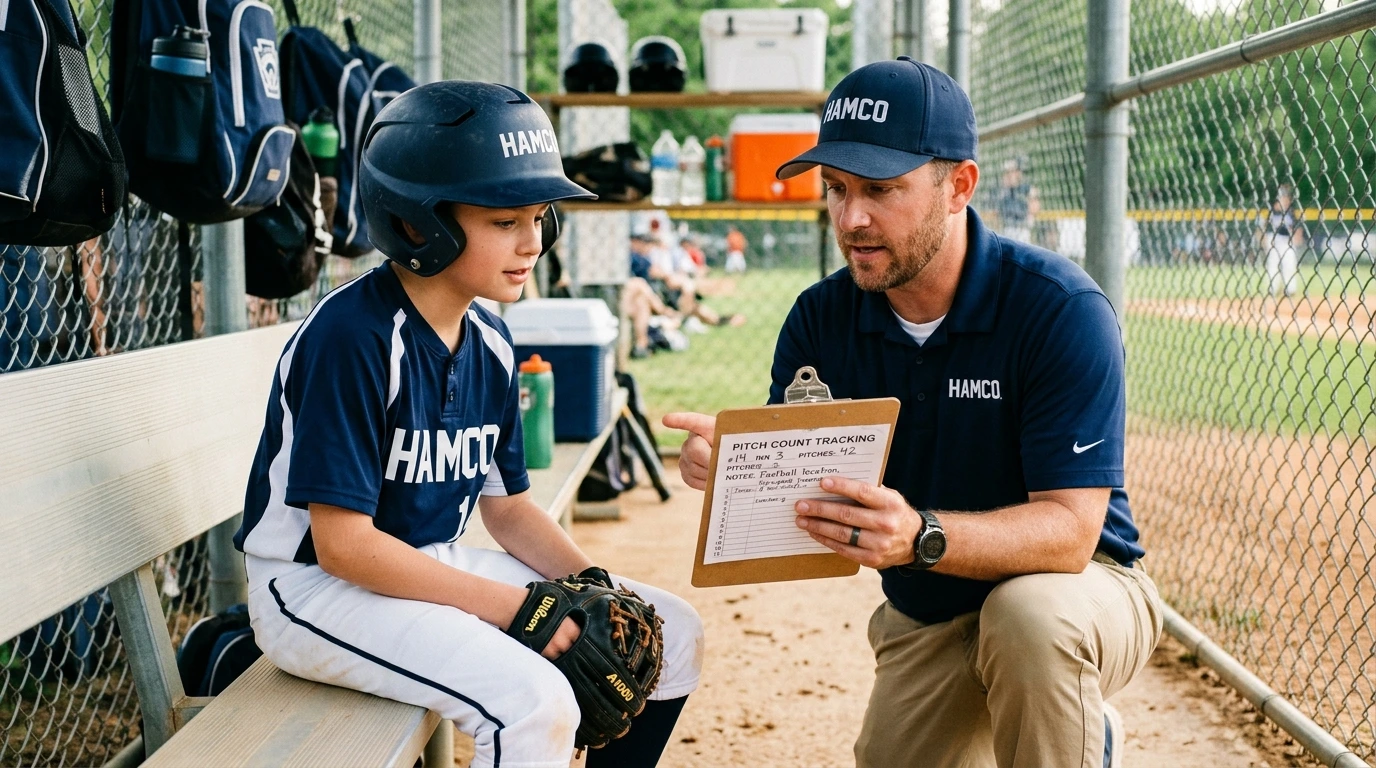
Curveballs are not banned by Little League. The medical advice is still clear. USA Baseball’s Pitch Smart guidelines for ages 9 to 12 say to avoid pitches other than fastballs and changeups. The ages 13 to 14 guidelines say breaking pitches can start only after a player has a consistent fastball and changeup. If a coach needs a visual for what a pitcher cannot do on the mound, our balk rule guide covers it.
Batting, Fielding, and Mandatory Play
Every rostered player who is present at the start of a regular season game must play at least six defensive outs and bat at least once. That is from Little League’s answers for parents. The six outs do not have to be consecutive, which is another point many websites get wrong. In the Major Division and below there is no on deck circle, so the next batter waits in the dugout.
Tournament play is different since 2023. Under Tournament Rule 9, every player on the affidavit who is present must be in a continuous batting order. Players may enter or re enter on defense at any time, but there is no defensive playing time requirement. Senior League tournaments have no mandatory play rule at all. The tournament guide for parents explains the rest.
The infield fly rule is part of the Little League rule book, not something added at the Major level. Batting out of order is an appeal play. Base running and obstruction rules follow the same structure as the professional rules. One big difference: there is no must slide rule in Little League. For practice ideas that teach these situations, see our baseball drills for beginners and 90 minute youth practice plans.
Equipment and Uniform Rules
Helmets: under Rule 1.16, each league must provide six helmets in the dugout. They must meet NOCSAE standards and carry the NOCSAE stamp and a warning label. Batters, base runners, and player base coaches must wear one. A face guard on the helmet is optional in Little League, not required. An earlier version of this page said face guards were required below Junior League. That was wrong.
Bats: the Little League bat rules require the USA Baseball mark on non wood bats in Majors and below. The barrel limit is 2 5/8 inches and the length limit is 33 inches. Intermediate 50/70 and Junior League may use USA Baseball bats up to 34 inches or BBCOR bats. Senior League uses BBCOR. Solid one piece wood bats do not need the USA Baseball logo. Tee Ball bats carry a mark that reads ONLY FOR USE WITH APPROVED TEE BALLS.
Cleats: molded cleats are fine everywhere. Metal spikes are not allowed in Majors and below. They are allowed in Intermediate 50/70, Junior, and Senior League, per the Little League help center. An earlier version of this page said metal cleats were banned below Junior League, which would wrongly exclude Intermediate.
Jewelry: allowed. Little League’s parent FAQ says jewelry may be worn, and an umpire can order any item removed that could cause injury. Pitchers may not wear white or gray undershirt sleeves, and anything exposed on the pitcher’s undershirt must be a solid color.
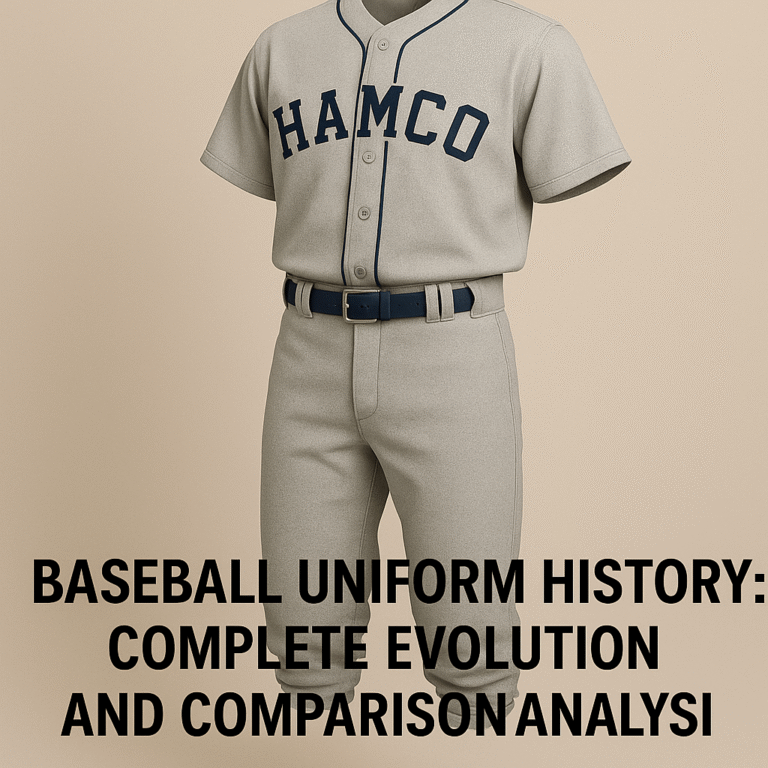
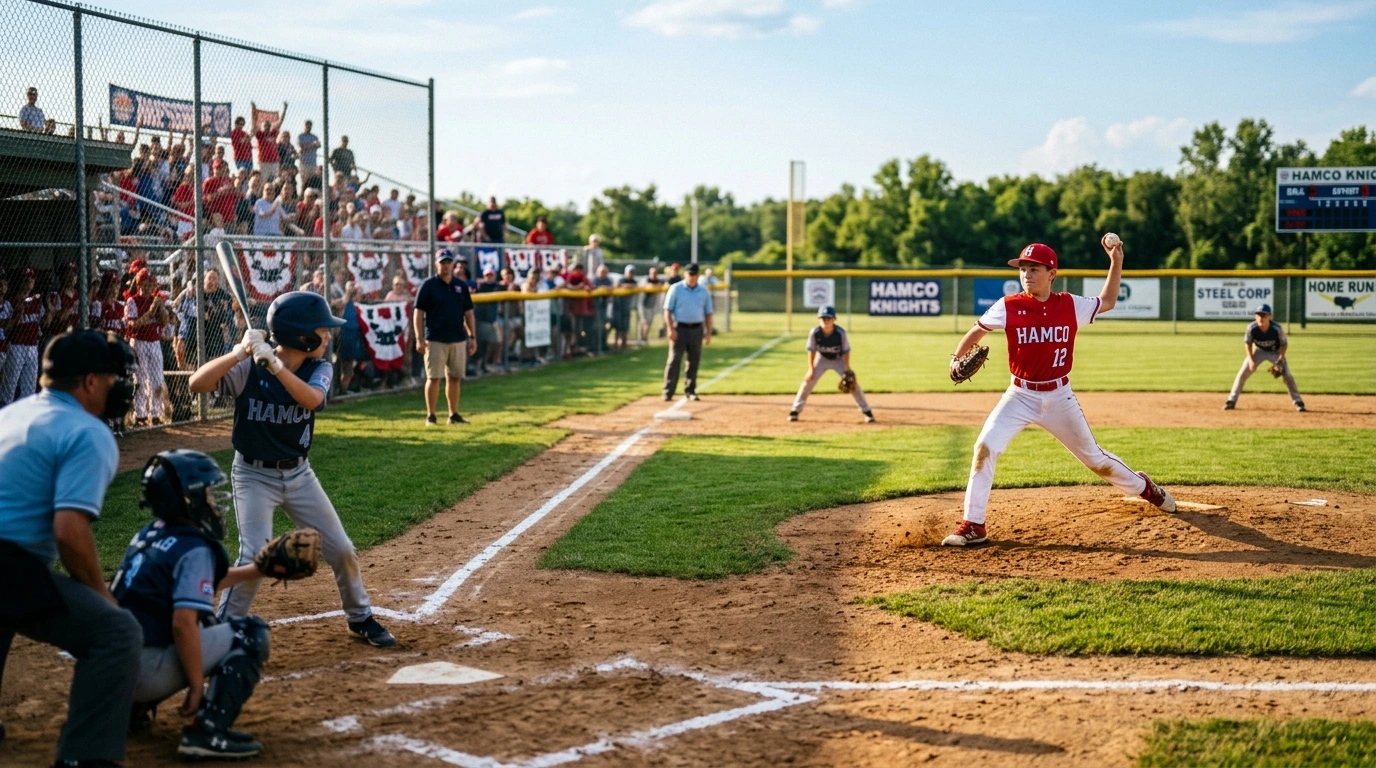
Uniforms: Rule 1.11 says all players on a team must wear numbered uniforms identical in color, trim, and style. The Little League shoulder patch goes on the upper left sleeve of the jersey. There is no required number size in the Little League rule, so a league can choose. Hamco’s custom baseball uniform set covers jersey, pants, and socks in youth sizes YS to YXL and adult XS to 4XL. It is $92.99 per set for 1 to 24 sets, $89.99 for 25 to 50, $84.99 for 51 to 100, and $79.99 at 101 or more. Names, numbers, logo, and shipping are included. If you only need jerseys, the two button baseball jersey is $44.99 at 1 to 24 and $34.99 at 101 or more. Baseball pants with double knees and belt loops run $49.99 down to $39.99. We do not sell baseball caps or the Little League shoulder patch, so budget those separately.
Tournament and All Star Rules
The Little League International Tournament has six levels in baseball, from district up to the World Series. It covers league age 8 to 16. To be eligible, a player must have played in at least eight regular season games by the start of tournament play in the district. Senior League has no games played requirement. The local board may waive the eight game rule for illness or injury. Tournament teams carry a maximum of 14 players, one manager, and two coaches (16 players in Senior League). All of this is on Little League’s tournament page for parents.
The Little League Baseball World Series in Williamsport is the Majors tournament. The tournament team is picked from league age 10 to 12 players. League age 12 is the oldest a player can be. The 8 to 10 and 9 to 11 tournaments end at the state level.
Conduct Rules for Coaches and Parents
Under Rule 4.07, a manager, coach, or player who is ejected must leave the field at once and take no further part in the game. They may not sit in the stands. An ejected manager or coach must not be present at the game site for the rest of that game. The ejection also carries a suspension for the team’s next played game. Parents are not permitted in the dugout, which is limited to players, the manager, and coaches.
Ordering Little League Uniforms Without a Rule Problem
- Confirm your league’s colors, number range, and patch rules with the board before you approve a mockup. Little League requires identical uniforms within a team.
- Order youth sizes off a measured roster, not by age. League age 12 can run from youth large to adult medium on the same team.
- Pitchers’ undershirts must be a solid color and not white or gray on the sleeves. Order team undershirts in a school color.
- Leave room on the upper left sleeve for the Little League shoulder patch.
- Order 3 weeks before opening day. Hamco’s published production time is 3 weeks from mockup approval, with a free mockup within 12 hours and no minimum.
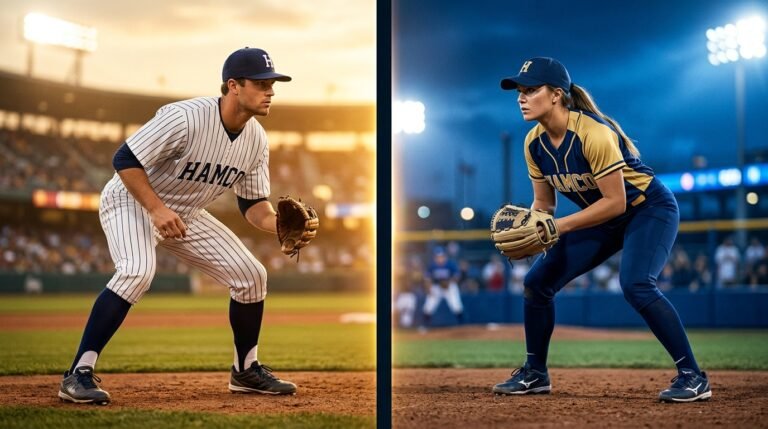
For team names before the numbers go on, see our 200 plus baseball team names. For a travel program that plays outside Little League, the travel baseball uniforms guide covers what changes. For a full budget by roster size, our custom baseball uniforms cost guide has the math. If your league also runs softball, the baseball vs softball uniforms guide covers the rule differences for that side.
Frequently Asked Questions
How is Little League age determined?
By the player’s actual age on August 31 of the current year for baseball, and on December 31 of the previous year for softball. Little League publishes an age chart each season.
How many pitches can a Little League pitcher throw?
50 a day at league age 6 to 8, 75 at 9 to 10, 85 at 11 to 12, and 95 at 13 to 16. Rest days run from 0 (1 to 20 pitches) to 4 (66 or more) for league age 14 and under. No pitcher may pitch three days in a row.
Can a 12 year old play in the Little League World Series?
Yes. The World Series is the Majors tournament, and the tournament team is picked from league age 10 to 12 players. League age 12 is the oldest allowed.
Are metal cleats and jewelry allowed in Little League?
Metal cleats are not allowed in Majors and below and are allowed in Intermediate 50/70, Junior, and Senior League. Jewelry is allowed, but an umpire can order removal of anything that could cause injury.
Is there a face mask or face guard rule for Little League helmets?
No. Helmets must meet NOCSAE standards and carry the NOCSAE stamp and a warning label. A face guard is optional.