| Quick Answer A good youth baseball practice matches its length to the players’ attention spans: about 60 minutes for tee ball, 75 for machine pitch, 90 for kid pitch and Majors, and up to 120 for middle school and high school. Every plan follows the same skeleton, which is a warmup, then throwing, fielding, and hitting in stations, then baserunning, ending with a game. What changes by age is the length, the pace, and how much game situation work you add. Below are six practice plans you can print and run. |
The difference between a team that improves and one that just shows up is almost always the practice plan. Youth baseball practice plans are not about fancy drills, they are about structure: knowing exactly what happens in each block so no minute is wasted and no kid stands in a line. A good baseball practice schedule keeps every player moving and every skill covered. This guide gives you six of them, one for each level from tee ball to varsity, built on the same template so you can run any age with confidence. For the individual drills that fill each block, our beginner drills guide is the companion piece, since this article is about the schedule, not the drills themselves. Think of each plan below as a baseball practice plan template: a fixed frame of blocks and times that you drop your own drills into, week after week, so you are never inventing a practice in the parking lot ten minutes before it starts.
One rule sits underneath every plan here: match the practice to the attention span. A 5 year old cannot focus for 90 minutes and a varsity player is wasting their time at 60, so the length and pace scale with age. Whether you are a first year volunteer or starting a youth league and writing plans for every team in it, the summary table shows the whole progression at a glance, then each plan follows below. Print the one you need and bring it to the field. Every plan uses the same five part frame, warmup, defense, hitting, baserunning, and a game, so a coach who moves up a level with their kid is never starting from scratch, only stretching the same template to fit older players.
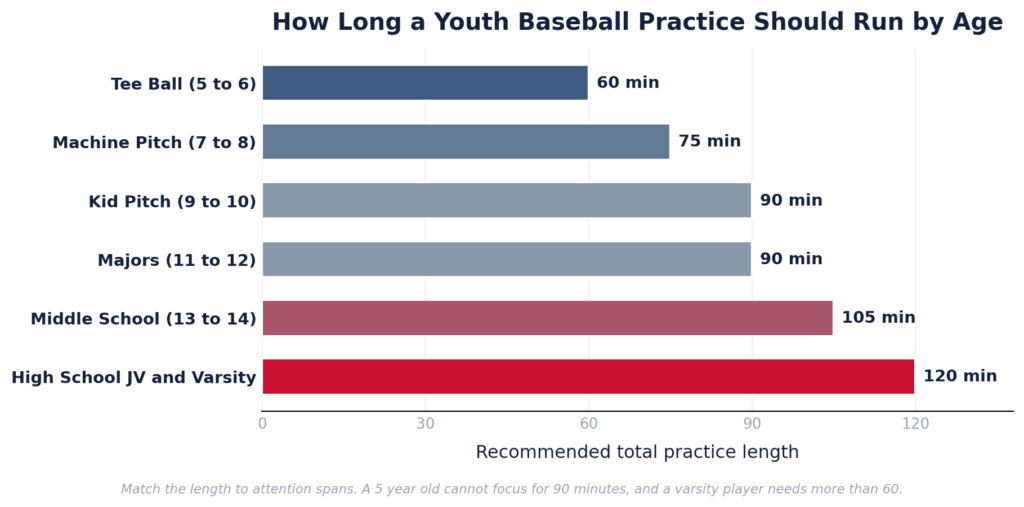
| Division | Ages | Length | Main Focus | Key Constraint |
| Tee Ball | 5 to 6 | 60 min | Fun and fundamentals | Tiny attention spans |
| Machine Pitch | 7 to 8 | 75 min | Contact and catching | Still short focus |
| Kid Pitch | 9 to 10 | 90 min | Real baseball, pitching starts | Pitch counts |
| Majors | 11 to 12 | 90 min plus | Game situations and IQ | Playing at game speed |
| Middle School | 13 to 14 | 105 min | Competitive reps | Conditioning begins |
| High School | JV and Varsity | 120 min | Position specific work | Time and intensity |
Tee Ball (5 to 6): The 60 Minute Version
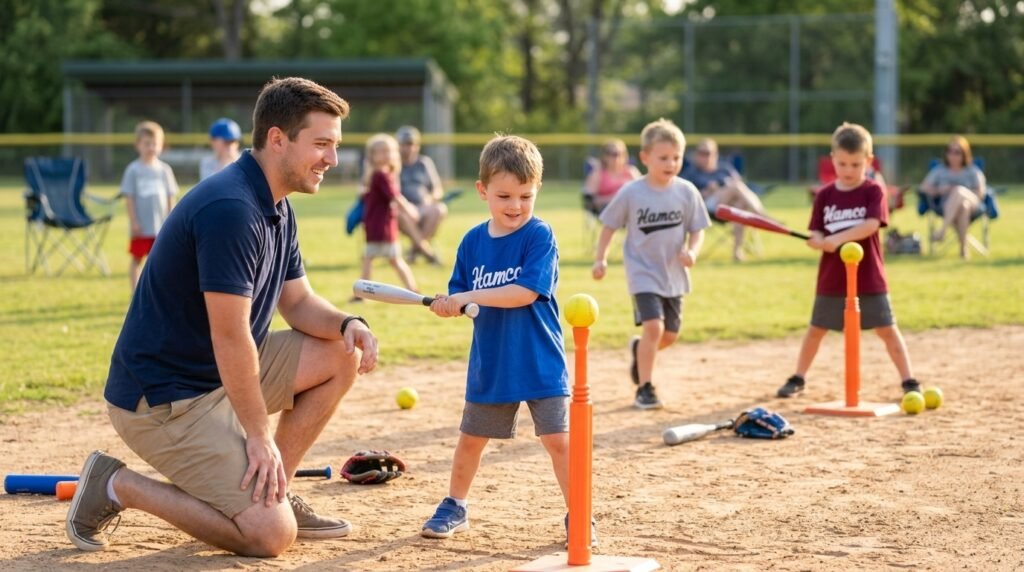
At this age, fun is the entire curriculum, and the attention span is measured in single minutes. Keep every block short, keep everyone moving, and end before they melt down. A tee ball practice that runs longer than 60 minutes does more harm than good. Rotate fast and never make a 5 year old wait in a line.
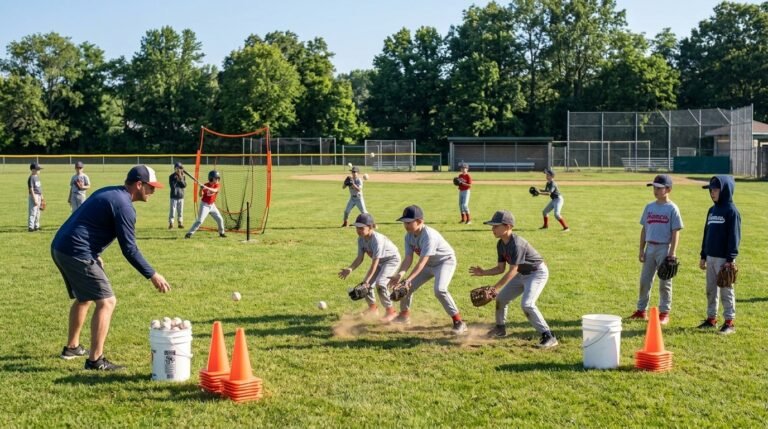
0 to 10 min Warmup with a running game, red light green light or simple tag, then a quick partner catch.
10 to 25 min Hitting off the tee at two or three stations, a coach or parent at each, so every kid swings constantly.
25 to 40 min Fielding and throwing basics, rolling ground balls and short tosses in small groups.
40 to 50 min Running the bases, teaching which way to run and how to touch each bag, as a race or relay.
50 to 60 min A fun game or scrimmage to end, all glove side high fives, no standings.
Coach’s note: at this age, half your job is keeping kids engaged and half is keeping parents patient. Progress looks like a kid who can catch a rolled ball and run to the right base, nothing more. Do not run a formal batting order or keep score, and if a drill is not working, drop it and move on rather than forcing it. The single biggest mistake at tee ball is treating a 5 year old like a small high schooler.
Machine Pitch (7 to 8): 75 Minutes
Machine pitch is where real baseball starts to take shape. The focus shifts to making contact off a pitched ball and to catching and throwing with purpose, but the attention span is still short, so stations remain your best friend. Add 15 minutes over tee ball, not more.
0 to 10 min Dynamic warmup and partner throwing, teaching a proper crow hop early.
10 to 30 min Fielding stations, ground balls and short fly balls in groups of four or five.
30 to 50 min Hitting off the machine at one station while others do tee and soft toss, then rotate.
50 to 62 min Baserunning, running through first base and reading a coach at each bag. Proper gear matters as contact picks up, which our
practice gear guide lays out.
62 to 75 min A short scrimmage or a situational game to finish.
Coach’s note: machine pitch is the year to build clean throwing habits before arms get stronger and mistakes get expensive. Spend real time on the crow hop and on catching with two hands. Hitting a machine pitched ball is hard and frustrating, so celebrate contact loudly and keep the machine speed low enough that kids succeed more than they fail. Confidence built here carries into kid pitch.
Kid Pitch (9 to 10): 90 Minutes
Kid pitch is the big jump. Now players pitch to each other, which changes everything, and the practice grows to a full 90 minutes because the attention span finally supports it. This is the first plan that has to carve out real time for pitching, and pitchers work under strict pitch counts even in practice. For teaching the delivery safely, our guide to teaching pitching walks through the mechanics and the arm care rules. Budget more time than you think you need here, because teaching a brand new pitcher to throw strikes safely is slow work that cannot be rushed.
0 to 15 min Warmup, throwing progression, and arm care for pitchers.
15 to 35 min Fielding, adding cutoffs, relays, and position specific ground balls.
35 to 45 min Pitchers and catchers work as a battery at one station while fielders take reps.
45 to 70 min Hitting in stations, tee, soft toss, and live or machine at bats.
70 to 80 min Baserunning, leadoffs where allowed, and reading a ball in the dirt.
80 to 90 min Situational scrimmage, playing out real game scenarios.
Coach’s note: the hardest part of a kid pitch practice is that pitching eats time and attention, and it is easy to let the other 11 players stand around watching one kid throw. Solve it with a dedicated battery station off to the side so pitchers and catchers work while everyone else takes live reps. Track practice pitches the same way you would in a game, since a young arm does not know the difference between a practice pitch and a game pitch.
Majors (11 to 12): 90 Minutes Plus Situational Work
At the Majors level the skills are in place, so practice shifts toward baseball IQ: where to throw, when to cover, how to read a situation. The length stays around 90 minutes, but more of it goes to game speed situational work than at any younger level. This is where you turn a group of players into a team. Knowing which players fit which spots matters now, and our position difficulty ranking helps you place them.
0 to 15 min Warmup, throwing, and pitcher and catcher prep.
15 to 35 min Defensive work, cutoffs, relays, rundowns, and bunt coverage as a full infield.
35 to 55 min Hitting stations with a situational focus, hit and run, moving a runner over.
55 to 75 min Team situational reps, first and third plays, pop up priority, and communication.
75 to 90 min Controlled scrimmage with coaches stopping play to teach the read.
Coach’s note: this is the age to stop the scrimmage and teach. A controlled scrimmage where you freeze the play and ask where the ball should go is worth more than an uninterrupted game. Rotate players through positions rather than locking an 11 year old into one spot forever, because the kid stuck in right field this year might be your best shortstop next year if you give them the reps.
Middle School (13 to 14): The Move to Competitive Practices
Middle school is the transition to a competitive practice. Players can now handle a longer session, around 105 minutes, and conditioning enters the plan for the first time as a real block. The standards rise, the reps get sharper, and situations get more complex. This is also where breaking balls may enter the picture for pitchers who have earned them, always within pitch counts.
0 to 15 min Dynamic warmup and a throwing program, with real arm care structure.
15 to 40 min Individual defense by position group, infield, outfield, and battery split up.
40 to 65 min Hitting with a plan, situational hitting and two strike approach in the cage or on the field.
65 to 90 min Team defense and situational scrimmage at game speed.
90 to 105 min Conditioning, short sprints and agility, ending the practice with a competitive edge.
Coach’s note: the jump to competitive practice is as much mental as physical. Players can handle being coached hard now, but they also burn out if every session is a grind, so protect the fun that got them here. Conditioning should build baseball movement, short sprints and agility, not punish laps. And keep tracking arms carefully, because 13 and 14 year olds are at the age where overuse injuries start showing up.
High School JV and Varsity: 2 Hour Blocks
At the high school level, practice becomes a 2 hour block of focused, position specific work. Players warm up on their own before the whistle, conditioning is a given, and the coach’s job is to run tight, efficient stations that leave no wasted time. The plan below is a template that a JV or varsity staff adjusts by the day, heavier on defense early in the week and on situations closer to a game.
0 to 20 min Team warmup, throwing program, and pitcher bullpens off to the side.
20 to 45 min Individual defense, position specific footwork and reps run by position coaches.
45 to 75 min Batting practice rounds with a purpose, situational hitting, bunts, and hit and runs.
75 to 100 min Team defense and full situational work at game speed.
100 to 120 min Conditioning and a competitive finisher, baserunning or a situational scrimmage.
Coach’s note: at the varsity level, efficiency is everything, because you have more to cover and the same two hours. Post the plan so players know where to be, run position coaches at parallel stations, and hold a standard for effort. The best high school practices feel fast, with players sprinting between stations rather than walking, so that game speed becomes a habit long before the first pitch.
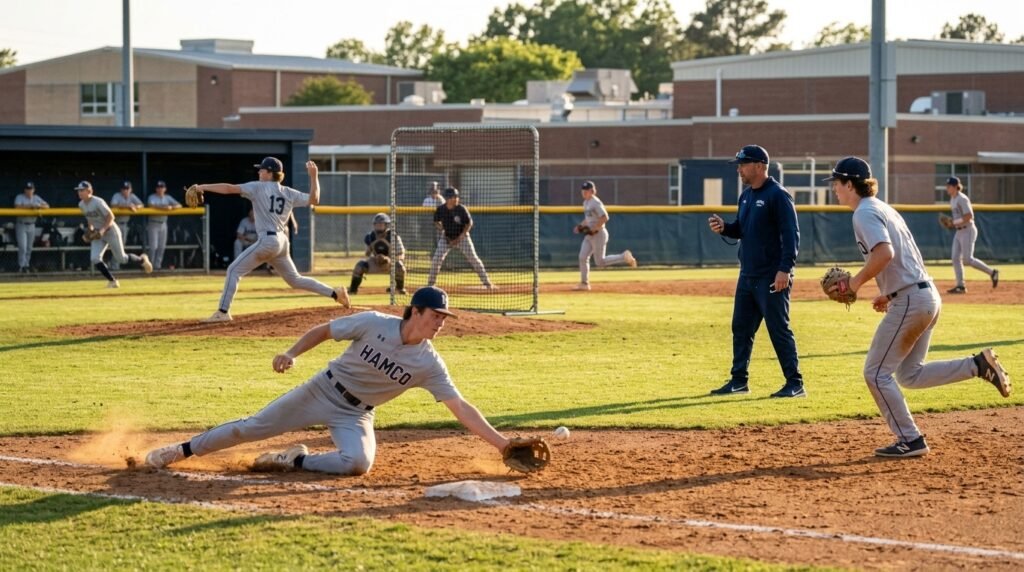
Practice is where uniforms take their worst beating, which is why smart programs keep practice kit separate from game sets. Our team uniforms include durable practice jerseys and two color reversibles that make splitting a squad for scrimmage instant, no pinnies required. Keep the game sets fresh for game day and outfit the whole roster in matching baseball apparel, with custom numbering, a free mockup, and about a three week turnaround.
Frequently Asked Questions
Q: How long should a youth baseball practice be?
A: Match it to age: about 60 minutes for tee ball, 75 for machine pitch, 90 for kid pitch and Majors, around 105 for middle school, and up to 120 for high school. Longer is not better for young players.
Q: What should a youth baseball practice plan include?
A: A warmup, then throwing, fielding, and hitting run as stations, then baserunning, ending with a game or scrimmage. The same template works at every age, just with different length and pace.
Q: How do you structure a tee ball practice?
A: Keep it to 60 minutes with very short blocks and constant movement. Use running games, tee stations, basic fielding, and a fun game to end, and never make a 5 year old wait in a line.
Q: What is a good baseball practice schedule for kid pitch?
A: A 90 minute plan that adds real pitching. Build in a throwing and arm care warmup, a battery station for pitchers and catchers within pitch counts, fielding with cutoffs, hitting stations, and a situational scrimmage.
Q: How often should a youth baseball team practice? A: For most rec teams, once or twice a week plus a game is plenty. Travel and high school teams practice more, but even then, quality and rest matter more than piling on sessions, especially for young arms.