The balk is the most confusing call in baseball, and anyone who tells you otherwise is bluffing. Coaches argue it, parents have no idea what just happened, and even professional umpires disagree on borderline cases. Part of the reason is that the rulebook does not describe one clean action. It describes 13 different ways a pitcher can break the rule, and most of them come down to a single judgment call: did the pitcher try to deceive the runner illegally? That word, deceive, is doing a lot of work, and it is why no two umpires call balks exactly alike.
So what is a balk in baseball, in plain terms? A balk is an illegal motion by the pitcher when at least one runner is on base. The penalty is automatic: every runner moves up one base. The whole rule exists to protect runners from being tricked by a pitcher who starts his delivery and then does something else, like throwing to a base or stopping cold. With nobody on base, a balk cannot happen (an illegal motion with the bases empty is usually just called a ball instead). Everything below assumes there is at least one runner aboard.
This guide walks through the two legal starting positions, all 13 ways to balk, what happens after the call, and the specific balks that wreck young pitchers most often. If you want the wider context, our full rules guide covers the calls that confuse parents the most, and the balk is near the top of that list.
The Two Starting Positions: Windup and Set
Before you can understand a balk, you have to understand where a legal pitch starts, because almost every balk is a violation of one of these two positions.
The windup is the full, big motion pitchers use mostly with the bases empty. Once a pitcher begins it, he is committed to delivering the pitch to the plate. He cannot stop, change his mind, or throw to a base out of the windup without balking.
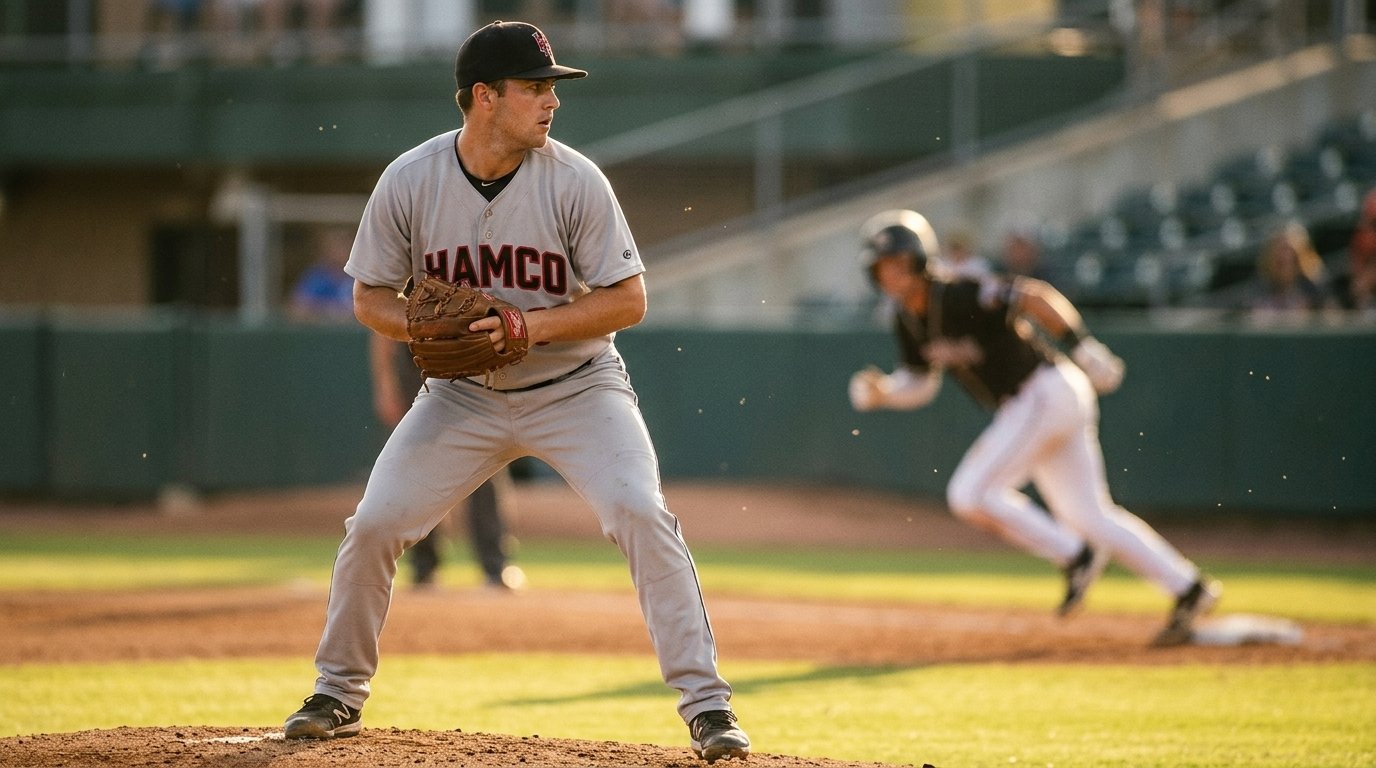
The set position, also called the stretch, is what most pitchers use with runners on base because it is quicker to the plate. From the set, the pitcher must come to a complete and discernible stop with the ball held in both hands before he delivers. That pause is the single most important requirement in the entire rule, and it is the one young pitchers blow constantly. From the set he may also throw to a base for a pickoff, but only with the footwork covered below.
Here is the honest truth: the difference between a legal pickoff and a balk often comes down to inches and timing that happen faster than the eye can track, which is exactly why the call is so contested. It is also why many youth divisions sidestep the whole problem. In leagues where runners cannot lead off until the ball reaches the batter, balks rarely come up at all, and the way the call is handled in Little League rules is not identical to what a high school or travel umpire enforces.
The 13 Ways a Pitcher Can Balk
The official rule lists 13 distinct illegal actions. Here is every one in plain language, with the deception each is meant to prevent.
- Starting the pitching motion and not finishing it. While on the rubber, the pitcher begins any motion associated with his pitch and then does not deliver the ball to the batter. This is the classic flinch.
- Faking a throw to first base. While on the rubber, the pitcher feints a throw to first base without completing it. Faking to first is illegal. Faking to second or third is treated differently and is legal under specific footwork.
- Throwing or faking to a base without stepping toward it. The pitcher must step directly toward a base before throwing there. Throwing to first while his stride foot goes toward home is a balk.
- Throwing to an unoccupied base. The pitcher throws or fakes to a base that has no runner on it and no runner trying to reach it, unless he is genuinely making a play.
- Throwing an illegal pitch. This includes a quick pitch, where the pitcher delivers before the batter is reasonably set in the box.
- Pitching while not facing the batter. The pitcher delivers the ball while not squarely facing the hitter.
- Making a pitching motion while off the rubber. The pitcher goes through a motion associated with the pitch while not touching the rubber.
- Unnecessarily delaying the game. The pitcher stalls on the mound without reason.
- Faking a pitch without the ball. The pitcher stands on or astride the rubber without the ball, or fakes a pitch while the ball is elsewhere. This is the hidden ball trick gone wrong.
- Removing a hand from the ball illegally. After taking the set position, the pitcher takes one hand off the ball except to actually pitch or to throw to a base.
- Dropping the ball while on the rubber. If the pitcher drops the ball while on the rubber and it does not cross a foul line, it is a balk.
- Pitching while the catcher is outside the box. On an intentional walk, the pitcher delivers before the catcher is in the catcher’s box.
- Pitching from the set without a complete stop. The pitcher delivers out of the stretch without that required full pause. This is the one you will see called more than any other.
Most balks you actually witness fall into just three or four of these: the flinch, the missing stop, the bad footwork on a pickoff, and the fake to first. The other nine are real but rare.
What Happens When a Balk Is Called
When an umpire calls a balk, the result is immediate. The ball is dead and every runner advances exactly one base: a runner on first goes to second, a runner on third scores. The batter usually stays at the plate with the same count, since a balk is not a pitch.
One honest wrinkle: in some rule sets, if the pitcher balks but delivers anyway and the batter puts the ball in play, the play may stand if the result helps the offense more than the one base award. The exact handling varies by rule set, which is one more reason the balk feels inconsistent.
The balk shares this trait with a few other rules that look automatic but hinge on judgment. The infield fly rule and the dropped third strike are the other two calls that empty the bleachers of confidence, and like the balk, they reward the team that knows the rule cold.
The Balk Calls Youth Pitchers Get Wrong Most Often
Here is where the honesty matters most, because youth pitchers lose games and rattle their confidence over balks that nobody ever taught them to avoid.
The complete stop from the set is the number one youth balk by a wide margin. Young pitchers get anxious with a runner on, rush their delivery, and never fully pause. Umpires at higher youth levels will ring them up every time. The fix is boring and effective: drill a deliberate one second stop in every bullpen until it is automatic.
The second most common is the flinch toward the plate, then aborting. A pitcher sees the runner break, panics, and twitches his shoulder or knee toward home before spinning to throw. That half motion is a balk. Once a pitcher starts toward the plate, he must finish.

The third is the lefty pickoff move to first. Left handed pitchers face the runner at first naturally, and the line between a legal pickoff and an illegal one (whether the lead leg crosses an imaginary 45 degree line toward home versus first) is genuinely murky. Even good umpires disagree, so lefties get away with moves that are technically balks all the time, and occasionally get called for moves that were clean.
Now the part most articles skip: enforcement is wildly inconsistent at the youth level, and that is not your imagination. Many beginner divisions barely call the balk at all, while higher youth levels suddenly enforce it strictly, and rules differ by organization. The practical takeaway for coaches is to teach the complete stop and clean footwork early, because the habits a pitcher builds at age 10 are the ones that will or will not balk him at 16, when the calls get strict. A few simple drilling tools, most of them in our youth baseball gear checklist, make that daily stop work easy to rep at practice.
The Short Version
A balk is an illegal deceptive motion with a runner on base, and the penalty is one free base for every runner. There are 13 official versions, but in real games you will mostly see four: the flinch, the missing complete stop, sloppy pickoff footwork, and the fake to first. The rule is genuinely vague at its core, umpires apply it unevenly, and youth enforcement is a coin flip below a certain level. Teach the stop, teach the step, and most balks disappear.
Frequently Asked Questions
What is a balk in baseball?
A balk is an illegal motion by the pitcher while at least one runner is on base, usually an attempt to deceive the runner. The penalty is automatic: every runner advances one base.
How many ways can a pitcher balk?
The official rulebook lists 13 separate illegal actions. In actual games, most balks come from just a few of them, especially failing to come to a complete stop from the set position.
Can you balk with no runners on base?
No. A balk requires at least one runner on base. The same illegal motion with the bases empty is typically called a ball instead, not a balk.
What is the most common balk in youth baseball?
Failing to come to a complete and discernible stop from the set position. Young pitchers rush their delivery with a runner on, and umpires at higher youth levels call it consistently.
Why are balk calls so inconsistent?
Because the rule hinges on whether a motion was deceptive, which is a judgment call. Borderline pickoff moves, especially by left handed pitchers, fall into a gray area where even experienced umpires disagree.
When it is time to outfit the staff, our full button baseball jerseys are cut for the throwing motion, part of our wider range of baseball uniforms built to survive a full season.
Pitchers wear out jerseys at the shoulder first. Ours are reinforced exactly there.