| Quick Answer A catcher does far more than catch pitches. The job rests on four pillars: receiving and framing pitches, blocking balls in the dirt, throwing out base stealers, and leading the defense by calling the game. The catcher is the only player who touches the ball on every pitch, sees the whole field, and manages the pitcher. It is the hardest and most mentally demanding position in baseball. |
Watch a game casually and the catcher looks like the player who just catches the ball and tosses it back. That view could not be more wrong. The catcher is involved in every single pitch, touches the ball more than anyone on the field, and carries a mental and physical load no other position comes close to. It is why our full position ranking puts catcher at the very top of the difficulty list. So what does a catcher do, exactly? This is the complete catcher position baseball guide, the honest breakdown of the job from the first pitch to the last out.
Before the details, the short version of the baseball catcher responsibilities. A catcher receives and frames pitches, blocks balls in the dirt, throws out runners trying to steal, and calls the game for the pitcher, all while wearing more equipment than anyone else. Managing that gear is a job in itself, which our gear checklist lays out. Master these responsibilities and you become the most valuable defensive player on the team. Here is what each one actually involves.
The Four Pillars: Receiving, Blocking, Throwing, Leading
Everything a catcher does falls into four pillars. Receiving is catching the pitch cleanly and presenting it well, the quiet, constant skill behind every pitch. Blocking is dropping to the knees to smother balls in the dirt so runners cannot advance. Throwing is retiring base stealers with a fast, accurate throw to second or third. And leading is the mental pillar: calling pitches, managing the pitcher, and running the defense. A catcher who is elite at one pillar but weak at another gets exposed, because the game always finds the gap. The table breaks down what each pillar demands and how it is measured.
| Pillar | What It Is | Key Skill | Measured By |
| Receiving | Catching and framing pitches cleanly | Soft, quiet hands | Called strike rate on the edges |
| Blocking | Smothering balls in the dirt | A quick drop to the knees | Passed balls and wild pitches allowed |
| Throwing | Retiring runners trying to steal | Pop time and fast footwork | Caught stealing percentage |
| Leading | Calling and managing the game | Baseball IQ and toughness | The pitcher’s results and command |
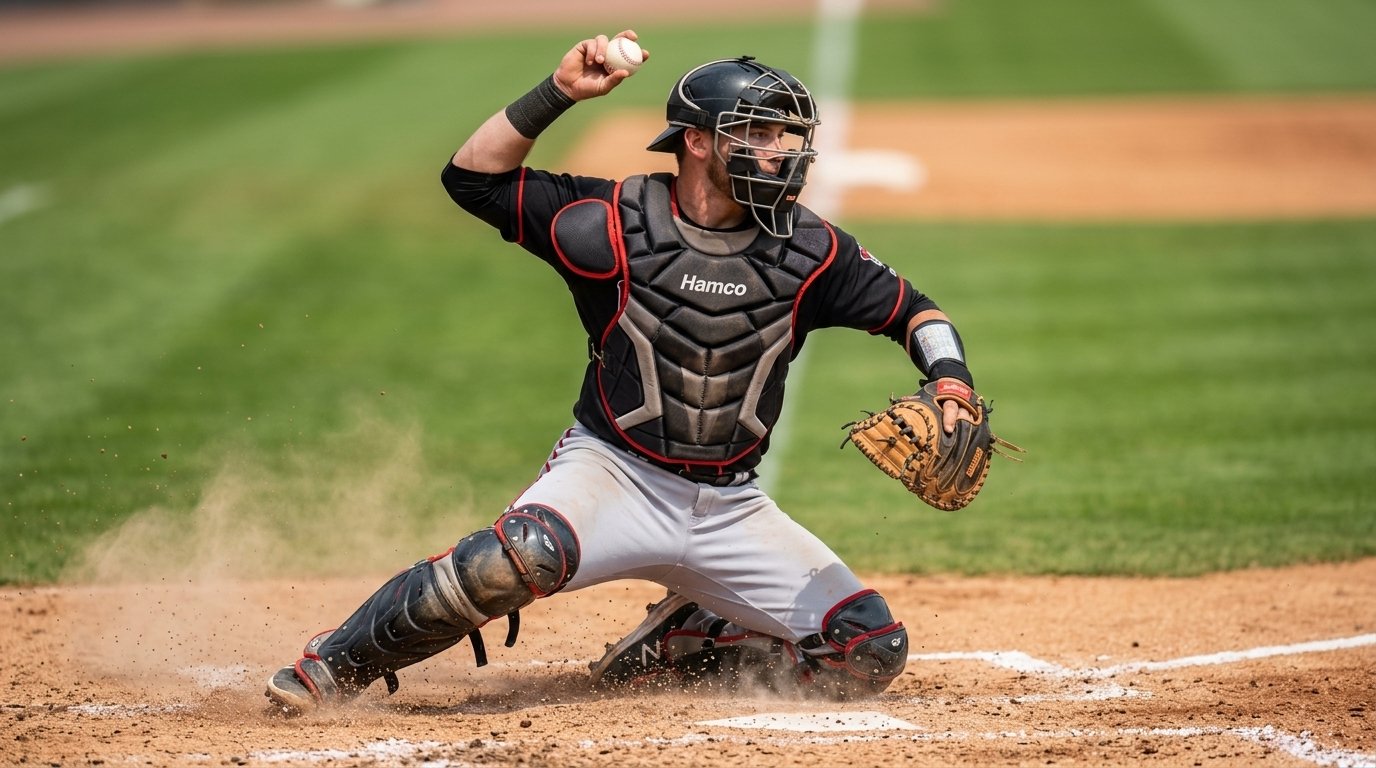
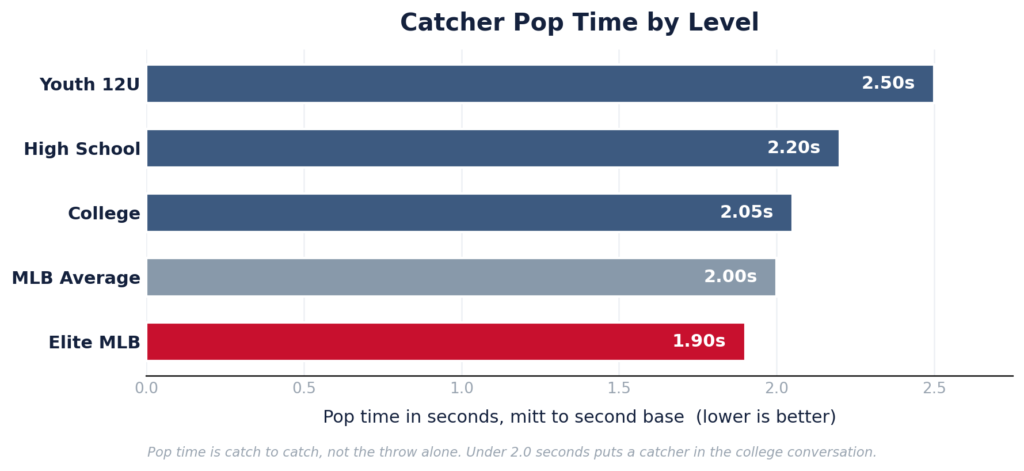
Of the four, throwing is the most visible, and it is measured by pop time: the seconds from the ball hitting your mitt to the fielder’s glove at second base, catch to catch, not the throw alone. It is the number scouts clock first. The chart shows the benchmark at each level, and the pattern is clear. Anything under 2.0 seconds puts a catcher in the college conversation.
Framing Pitches: What It Is and How Umpires Respond
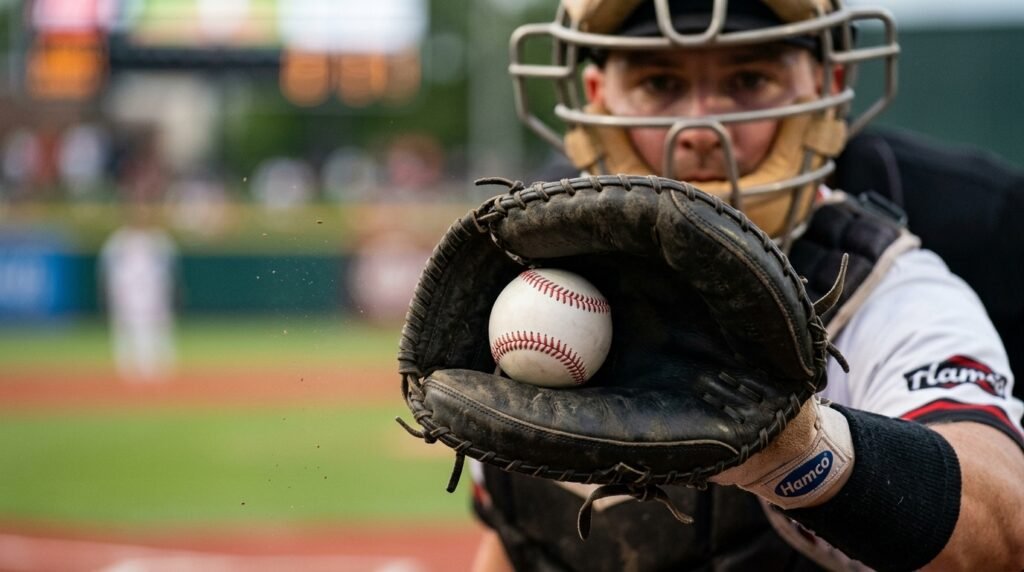
Framing, also called receiving, is the subtle art of catching a borderline pitch so it looks like a strike to the umpire. A skilled framer catches the outer half of the ball, keeps the glove quiet, and sticks the pitch in the zone without yanking it, turning a would be ball into a called strike. It sounds minor. It is not. Across a full season, a good framer steals enough strikes to change games and win jobs, which is why it became one of the most valued hidden skills in the sport, tracked closely at the professional level and visible over time if you know how to read a baseball box score. The honest caveat: the automated ball and strike system now being phased into the higher levels could reduce framing’s value, since a machine cannot be fooled by a quiet glove. For now, wherever a human calls balls and strikes, framing remains a real edge worth teaching from the first day a kid puts on the gear.
Blocking the Plate (Legally, After 2014)
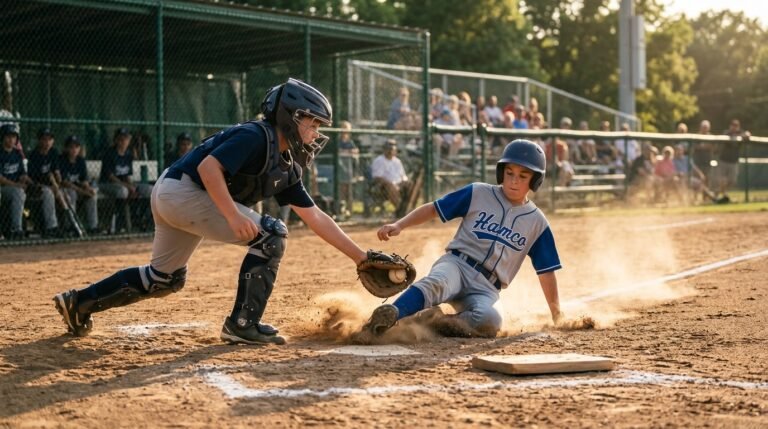
For most of baseball history, the play at the plate meant a violent collision, with the catcher planting in front of the plate and the runner trying to bowl them over. That changed after 2014. Following a severe injury to catcher Buster Posey in a 2011 collision, Major League Baseball introduced Rule 7.13, often called the Buster Posey rule, on February 24, 2014. It made it illegal for a runner to leave their path to initiate a collision, and equally illegal for a catcher to block the plate without possession of the ball. In practice, the modern catcher sets up to the side, gives the runner a lane, and swipes the tag as the ball arrives. Youth and high school baseball go further, with most leagues banning collisions outright and requiring the runner to slide. If you learned the position from old highlights, unlearn the blindside block at the plate. It is now a penalty, and more importantly, a needless injury.
Calling a Game: Working With Your Pitcher
This is the pillar that separates a good catcher from a great one, and the one nobody in the stands sees. Pitch calling is the heart of it: the catcher calls the game, choosing the type and location of every pitch through signs, or through an electronic device at the higher levels. That means knowing each hitter’s weakness, understanding what the pitcher throws best on that particular day, sequencing pitches so a hitter never gets comfortable, and reading the situation before every play. Just as important is the human side: a catcher manages the pitcher’s confidence, slows the game down with a mound visit when things speed up, and keeps a rattled arm calm. When a pitcher throws a perfect game, the catcher who called it deserves nearly as much of the credit. This is why so many catchers become coaches and managers. They have been running the game from behind the plate their whole careers.
The Pre Pitch Checklist Great Catchers Run
Before every single pitch, a good catcher runs a mental checklist in the two seconds between plays. It looks like this: How many outs are there? What is the count? Are there runners on, and how fast are they? What is this hitter likely to do here? What pitch and location do I want, and what is my backup plan if it gets away? Where should I position the defense? And if the ball is put in play, what is my job on the throw? Great catchers process all of that automatically, which is why the position is as much about anticipation as reflexes. A catcher thinking one pitch ahead is never surprised. A catcher who is not gets beaten by the game. Teaching a young catcher this checklist is worth more than any single drill, because it builds the habit of game management and leading that defines the position.
Gear, Body Wear, and Why Most Catchers Quit
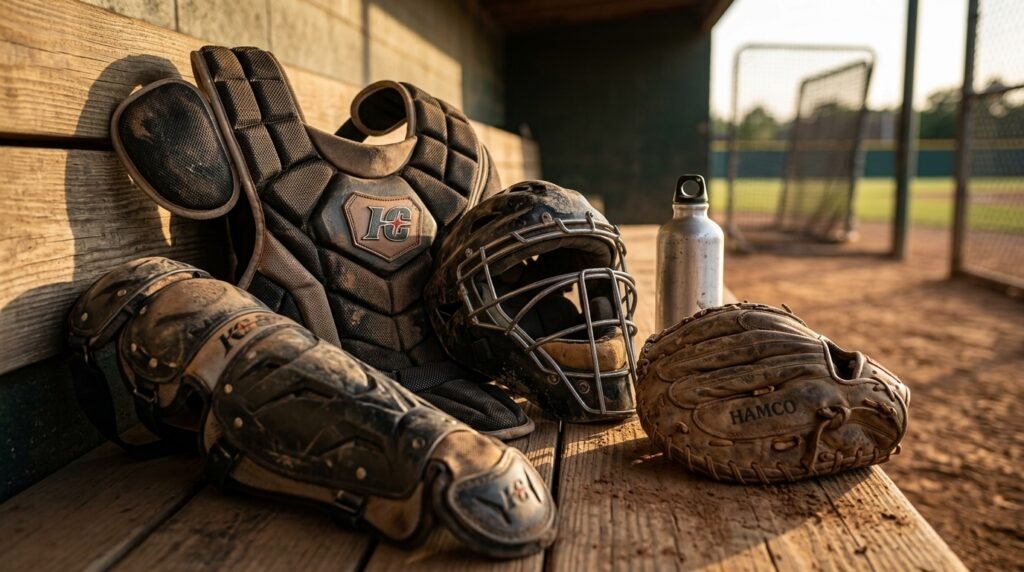
Now the honest part nobody tells a 10 year old who volunteers to catch. The catcher wears more gear than anyone: a mask or helmet, a chest protector, leg guards, a heavy mitt, a throat guard, and a cup, so much equipment that it is nicknamed the tools of ignorance. And that gear is protecting a body that takes a real beating. The catcher squats into a deep crouch for 120 or more pitches a game, which grinds on the knees and back across a season. Foul tips slam off the mask and the throwing hand. Backswings, blocked balls, and the occasional collision all land on the catcher.
This is why most kids who start catching young move off the position by their mid teens, their knees or their interest worn out. It is also why smart coaches manage a young catcher’s workload, sitting them a game or splitting the position rather than catching one kid every inning of every doubleheader. But if a young catcher sticks with it and stays healthy, the position is the fastest track to being seen, because every college scout at a travel ball tournaments event watches the catcher first. The demand is brutal, and so is the reward.
Catcher gear takes more abuse than any kit in baseball, and it needs a uniform that can keep up. Our catcher friendly uniforms are cut to fit over a chest protector and leg guards without binding in the deep squat, built from durable sublimated fabric that survives a full season of dirt, sweat, and blocked balls. Outfit the whole team in matching baseball apparel, from the catcher to the outfield, with custom numbering and a free mockup. Order a full team set built for the way each position actually moves.
Frequently Asked Questions
Q: What does a catcher do in baseball?
A: A catcher receives and frames pitches, blocks balls in the dirt, throws out runners trying to steal, and calls the game for the pitcher. It is the only position involved in every pitch.
Q: What are the main baseball catcher responsibilities?
A: The four pillars: receiving, blocking, throwing, and leading. On top of the defense, the catcher manages the pitcher and runs the field like a coach on the grass.
Q: Is catcher the hardest position in baseball?
A: Yes. It combines the most physical work, catching every pitch in a deep squat, with the mental job of calling the game, so nothing else on the field compares.
Q: What is a good pop time for a catcher?
A: The MLB average is about 2.0 seconds and elite catchers dip near 1.9. Youth catchers run 2.4 to 2.5 and high schoolers around 2.2. Under 2.0 draws college interest.
Q: Why do so many kids stop catching? A: The physical toll. Squatting for a full game, foul tips, and blocked balls wear down the knees and body, so many young catchers move off the position by their mid teens.