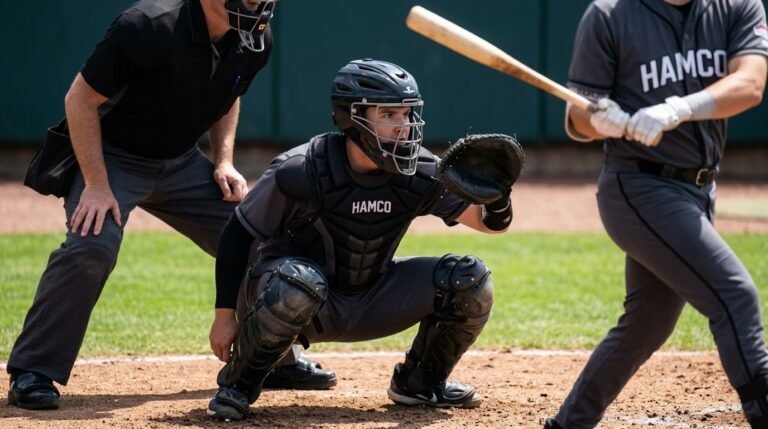
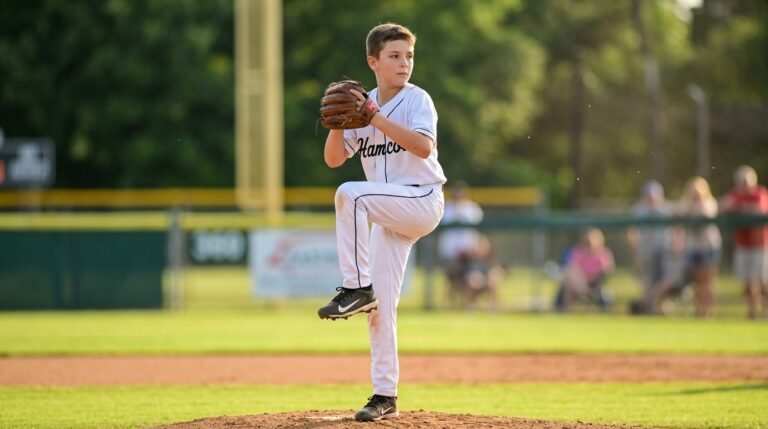
A regulation baseball game is 9 innings in MLB and college, 7 in high school, and 6 in Little League Majors and below.
| Quick Answer A regulation college baseball game is 9 innings, the same as MLB. The exceptions are doubleheaders, where each game is cut to 7 innings by conference rule, and blowouts, where a 10 run mercy rule can end a game after 7 innings if the conference has adopted it. High school games are 7 innings and Little League Majors and below play 6. So how many innings in college baseball is 9, with a few honest asterisks. |
It sounds simple, and mostly it is: a college baseball game is 9 innings. But if you have watched a doubleheader end after 7, or a lopsided game called early, you know the real answer has footnotes. For a high school player weighing college ball, or a parent planning a Saturday at the ballpark, those footnotes matter. They even decide whether a rare feat like a perfect game needs 9 clean innings or 7. Here is exactly how many innings college baseball plays, and how it compares to high school and the majors.
Before the details, the short version. How many innings in a college baseball game? Nine in a standard game, seven in a doubleheader. High school plays seven, MLB plays nine, and Little League Majors and below play six. If you are learning to follow along inning by inning, our guide to reading a baseball box score shows how the innings actually stack up on paper. Now the full picture, level by level.

The Standard 9 Inning Game (and Where It Applies)
Under NCAA rules, a regulation game is 9 innings. That is the answer to how many innings are in college baseball for the vast majority of games, and it holds across Division 1, 2, and 3. The 9 inning standard matches Major League Baseball, which is part of why college is the closest amateur mirror of the pro game. The home team does not bat in the bottom of the 9th if it is already ahead, so a home win technically runs 8 and a half innings. Everything else here is an exception to this baseline, so fix the number 9 in your head first.
Seven Inning Doubleheader Games
The most common exception is the doubleheader. When two teams play twice in one day, conferences almost always schedule each game at 7 innings rather than 9, by rule or agreement, to protect pitching staffs across a demanding spring. In those games the rules that normally apply to the 9th inning apply to the 7th instead. It is worth knowing for recruiters and parents, because a player’s weekend stat line might come from two 7 inning games rather than one 9 inning game, which changes how you read the numbers.

The Mercy Rule in College Baseball
College baseball has a mercy rule, but it is not automatic or universal. NCAA rule 2-79 lets a game be stopped after 7 innings if one team leads by 10 or more runs, but only by conference rule or if both coaches agree before the game. The SEC adopted a 10 run rule for conference games in 2023. Other conferences and college levels set their own run rules, so check your conference. The honest catch every recruit should know: NCAA tournament games are played to the finish. Programs starting a youth league set their own run rules the same way, by local agreement.

High School Inning Counts, State by State
High school baseball is shorter. Under NFHS rules, a regulation high school game is 7 innings, not 9, so games get longer when a player moves up to college. High school uses a mercy rule too, but each state association sets its own thresholds. The exact thresholds vary state by state, so a player moving across state lines should check the local rule. For families gearing a player up for that step, our equipment checklist covers what changes as the level rises.
Extra Innings and Tiebreakers
When a game is tied after the final regulation inning, it goes to extra innings, and the levels split again. MLB now starts each extra inning with a runner on second base in the regular season, a rule that does not apply in the playoffs. College generally plays traditional extra innings, full frames until someone wins, though some conferences use a runner on base tiebreaker in the regular season. The NCAA Tournament uses traditional extras with no tiebreaker. High school is the most varied, with many states placing runners on base after a set inning to protect young pitchers and avoid marathons. If you are chasing high level competition where these rules come into play, our list of travel ball tournaments points to the events that run under strict college style formats.
A Quick Reference Table
Here is every level in one place, so you can settle the how many innings do they play in college baseball question at a glance, alongside high school, youth, and the majors.
| Level | Regulation | Doubleheader | Mercy Rule | Extra Innings |
| MLB | 9 | 9 | None | Runner on 2nd base, regular season |
| College (NCAA) | 9 | 7 | 10 runs after 7, by conference rule or agreement; not in the NCAA tournament | Traditional, some tiebreakers by conference |
| High School (NFHS) | 7 | 7 | Set by each state | State tiebreakers common |
| Little League Majors and below | 6 | 6 | 15 after 3, 10 after 4 | Varies by league |
| Little League Intermediate (50/70), Junior and Senior | 7 | 7 | 15 after 4, 10 after 5 | Varies by league |
In Little League, the run rule is mandatory in tournament play, and in the regular season the local league decides; some local leagues also use an 8 run rule after 5 innings (after 6 in Intermediate, Junior and Senior League). Our guide to youth league rules covers every division. Rules checked October 26, 2026 against MLB’s 2026 Official Baseball Rules, the NCAA run rule (rule 2-79) and Little League’s regular season and run rule pages.
Making the jump from high school to college ball is a real step up, and looking the part is part of feeling ready. Our custom baseball uniforms come in the classic college and pro look, with full button jerseys at the center of it. Outfit the whole roster in matching baseball apparel, with a free mockup within 12 hours and uniforms ready 2 to 3 weeks after design approval. Shipping to US teams takes 3 to 5 days after that, so work back from opening day: for a season opener on Saturday, March 20, 2027, approve your design by Saturday, February 13, 2027. That covers the 2 to 3 weeks of production, the 3 to 5 days of shipping and about a week to spare. Most baseball orders are approved after 1 to 2 rounds of mockup changes, so send your logo a few days before that date. It is the standard step up for a program that wants to look college ready.
Frequently Asked Questions
Q: How many innings are in college baseball?
A: A regulation NCAA game is 9 innings, the same as MLB. It applies across Division 1, 2, and 3.
Q: How many innings in a college baseball game during a doubleheader?
A: Seven. When teams play twice in one day, conferences schedule each game at 7 innings to protect pitching staffs.
Q: How many innings do they play in college baseball compared to high school?
A: College plays 9 innings in a standard game, while high school plays 7 under NFHS rules. Little League Majors and below play 6.
Q: Is there a mercy rule in college baseball?
A: Yes, by conference agreement. A game can end after 7 innings if a team leads by 10 or more runs, but NCAA tournament games are played to the finish.
Q: How many innings in baseball college versus the pros? A: Both college and MLB play 9 innings in a regulation game. The main difference is that college cuts doubleheader games to 7.
Q: How many innings are in an MLB game?
A: Nine. A regulation MLB game is 9 innings under rule 7.01 of the 2026 Official Baseball Rules. The home team skips the bottom of the 9th when it is already ahead, and a tie goes to extra innings.
Q: How many innings is a high school baseball game?
A: Seven. A regulation high school game is 7 innings under NFHS rules. Each state sets its own run rule, so check your state association.