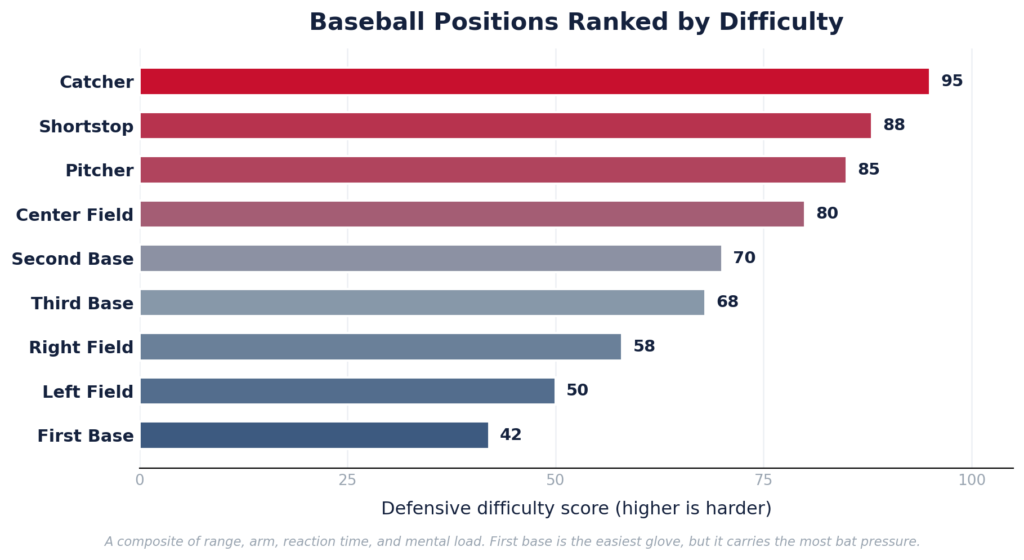
| Quick Answer The hardest position in baseball is catcher, with no real debate: it is the most physically and mentally demanding job on the field. Shortstop and pitcher come next. First base is the easiest position to field, though it carries the most pressure to hit. Here are all nine baseball positions ranked by difficulty, from hardest to easiest, with the reasoning for each. |
Why Ranking Positions by Difficulty Actually Matters
Every youth coach eventually faces the same problem: nine spots, a roster of kids with wildly different skills, and one afternoon to sort out who plays where. Ranking baseball positions by difficulty is not a bar argument. It is a coaching tool. Put your least experienced player at the hardest position and you set them up to fail in front of everyone. Put your best athlete at first base and you waste them. The demands also change what a player wears and carries, since a catcher’s kit looks nothing like an outfielder’s, as our gear by position guide lays out. Understanding the difficulty order lets you match players to spots on purpose instead of by guesswork.
A quick word on how this ranking is built. Difficulty here means defensive difficulty: how much ground a position covers, how hard and how fast the throws are, how quickly a player must react, and how much mental load the job carries. Baseball people have a name for this idea, the defensive spectrum, which lines the positions up from the most demanding to the least and helps explain why a shortstop can slide to second base far more easily than the reverse. It is not about which position is most important, since every spot matters, and it is not purely about the bat. If you track how often each position touches the ball across a game, which our guide to reading a baseball box score helps you do, the pattern behind this order becomes obvious. Now the ranking.
The Ranking (With Reasoning for Each)
Here is every position from hardest to easiest to play defensively, with each one’s scorekeeping number. The chart shows the same order as a difficulty score, and the sections below explain the reasoning for the spots that matter most.
| Difficulty | Position | No. | Why It Ranks Here |
| 1 (hardest) | Catcher | 2 | Squats every pitch, blocks, throws, and calls the game |
| 2 | Shortstop | 6 | The most range and the hardest throws in the infield |
| 3 | Pitcher | 1 | Carries the workload and the arm strain alone |
| 4 | Center field | 8 | The most ground to cover, captains the outfield |
| 5 | Second base | 4 | Turns the double play with a runner bearing down |
| 6 | Third base | 5 | The hot corner, fast reactions and a long throw |
| 7 | Right field | 9 | Needs the strongest outfield arm |
| 8 | Left field | 7 | Fewer defensive demands, often hides a big bat |
| 9 (easiest glove) | First base | 3 | Easiest glove, but the bat has to produce |
Catcher: The Most Demanding Role on the Field
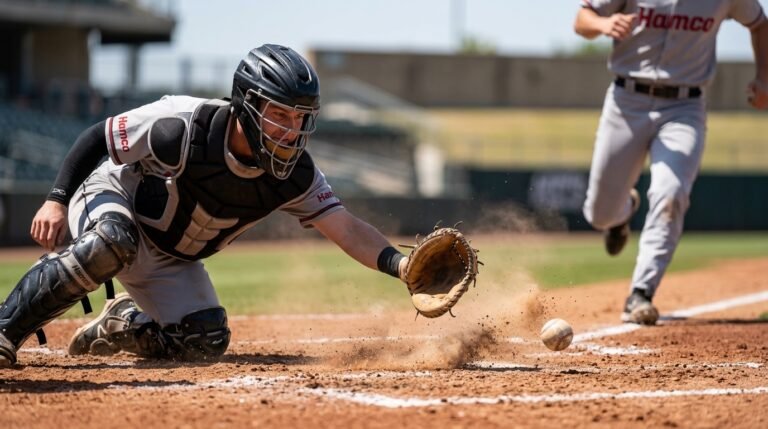
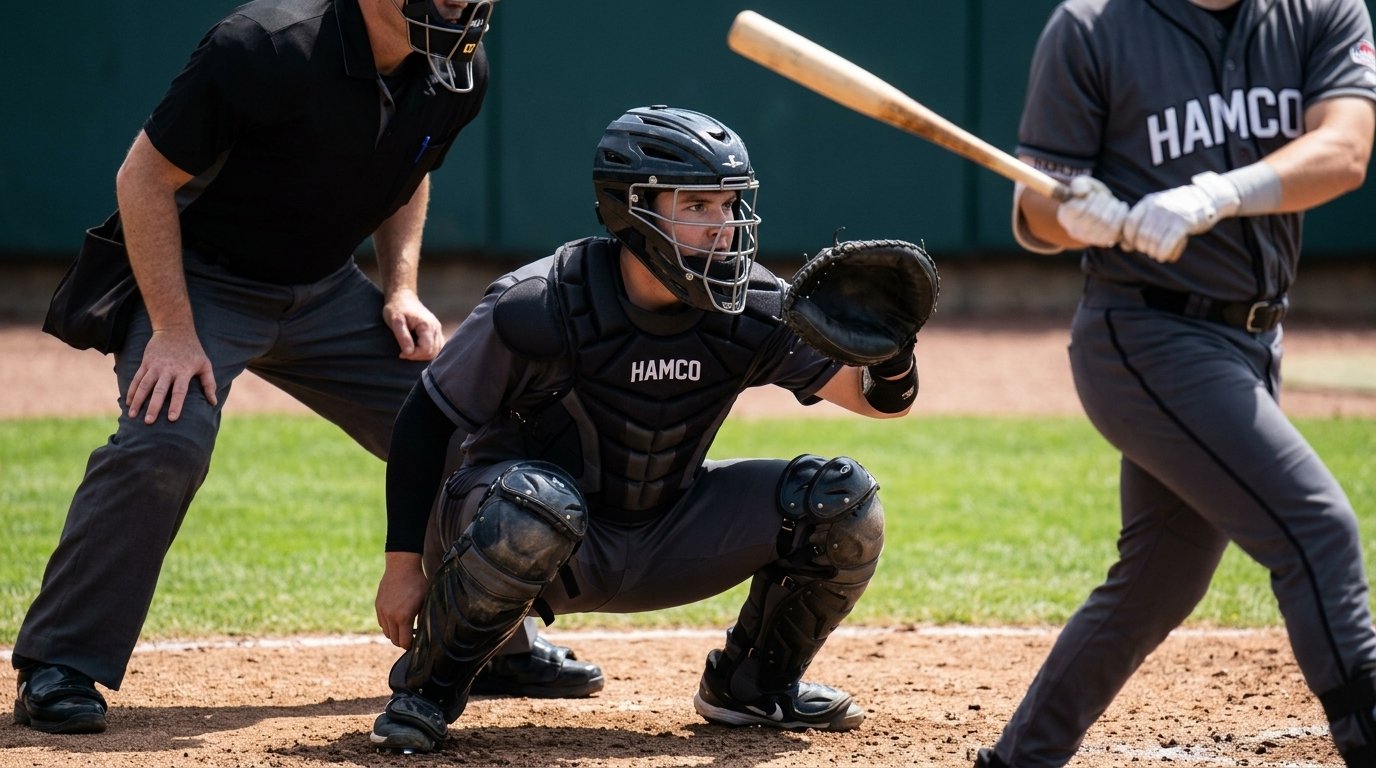
Catcher is the hardest position in baseball, and it is not close. No other player works as hard on a single pitch, let alone across a full game. The catcher squats into a crouch for every one of the 120 or more pitches in a game, a physical toll no other position comes close to matching. On top of that, the catcher blocks balls in the dirt with their body, frames borderline pitches to steal strikes, throws out runners trying to steal second on a two second clock, fields bunts, covers the plate on collisions, and manages foul tips off the mask all game long.
Then there is the mental side, which is the part casual fans miss. The catcher calls the game, choosing every pitch and location, reading hitters, and managing the pitcher’s confidence inning by inning. A great catcher is a coach on the field, which is why the position produces so many future managers. It is the one job that demands elite hands, a strong and accurate arm, real toughness, and a baseball brain all at once. When a battery throws a perfect game, the catcher’s game calling is as responsible as the pitcher’s arm. Put your smartest, toughest, most durable athlete here.
Shortstop: The Brain of the Infield
Shortstop is the second hardest position and the premium spot in the infield, which is why the best all around athlete on almost every team ends up there. The shortstop covers more ground than any other infielder, ranging deep into the hole toward third and across the middle behind second base. The throws are the hardest in the infield too: a shortstop often catches the ball moving away from first base and has to plant and fire across the diamond on the run, sometimes from the outfield grass.
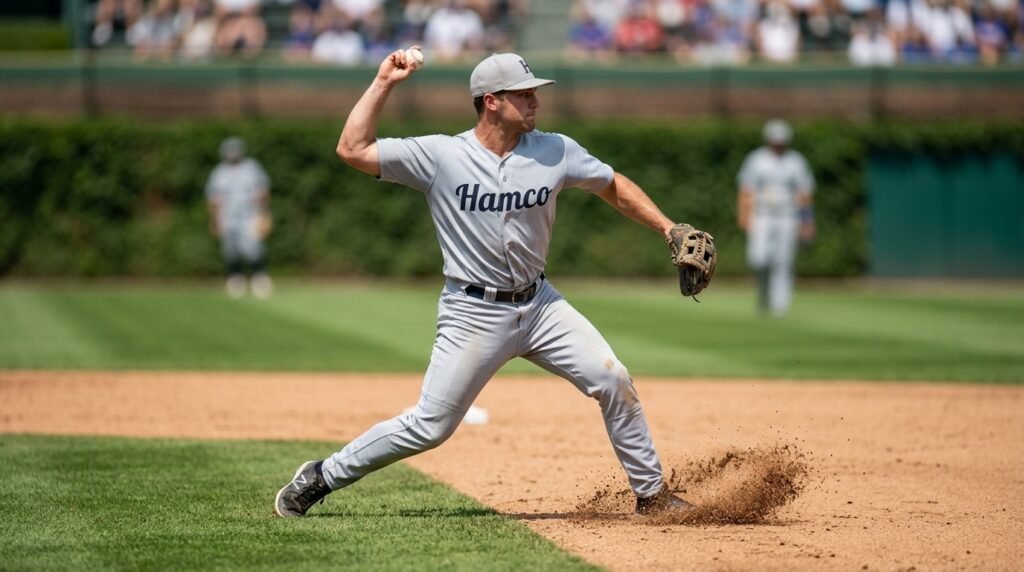
The shortstop is also the infield’s quarterback. They position teammates, relay signals, cover second on steals, anchor the double play, and take charge on relays from the outfield. It is a job that rewards range, arm strength, quick hands, and instant decision making in equal measure. If catcher is the hardest job overall, shortstop is the hardest pure fielding position, and a strong one changes an entire defense.
Pitcher: The Workload Nobody Else Carries
Pitcher ranks third, and it is really a different sport bolted onto baseball. A pitcher is not judged by range or reaction time but by the single most physically stressful athletic act in the game, throwing a baseball 80 to 95 miles an hour with maximum intent, dozens of times, with the whole defense waiting on them. Every play starts with the pitcher, and the arm strain is so severe that it is the one position with strict pitch counts and rest rules to protect young players from injury.
Beyond the arm, a pitcher has to field their position, cover first base, hold runners, back up bases, and execute pickoffs and pitchouts, all while managing the mental grind of attacking hitters one pitch at a time. There are rules that exist only for pitchers, like the balk, and understanding the balk rule is part of learning the position. We rank it third rather than first only because a pitcher throws roughly every fifth day, while a catcher and shortstop grind every single inning of every game.
Center Field: The Captain of the Outfield
Center field is the hardest outfield position and the fourth hardest overall, because it combines the most ground to cover with real leadership. The center fielder has to run down balls in both gaps, which means covering more square footage than anyone else on the field, and they need the speed and reads to do it. On any ball hit to the outfield, the center fielder has priority and calls off the corner outfielders to avoid collisions, so they captain the outfield the way the shortstop captains the infield.
The position rewards pure speed, elite reads off the bat, and the range to turn gap doubles into outs. The arm matters less than it does in right field, but the range requirement is the highest on the grass, and a great center fielder makes the two corner outfielders look better than they are by swallowing everything in between. This is where you put your fastest, most athletic outfielder, the one who can cover for weaker corner defenders on either side and take charge when a ball splits the gap.
First Base: Easier Glove, Harder Bat
First base is the easiest position to field, which is exactly why it is the most misunderstood. The first baseman has the shortest throws, the least ground to cover, and the simplest primary job: catch throws from the other infielders to record outs. A good first baseman does add real value by scooping low throws out of the dirt and stretching to shave a split second off a play, and left handed players have a slight edge here, but the defensive bar is the lowest of any position.
Here is the honest tradeoff, and the reason easiest glove does not mean easy job. Because the defensive demands are low, first base carries the highest offensive expectation on the field. It is traditionally where teams put a big, powerful bat, so a first baseman who cannot hit for power is not doing the job. The glove is forgiving, the bat is not. It is the right home for a strong hitter whose foot speed or arm does not fit a tougher position, which is a common and smart way to keep a great hitter in the lineup. If you are choosing baseball vs softball uniforms or cuts for a corner power hitter, room to move through the swing matters more than a slim fielding cut.
Left Field, Right Field, Second Base, and Third Base: Where They Really Fit
The middle of the difficulty rankings is where coaches disagree most, so here is the honest placement for the remaining four spots. None of them are up the middle premium positions, but the gap between them is real, and getting it right keeps your best gloves where the game sends the most action.
Second base ranks fifth. It has less range responsibility than shortstop and shorter throws, which makes it easier, but it carries one genuinely hard task: turning the double play with a base runner sliding hard into the pivot. That takes nerve and quick feet, since the second baseman often has their back to the runner while catching and releasing in one motion. It is often where a team plays a smaller, quick infielder who is not quite a shortstop, and a good one is worth far more than the ranking suggests, because the double play is the most valuable defensive play in the game.
Third base, the hot corner, ranks sixth. It sits closest to right handed pull hitters, so balls arrive fast and with little reaction time, and it needs a strong arm for the long throw across the diamond. But it requires far less lateral range than shortstop, so a player with quick reflexes and a cannon arm can thrive there even without great speed.
Right field ranks seventh among the nine, ahead of left only because it demands the strongest outfield arm. A right fielder makes the longest throw in the game, all the way to third base, to stop runners from advancing. Left field ranks eighth and is the least demanding outfield spot: it sees plenty of balls from right handed pull hitters, but the throws are short, so it is the classic place to hide a big bat with a weaker glove. None of these four are easy in a vacuum, they simply ask for less than the spots above them.
How to Match a Young Player to the Right Position
Ranking the positions is only useful if it helps you place real kids, so here is the honest coaching logic. Start with your most complete athletes, the ones with hands, arm, and instincts, and put them up the middle: catcher, shortstop, center field, and second base. That spine, the up the middle defense, wins youth games, because that is where the most balls are hit and the most plays are made.
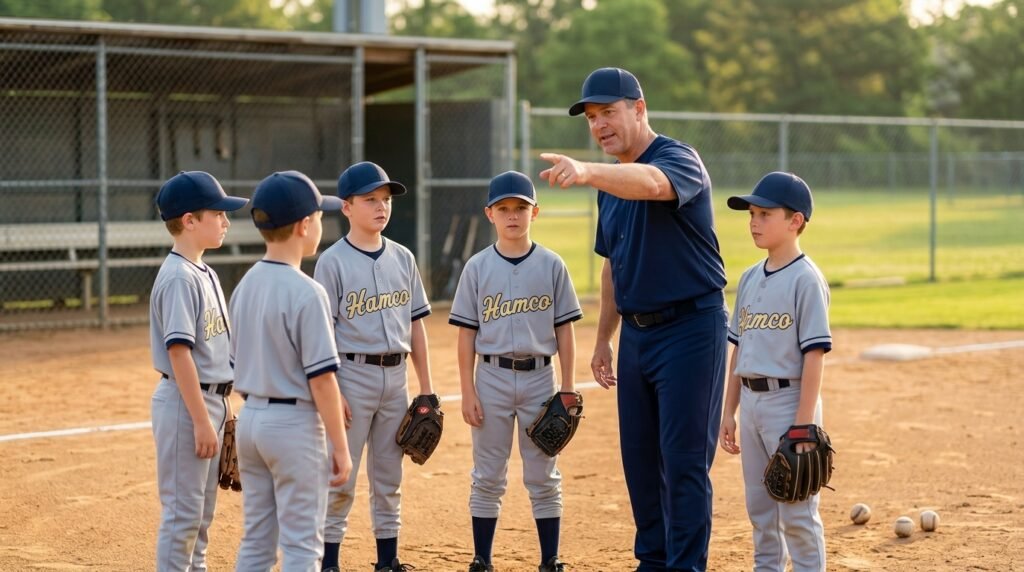
From there, place by specific tool. A strong arm but limited speed points to third base or right field. A big bat with an average glove fits first base or left field. A quick, fearless, smart kid who is not the fastest can still excel at catcher or second base. A player with blazing speed but a weak arm belongs in center or left, where range matters more than throwing. And be honest with players and parents about why: telling a child they are at first base because of their bat is more respectful than pretending every position is equally hard, and it gives them a clear thing to work on if they want a tougher spot. For players chasing the next level, our list of travel ball tournaments is where scouts watch how well a player fits their position. Finally, keep young players moving. Let them try harder spots in practice, because the only way to find a hidden shortstop is to give a kid a chance to play there.
However your defense shakes out, every player from the catcher to the right fielder needs a number and a uniform built for the way their position moves. That is our whole job. Our position specific uniforms are cut for real fielding, with room for a catcher’s gear and a clean athletic fit for the middle infield, and our full button jerseys give the whole team the classic look. Yes, we do custom numbering by position. Order a full team set in matching baseball team apparel with a free mockup and about a three week turnaround.
Frequently Asked Questions
Q: What are the baseball positions ranked by difficulty?
A: From hardest to easiest to field: catcher, shortstop, pitcher, center field, second base, third base, right field, left field, and first base.
Q: What are the hardest baseball positions?
A: Catcher is the hardest, followed by shortstop and pitcher. Catcher combines the most physical work with calling the entire game, so nothing else compares.
Q: What are the easiest baseball positions?
A: First base is the easiest to field, then left field. Both have short throws and less range to cover, though first base carries a high expectation to hit.
Q: Why is catcher the hardest position in baseball?
A: The catcher squats for every pitch, blocks, frames, and throws out runners, and also calls the game and manages the pitcher. It is the only spot that demands elite defense and a baseball brain at once.
Q: Where should I play my best athlete? A: Up the middle. Catcher, shortstop, and center field see the most action, so your most complete athletes belong there rather than at a corner.