Twenty years ago, you could tell a power forward from a small forward with your eyes closed. One banged in the post with his back to the basket, the other faced up and slashed from the wing. They did different jobs, had different body types, and guarded different players. Today, ask a coach to point out which forward is the 3 and which is the 4, and you will often get a shrug, because they are frequently the same kind of player. This is the honest version of power forward vs small forward, what the positions used to mean, what erased the line between them, and what actually separates a 3 from a 4 now. If you want the full map of the five spots first, our guide to positions 1 to 5 lays out the whole system.
The Historical Distinction: Back to the Basket vs. Face Up
For most of basketball history, the two forward spots were genuinely different jobs.
The small forward, the 3, was the wing. He scored facing the basket, shooting from mid range, slashing to the rim, and operating out on the perimeter. He was usually the most athletic all around player on the floor, a scorer and a perimeter defender rolled together, and the term swingman came from his ability to swing between guard and forward duties. Think of the classic wing scorer who lived between the foul line and the three point arc.
The power forward, the 4, was a big man. He played with his back to the basket, scored in the post, set hard screens, crashed the boards, and defended the paint alongside the center. He was an enforcer and a rebounder first, a scorer second, and his offense came from the block, not the perimeter. Players like Karl Malone defined the bruising, back to the basket 4 for a generation.
The line was simple: the 3 faced up and played out, the 4 backed down and played in. You could sort almost any forward into one bucket or the other by watching a single possession.
What Changed: The Three Point Arc and Switchable Defense
Two forces erased that clean line, and both trace back to how the modern game values space.
The first is the three point revolution. Once teams realized that spacing the floor with shooters created better offense, the back to the basket 4 became a liability in many systems, because a big man parked on the block clogged the lane his guards wanted to drive. The answer was the stretch four, a power forward who steps out and shoots threes, pulling his defender away from the rim. Dirk Nowitzki proved a 4 could be a primary scorer from the perimeter, and once that worked, the post bound power forward stopped being the default. A 4 who cannot shoot now has to justify his spot some other way, through defense, rebounding, or rim running.
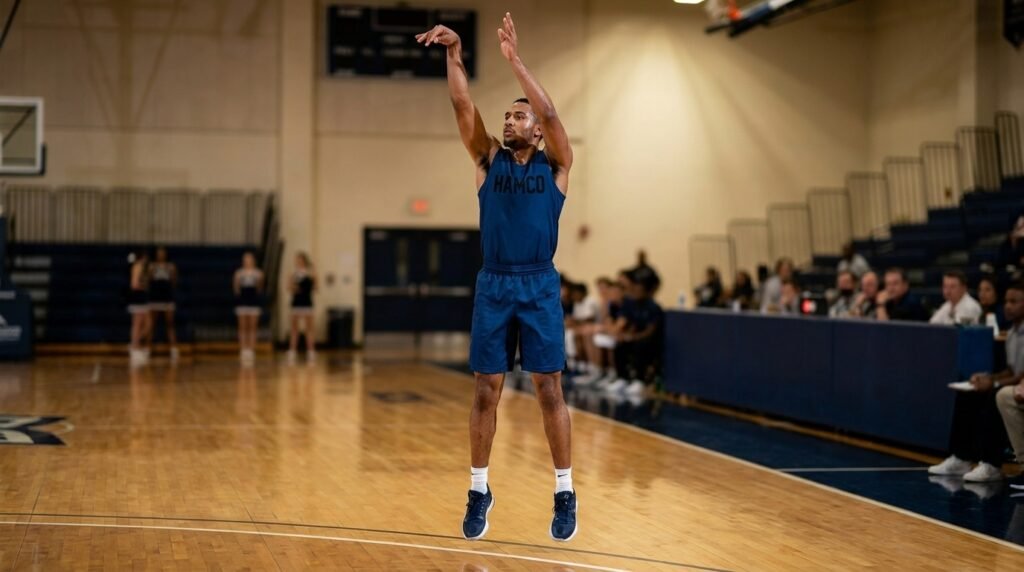
The second force is switchable defense. Modern teams want defenders who can guard more than one position, so that when an opponent runs a pick and roll, the defense can switch assignments without creating a mismatch. That puts a premium on forwards who can guard both a quick wing and a bigger forward. The ideal modern forward, whether you call him a 3 or a 4, can space the floor on offense and switch across positions on defense. Those shared demands pulled the two roles toward each other until they overlapped. This is the same convergence that fuels every conversation about positionless basketball, and it did not stop at the forwards. The same spacing logic nearly erased the traditional pass first floor general too, as our look at the point guard role explains.
How Lineups Now Define the Difference, Not the Player
Here is the part that trips people up: in the modern game, the same player can be a 3 or a 4 depending on who else is on the floor.
Position has become relative. A 6 foot 8 forward who is the second biggest player in a small lineup is functioning as the 4, and that exact same player, dropped into a bigger lineup beside two true bigs, slides down to the 3. Nothing about his skills changed. The lineup around him changed, and the position label followed. This is why coaches increasingly talk about wings and bigs rather than strict numbers, and why the combo forward, a player who genuinely fits either spot, is one of the most valuable pieces in basketball.
The matchup driven center has gone through the same shift, where the role is defined by the lineup and the opponent rather than a fixed job description, as our piece on the modern center covers. The forwards just got there first, because they sit at the exact middle of the size spectrum where the small ball and big ball decisions are made.
Defensive Matchup as the Real Position Indicator
If offense has blurred the line, defense is where you can still find it, and this is the honest tell most fans miss.
The clearest way to know whether a forward is playing the 3 or the 4 on a given night is to look at who he guards. If he is matched up against the other team’s bigger, stronger forward, banging in the post and boxing out, he is functioning as a 4 regardless of what the roster lists. If he is chasing the opponent’s perimeter scorer around screens out on the wing, he is playing the 3. Offense lets a player roam and shoot from anywhere, which hides his position. Defense assigns him a specific man, which reveals it.
This is why coaches and analysts increasingly describe forwards by their defensive matchup rather than their offensive role. A player can take all his shots from the perimeter like a classic small forward and still be his team’s 4, simply because he draws the tougher frontcourt defensive assignment every night. When you are trying to settle a power forward vs small forward debate about a specific player, stop watching where he shoots and start watching who he guards.
What Youth Coaches Should Teach a 14 Year Old Forward
Here is where the honesty matters most, because the wrong choice at this age caps a kid’s ceiling.
Do not pigeonhole a tall 14 year old as a back to the basket power forward just because he is the biggest kid in the gym today. Bodies change. The tall 14 year old is often a 6 foot 2 wing by 18, and if you only ever taught him to post up, you handed him the skills for a position he will not play and the body for one he was never trained for. The game has moved on from the one dimensional post player, and so should youth development.
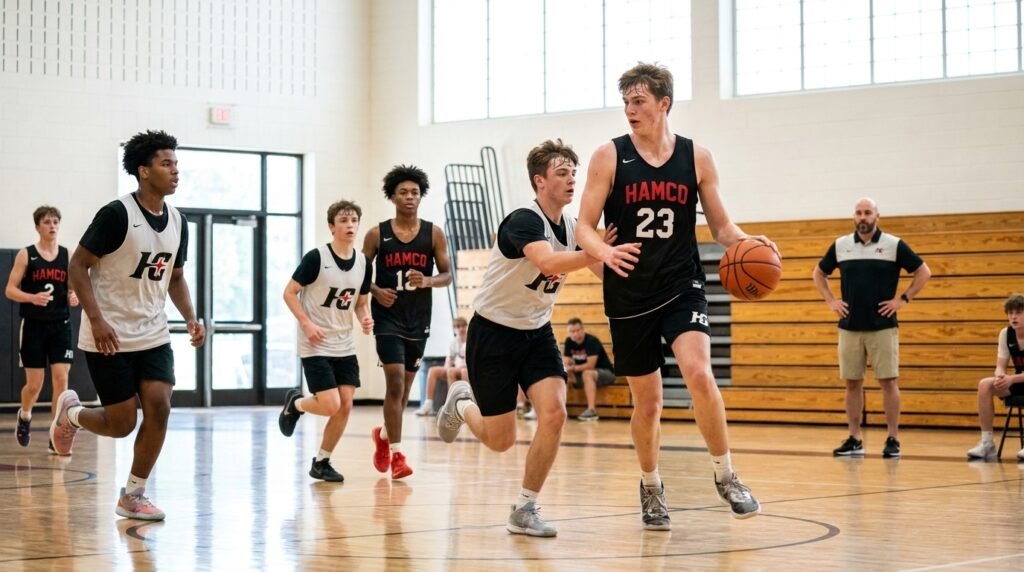
Teach every forward the full toolkit. Ball handling, perimeter shooting with real range, face up moves off the dribble, and yes, post fundamentals too, because footwork on the block still matters. The modern forward has to do all of it, and the only way to build that player is to refuse to lock a kid into a single role before his body and his game have finished arriving. The rules and developmental priorities also shift by age, which our youth basketball rules guide breaks down by group, and teams that scrimmage positionless from a young age build more complete players. Reversible practice gear makes that daily up and down scrimmaging easy, and our reversible practice jerseys are built for exactly that.
The Short Version
Power forward vs small forward used to be a clear divide between a back to the basket big and a face up wing. The three point arc and switchable defense pulled those jobs together until, on offense, they are often the same player. Today the difference is defined by the lineup a forward is in and the man he guards, not by where he shoots. And if you coach youth, the lesson is simple: teach the whole skill set and let the position sort itself out later.
Frequently Asked Questions
What is the difference between a power forward and a small forward?
Traditionally the power forward, or 4, played in the post with his back to the basket and rebounded, while the small forward, or 3, faced up and scored from the wing. In the modern game those roles overlap heavily, and the difference is often defined by lineup and defensive matchup rather than skills.
Is the power forward the 3 or the 4?
The power forward is the 4. The small forward is the 3. The center is the 5, and the two guard spots are the 1 and 2.
What is a stretch four?
A stretch four is a power forward who can shoot from three point range, pulling his defender away from the rim to open driving lanes. The role became common once spacing the floor proved more valuable than a traditional post big.
Can the same player be both a small forward and a power forward?
Yes. In the modern game a forward is often a 4 in a small lineup and a 3 in a bigger one, with no change to his actual skills. The lineup around him decides the label, which is why the combo forward is so valuable.
What position should a tall 14 year old play?
Do not lock a young, tall player into the post. Bodies change quickly at that age, so teach every forward ball handling, perimeter shooting, and face up skills along with post fundamentals, and let the position settle as the player matures.
Kitting out a team this season? A sharp, consistent look matters, and our basketball uniform design guide is a good place to start planning one.
When you are ready to order, our basketball game uniforms come in youth and adult cuts with a fast turnaround.
For the full team store, from warmups to bags, browse our complete range of basketball apparel built for a full season of play.Wing players need length in the torso. Our youth and adult cuts handle both.