
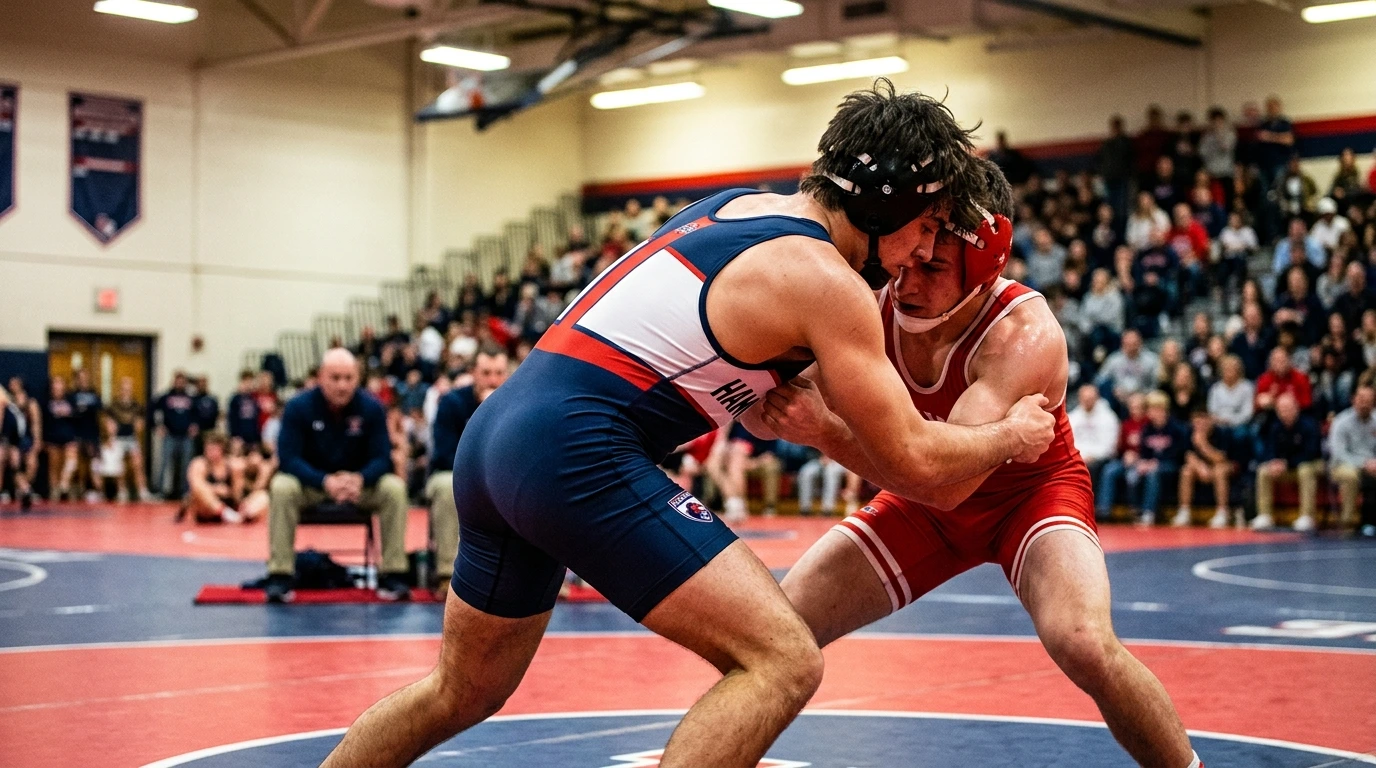
What is a wrestling uniform called? A wrestling uniform is called a singlet, a one-piece, tight-fitting outfit made of spandex, lycra, or nylon that covers the torso and upper thighs while leaving the arms and legs free to move. It’s the standard uniform across high school, college, freestyle, and Greco-Roman wrestling worldwide.
If you’ve heard people call it a “wrestling outfit,” “wrestling unitard,” or even an “onesie,” they’re all referring to the same garment. But when it comes to the official wrestling uniform name, singlet is the correct competitive term, and it’s the word every wrestler, coach, and official uses.
So the short answer to what is a wrestling uniform called is simple: a singlet. Below, this guide covers everything else you actually need to know: what a singlet is and why it’s designed this way, the three official cuts, the rules under USA Wrestling, NFHS, and NCAA, what colors competitors wear, what goes underneath, and how to choose or order the right one.
What Is a Wrestling Singlet?
One reason people ask what is a wrestling uniform called is that “singlet” isn’t an obvious word outside of the wrestling community. A wrestling singlet is a one-piece, sleeveless athletic garment engineered for one purpose: to give wrestlers full freedom of movement without giving an opponent any loose fabric to grab. The form-fitting cut also lets the referee clearly see body position, contact with the mat, and pinning combinations during scoring.
Singlets are typically constructed from a four-way-stretch blend of spandex (also called elastane) and either polyester, nylon, or lycra. The fabric stretches in every direction, returns to shape, wicks moisture, and resists tearing under the friction of mat contact.
The basic anatomy of a singlet:
- Shoulder straps that hold the garment in place during scrambles and inversions
- A torso panel that fits snugly across the chest, back, and stomach
- Leg openings cut at the upper thigh, with elastic grippers in higher-end models to prevent ride-up
- A unified one-piece construction with no separate top and bottom (though two-piece versions now exist, covered below)
Why Is the Wrestling Outfit Called a Singlet?
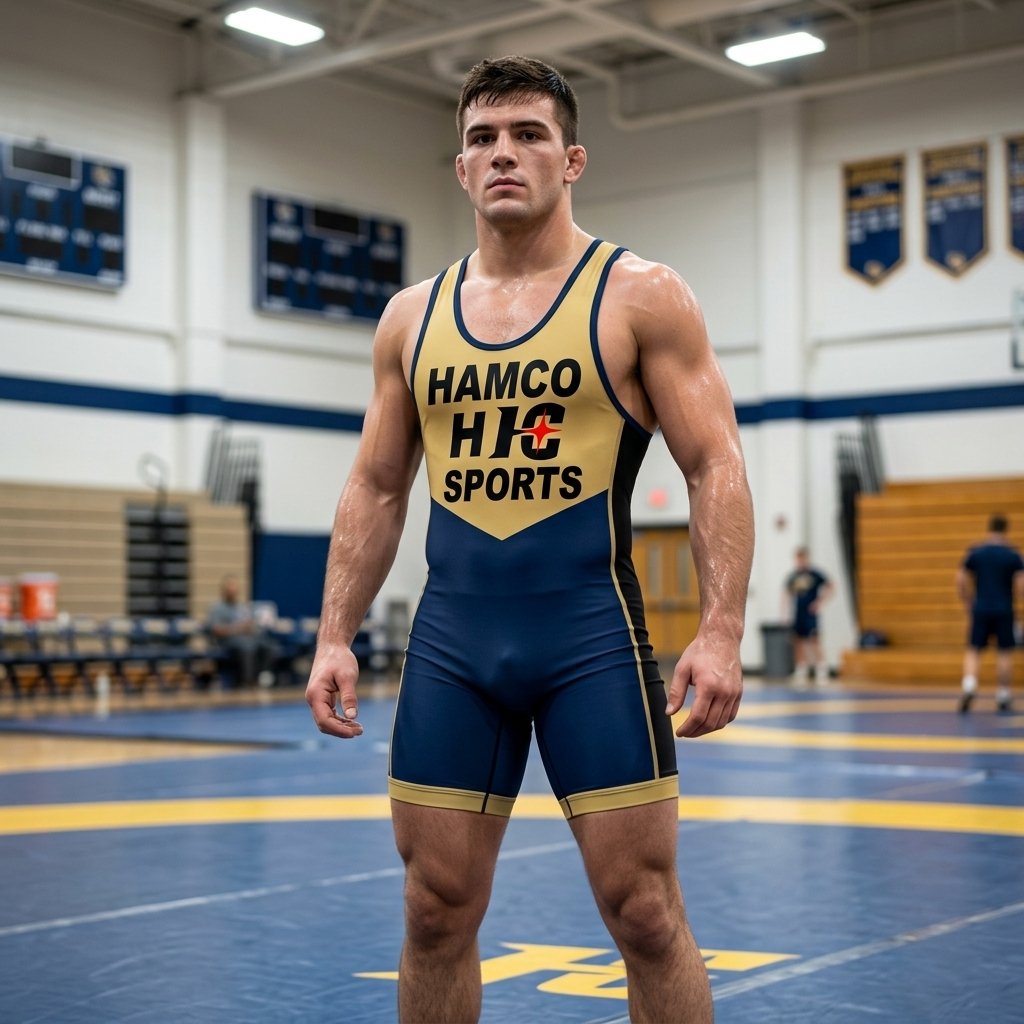
The word “singlet” comes from the British term for a sleeveless undershirt, itself derived from “single” because it’s one layer rather than the doubled-up garments common in earlier athletic wear. When the NCAA approved the modern one-piece wrestling uniform in the late 1960s after banning shirtless wrestling, the name stuck.
Before singlets became standard, wrestlers competed in a mix of trunks, tights, sleeveless shirts, or three-piece combinations. The singlet replaced all of that with a single streamlined garment that addressed every regulatory and functional concern at once. Today’s custom wrestling uniforms follow the same core design principles while using modern sublimated fabrics, advanced stretch blends, and team-specific branding that weren’t possible fifty years ago.
The Three Cuts of Wrestling Singlets
Once you’ve settled what is a wrestling uniform called, the next practical question most wrestlers have is which cut of singlet to wear. Singlets are produced in three distinct cuts, and the cut you choose depends on your level of competition and personal preference.
High Cut (Full Cut)
The high cut is the most common style in high school and collegiate folkstyle wrestling. The fabric extends up close to the armpits and across more of the chest, providing maximum coverage. It’s the cut you’ll see most often at NCAA championships and at the international and Olympic levels.
FILA Cut
Named for the international wrestling federation that became United World Wrestling (UWW), the FILA cut sits between the high and low cuts. It exposes more skin along the sides than the high cut but doesn’t drop as low as a low-cut singlet. It’s a popular middle-ground choice for freestyle and Greco-Roman wrestlers.
Low Cut
The low cut uses minimal fabric, with deep openings at the chest, sides, and back. It looks closer to a pair of compression briefs with stretch suspenders. Low-cut singlets are not permitted at the Olympic, international, or high school levels. They’re typically restricted to lower-stakes practice or specific collegiate settings.
Singlet vs. Unitard vs. Onesie: What’s the Difference?
People outside the sport often confuse these terms. Here’s the clean distinction:
A singlet is the wrestling-specific garment described above: sleeveless, mid-thigh length, designed for grappling.
A unitard is a broader category of one-piece form-fitting garments worn in gymnastics, dance, and acrobatics. Unitards typically extend down the legs to the ankle and may include long sleeves. All singlets are technically a type of unitard, but not all unitards are singlets.
An “onesie” is informal slang and not a real category of competitive athletic wear. If someone calls a wrestling singlet an onesie, they’re not familiar with the sport.
What Colors Do Wrestlers Wear When Competing?
If the answer to what is a wrestling uniform called is “a singlet,” the very next question most people have is what color it should be. What colors do wrestlers wear when competing depends entirely on the level of competition:
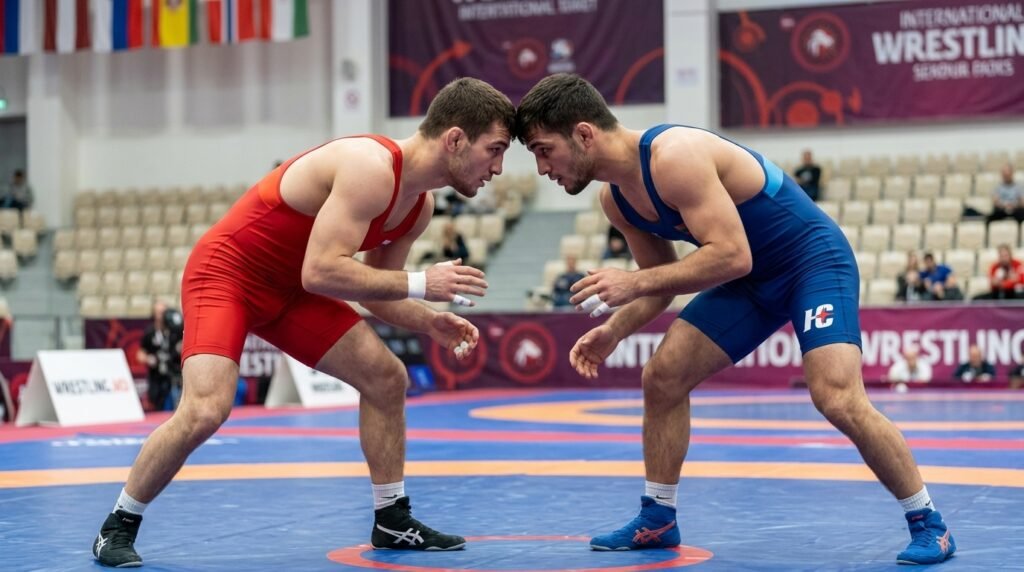
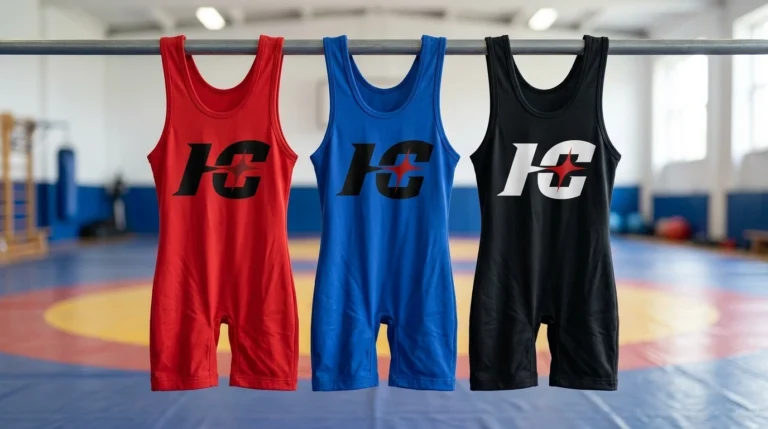
International freestyle and Greco-Roman: Wrestlers must be ready to wear either red or blue, assigned by officials before the match. Most international competitors own a reversible singlet (red on one side, blue on the other) to satisfy this requirement with a single garment.
High school and college folkstyle: Wrestlers wear their team colors. When two opposing wrestlers wear similar colors, one is assigned a colored anklet (or in older rules, a bib) so officials can clearly distinguish them during scoring.
Tournament considerations: When designing custom team singlets, picking colors that contrast cleanly against the most common opponent colors in your conference reduces how often your wrestlers will be asked to wear an identifying anklet.
USA Wrestling and NFHS Singlet Rules (High School)
Knowing what is a wrestling uniform called is half the picture; understanding the rules that govern how it’s worn is the other half. USA Wrestling, the national governing body, follows international UWW rules for freestyle and Greco-Roman events, and the core USA Wrestling singlet rules are aligned with those international standards. The National Federation of State High School Associations (NFHS) governs scholastic competition and publishes the rules for sanctioned high school matches.
Key NFHS singlet requirements:
- The singlet must adequately cover the torso from shoulder straps down to the upper thigh
- Singlets must be in school or team colors and free of inappropriate language or graphics
- Officials must be able to distinguish the two competing wrestlers; a colored anklet is used when colors are too similar
- Two-piece uniforms are now permitted under NFHS rules. A fitted compression top paired with form-fitting compression shorts is a legal alternative to the traditional singlet, an option introduced to give wrestlers (especially female athletes and those uncomfortable with traditional cuts) more choice
- Compression shorts worn under a traditional singlet must not extend visibly below the singlet leg opening
- Female wrestlers may wear a sports bra or other appropriate undergarment beneath the singlet
Always check your state athletic association’s most recent rule book before ordering uniforms. Small variations exist between states, and NFHS rules are updated annually.
NCAA Wrestling Singlet Regulations (College)
NCAA wrestling regulations cover singlet coverage, school identification, and undergarments at the collegiate level:
- Singlets must display the institution’s name, abbreviation, or recognized logo
- Numbers are not typically required (unlike most other NCAA sports)
- Both traditional one-piece singlets and the two-piece compression uniform option are permitted
- Compression shorts and tights worn underneath must comply with visibility and color rules
- Some institutions allow full-length tights under singlets in cold-environment competition
UWW International Wrestling Singlet Rules (Olympic and World Championship Level)
United World Wrestling (UWW) governs international freestyle and Greco-Roman wrestling, including the Olympic Games, World Championships, and continental championships. UWW rules are stricter and more uniform than NFHS or NCAA because international competition uses a single, globally applied standard.
Key UWW singlet requirements:
- Wrestlers must bring both a red singlet and a blue singlet (or a reversible red/blue singlet); the color is assigned by bracket position before each match
- The singlet must be non-transparent and made from UWW-approved stretch fabric
- Country code and athlete’s last name must be visible on the back of the singlet, in specified sizes
- Advertising and sponsor logos are tightly regulated in size, number, and placement
- All singlets are inspected before competition; non-compliant gear disqualifies the wrestler from that bout
- Recent rule updates have expanded acceptance of two-piece compression uniforms at most international levels, though traditional singlets remain standard
If you’re outfitting a program that competes internationally, buy UWW-compliant singlets from the start rather than trying to adapt scholastic gear.
Prohibited Items and Uniform Violations
Across NFHS, NCAA, and UWW competition, certain items are prohibited during matches. These rules exist for safety and fairness:
- Jewelry of any kind, including religious items (medical-alert bracelets are the narrow exception with proper documentation)
- Hard objects such as unpadded casts, rigid braces, or anything that could injure an opponent
- Lubricants, oils, or grease applied to skin or singlet that would prevent an opponent from securing a grip
- Excessive taping without a medical note and referee pre-approval
- Modified or altered equipment that hasn’t been approved by officials
Penalty structure for uniform violations typically escalates: a verbal warning for minor issues, a one-point deduction for repeat offenses, and forfeiture for safety violations or refusal to correct. Athletes with medical or religious accommodations should secure documentation and notify tournament officials in advance rather than arriving at the weigh-in hoping for an exception.
What Do Wrestlers Wear Under Their Singlets?
This is one of the most-asked questions about wrestling, and the answer is more flexible than people assume. There is no universal rule requiring a specific undergarment, and practices vary by level and personal preference.
Common options include:
- Compression shorts: the most popular modern choice, providing coverage and comfort without bunching
- Jockstrap with athletic cup: common for younger wrestlers and required by some youth programs
- Briefs or boxer-briefs: permitted but less common at higher levels
- Nothing: many elite wrestlers wear nothing underneath, citing reduced bulk and friction; this is legal at most competitive levels for adult male wrestlers
For female wrestlers, a sports bra is standard, and additional compression undergarments are common. For youth wrestlers, parents and coaches typically require compression shorts or a jockstrap-and-cup combination as a baseline expectation regardless of league rules.
Wrestling Singlet Materials and Construction
Quality wrestling singlets share a specific set of material characteristics:
Four-way stretch fabric: the singlet must move with the wrestler in every direction, including deep shots, sprawls, bridges, and inversions. A fabric that only stretches two ways will restrict motion or distort under load.
Spandex/elastane content: typically 15 to 25% spandex blended with polyester or nylon. Higher spandex percentages give better stretch and recovery; the synthetic backing provides durability.
Moisture-wicking treatment: pulls sweat away from the skin and dries quickly, preventing the singlet from becoming heavy or slippery during long matches.
Flatlock stitching: seams sewn flat against the inside of the garment to prevent chafing and reduce weak points that can split under stress.
Sublimated graphics: the gold standard for custom designs. Sublimation infuses dye directly into the fabric fibers, so logos, names, and color blocks never crack, peel, or fade. Screen-printed designs on stretch fabric crack within a season because the ink layer cannot flex with the material.
Women’s Wrestling Singlets
Women’s wrestling is the fastest-growing segment of the sport, and women’s-cut singlets are now produced by every major manufacturer. A women’s-cut singlet is contoured for a different body shape than a men’s cut: a more shaped torso, adjusted shoulder strap geometry, and a fit through the hips designed for athletic female bodies rather than scaled-down men’s patterns.
Women’s wrestlers also have the option of the two-piece uniform (a fitted compression top with compression shorts), which is now legal under NFHS, NCAA, and UWW rules and is often preferred by female athletes for comfort and coverage.
For design inspiration specifically tailored to women’s wrestling programs, see our collection of women’s wrestling singlet design ideas.
How to Size a Wrestling Singlet
Singlet sizing is based on a combination of body weight and chest measurement, and a precise fit matters more than in almost any other athletic garment.
A singlet that’s too small restricts breathing, limits range of motion, and can fail coverage requirements during scrambles. A singlet that’s too large bunches at the torso and gives opponents loose fabric to grip, a real competitive disadvantage.
Wrestling Singlet Size Chart
Brands vary, but the guide below reflects a typical adult size range. Always verify against the specific manufacturer’s chart before ordering.
| Size | Weight (lbs) | Chest (in) | Waist (in) | Height |
| XS | 100–115 | 30–32 | 26–28 | 5’2″–5’4″ |
| S | 116–130 | 33–35 | 28–30 | 5’4″–5’6″ |
| M | 131–150 | 36–38 | 30–32 | 5’6″–5’9″ |
| L | 151–175 | 39–41 | 33–35 | 5’9″–6’0″ |
| XL | 176–200 | 42–44 | 36–38 | 6’0″–6’2″ |
| 2XL | 201–230 | 45–47 | 39–41 | 6’2″–6’4″ |
| 3XL | 231+ | 48–50 | 42–44 | 6’4″+ |
Youth singlets use their own sizing scale, typically keyed to weight classes starting at 55 lbs.
Sizing tips
- Use the manufacturer’s specific size chart, as they vary between brands
- Measure chest, waist, and hips before ordering
- Account for muscle mass rather than street-clothes size; wrestlers often size up from their everyday shirt size
- For youth wrestlers, fit to current measurements rather than sizing up for growth. A singlet that fits properly now performs better than a roomy one that lasts two seasons
- Order new singlets well before the first competition and have wrestlers test them in practice; never debut a brand-new singlet in a match
Wrestling Singlet Brands and Price Ranges
Before ordering, it helps to know what the market looks like. The wrestling singlet space is dominated by a handful of established manufacturers plus a growing number of custom suppliers.
The major brands you’ll encounter:
- ASICS Wrestling: known for Japanese build quality and performance fabrics
- Cliff Keen Athletic: American-made, long-trusted in scholastic and collegiate wrestling
- Adidas Wrestling: international brand with advanced fabric technology
- Matman Wrestling: budget-friendly, strong youth and entry-level presence
- Brute Wrestling: stock and custom options with fast shipping
- Custom team specialists (like HAMCO Sports): full sublimation, no-minimum ordering
Typical price ranges for a single singlet:
| Tier | Price | What You Get | Best For |
| Entry | $25–$40 | Basic fabric, limited colors, off-the-shelf | Beginners, practice singlets |
| Mid | $41–$65 | Better fabric, more design options | Regular competition |
| Premium | $66–$90 | Advanced materials, full custom sublimation | Serious competitors, team kits |
| Elite | $91–$150 | Top-tier fabric, reinforced construction, full customization | Elite athletes, flagship team gear |
Custom team orders typically come in at the Mid to Premium tier per unit, with the per-piece price dropping at higher volumes.
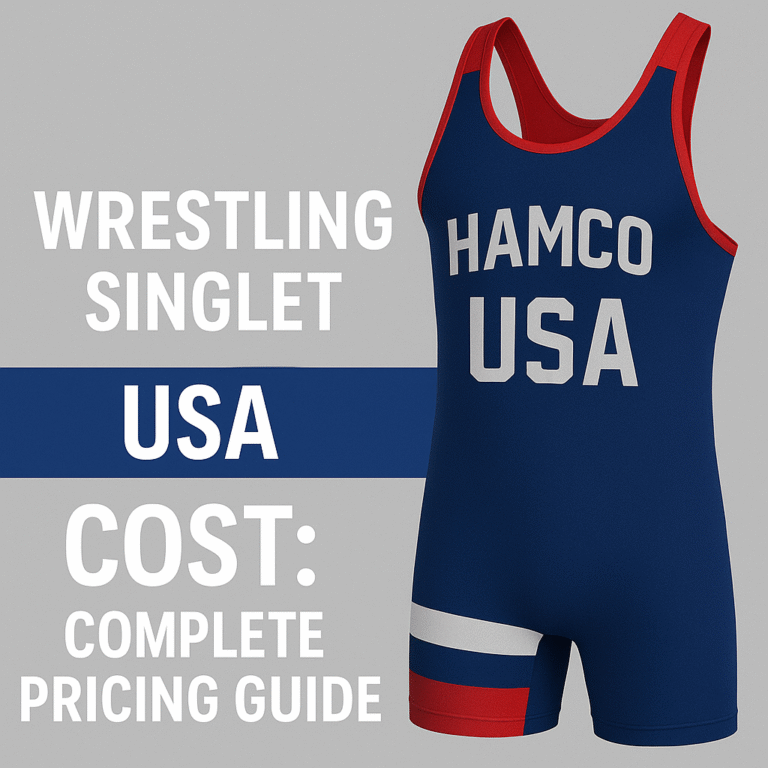
For a detailed breakdown of singlet costs across youth, adult, custom, and team-order categories, see our complete wrestling singlet pricing guide.
Custom Wrestling Singlets for Teams
Once you’ve sorted out the regulatory and sizing fundamentals, the question becomes how to design a singlet that represents your program well.
Custom wrestling singlets differ from generic catalog options in three meaningful ways: they carry your team’s specific colors and identity, they’re sublimated with permanent graphics that hold up through full seasons, and they create the visual cohesion that distinguishes a serious program on competition film and team photos.
Effective custom designs follow a few practical principles. Bold color blocking reads better than fine detail because the singlet stretches asymmetrically across different body types. Team name and school identifier should sit prominently across the chest where cameras and officials see it most. Always review a mockup on a fitted figure (or have a sample wrestler try one on) before approving a full team order, since designs that look sharp on a flat mockup sometimes distort when stretched across an athlete’s torso.
Frequently Asked Questions
What is a wrestling uniform called?
A wrestling uniform is called a singlet. It’s a one-piece, tight-fitting garment made of spandex or lycra that’s worn in folkstyle, freestyle, and Greco-Roman wrestling at every level from youth through Olympic competition.
Are shorts allowed under wrestling singlets?
Yes. Compression shorts are permitted under singlets in NFHS, NCAA, and USA Wrestling competition. They generally must not extend visibly below the singlet’s leg opening.
What colors do wrestlers wear in international competition?
Red and blue. International freestyle and Greco-Roman wrestlers must be prepared to wear either color, assigned by officials before each match. Most own a reversible singlet to handle both assignments with one garment.
Is a wrestling singlet the same as a unitard?
A singlet is a specific type of unitard designed for wrestling. The wrestling singlet ends at mid-thigh and is sleeveless; general-purpose unitards (gymnastics, dance) often extend to the ankles and may have sleeves.
Can wrestlers wear a two-piece uniform instead of a singlet?
Yes. A two-piece option (a fitted compression top with compression shorts) is now legal under NFHS, NCAA, and UWW rules. It’s an increasingly popular alternative, especially among female wrestlers and athletes who prefer not to wear the traditional cut.
How long do custom wrestling singlets last?
A quality sublimated singlet lasts two to three full seasons with proper care. Wash in cold water, turn the garment inside out before washing, and skip the dryer’s high-heat setting to preserve the elastic fibers and graphics.
For a full breakdown of washing, drying, and storage techniques that preserve sublimated graphics through multiple seasons, see our wrestling singlet care guide.
Can I order a single custom singlet, or do I need a full team order?
It depends on the manufacturer. Some require team minimums; others (like HAMCO Sports) have no minimum, which makes individual replacement singlets and starter orders for new programs straightforward.
Final Word
So the next time someone asks what is a wrestling uniform called, you can give them the one-word answer (singlet) and, if they’re curious, the full context. Despite its simple appearance, the wrestling singlet is one of the most carefully engineered garments in competitive sport. Every element, from the cut and the fabric to the colors and the stitching, exists to satisfy a specific competitive or regulatory function.
Whether you’re a new wrestler trying to understand what to wear, a parent ordering your child’s first singlet, or a coach outfitting an entire program, the right singlet is the one that fits your level of competition, your governing body’s rules, and your athlete’s body, in that order.

3 thoughts on “What Is a Wrestling Uniform Called ?Wrestling Singlets Guide”