| Quick Answer A team jersey is the shirt worn by members of a sports team to show which team they play for. It carries the team colors and logo, and most jerseys also show the player name and number. The first jerseys were knitted from wool on the Isle of Jersey, which gave the garment its name. Modern team jerseys are made from polyester and decorated with dye sublimation printing. This article covers the full story, from the wool sweaters of the 1800s to the printed uniforms teams wear today. |
What Is a Team Jersey
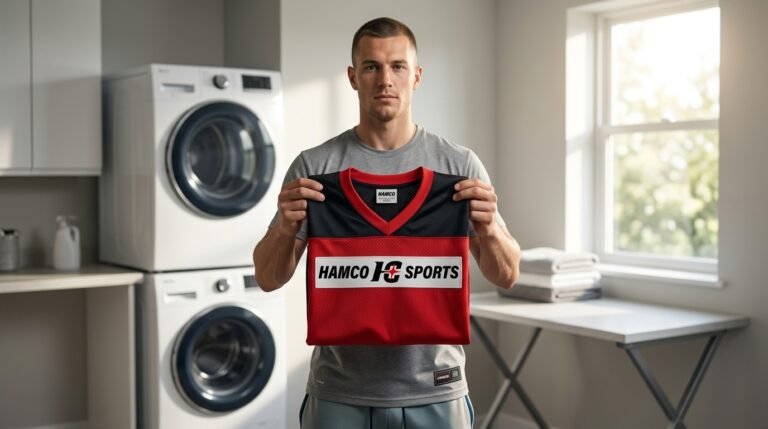
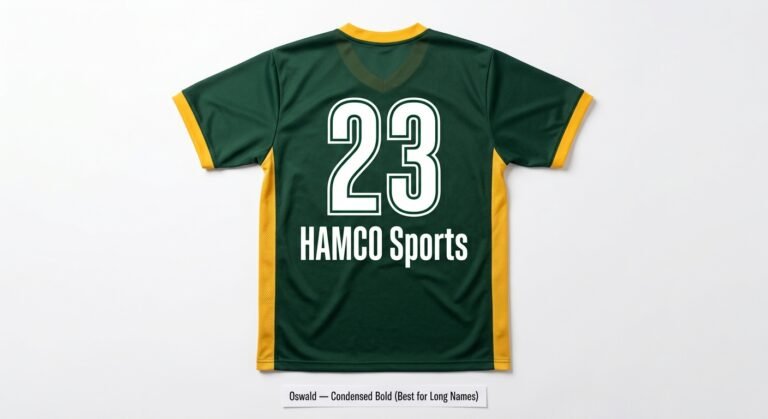
A team jersey is a shirt that identifies its wearer as a member of a sports team. Because every player on a team wears the same design, the jersey alone cannot tell players apart. That is the job of the number and the name. The number identifies the player to referees, official scorers, teammates, and fans. Professional jerseys often carry a sponsor logo as well, which turns the shirt into advertising space during the game.
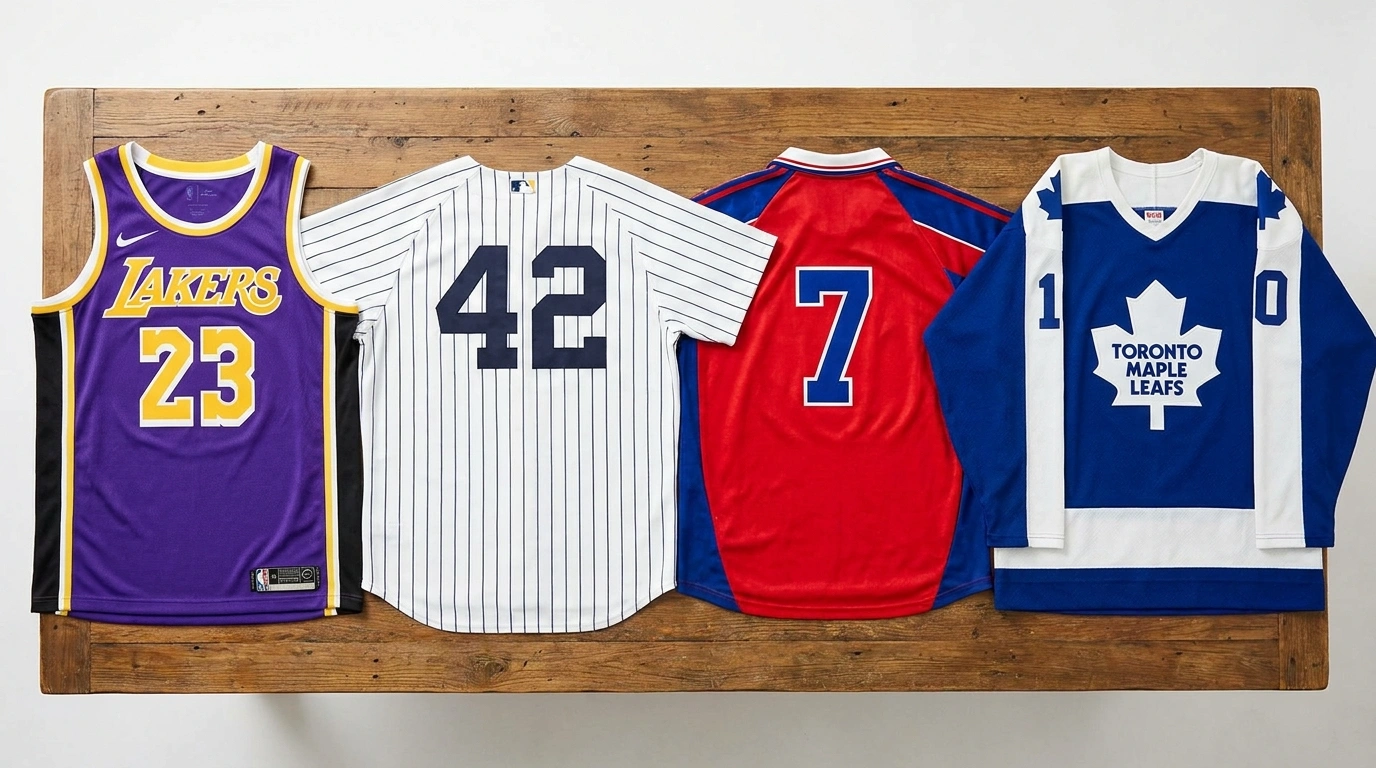
People use several names for the same garment. In ice hockey it is called a sweater. In Australian rules football it is called a guernsey. In soccer it is often called a kit or a shirt. All of these words describe the same thing, which is the top half of a team uniform.
Where the Word Jersey Comes From
The word comes from the Isle of Jersey, one of the Channel Islands between England and France. For centuries, knitters on the island made warm wool sweaters for fishermen and sailors. The stretchy knit fabric they used took the name of the island. In 1916, the designer Coco Chanel used jersey fabric in womens fashion, which made the material famous far beyond the docks.
Jersey fabric is knitted, not woven. Knitting forms loops of yarn, and those loops let the fabric stretch and move with the body. That stretch is the reason early athletes chose it. Sports shirts made from jersey fabric took on the name of the fabric itself, and the name stuck even after the material changed.
A Short History of the Team Jersey
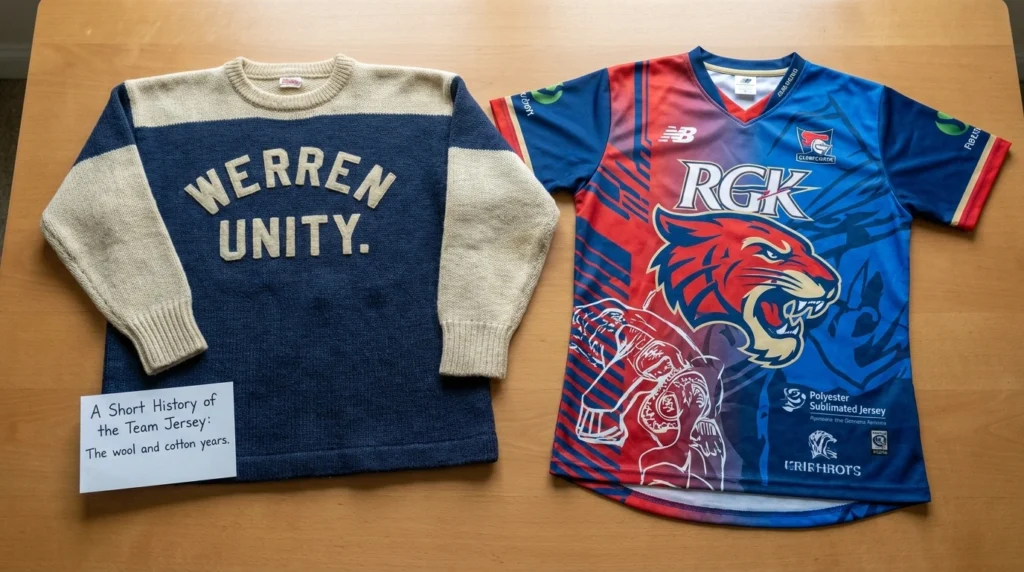
The wool and cotton years
Organized team sports grew fast in the late 1800s. Teams needed a way to tell sides apart on the field, so they wore matching shirts in team colors. Until after World War Two, most team jerseys were made of cotton or wool knit. These fabrics were comfortable when dry but had a serious problem. They soaked up sweat and rain, grew heavy during play, and dried slowly. Wool jerseys were also itchy and hot.
Synthetic fibers change the game
Nylon, polyester, and elastane were developed between the 1930s and the 1960s. These synthetic fibers were strong, light, stretchy, and quick to dry, which made them ideal for sports clothing. By the 1970s, double knit polyester had become the standard for many pro uniforms because it held its shape and its color through hard use and constant washing.
The sublimation era
In the 1980s, sublimated polyester jerseys became common. Sublimation printing places the design inside the fabric instead of on top of it, so graphics no longer cracked or peeled. This opened the door to full color designs, gradients, and patterns that were impossible with older methods. From the 1990s onward, microfiber polyester and moisture management finishes made jerseys even lighter and faster to dry. Today many jerseys also use recycled polyester made from plastic bottles.
How Jersey Numbers Started, Sport by Sport
Numbers on jerseys are newer than most fans think. Each sport adopted them at a different time, and often against strong resistance. Many coaches feared numbers would promote individual glory over the team. Others worried that numbers would help opponents scout their plays.
- Rugby and Australian football. Teams in Australia and New Zealand were the first to number players, starting in the late 1890s. Photographic evidence shows numbers in a 1903 Australian rules match between Fitzroy and Collingwood.
- American football. Drake and Iowa State wore the first football numbers on Thanksgiving Day in 1905, painted on canvas patches sewn to the backs of their jerseys. Pittsburgh wore numbers for a full season in 1909. The NCAA did not require numbers on both the front and back of jerseys until 1937.
- Baseball. The Cleveland Indians tried sleeve numbers in 1916 but soon dropped the idea. The practice took hold in 1929, when Cleveland and the New York Yankees both placed numbers on the backs of their shirts. The Yankees assigned numbers by batting order, which is why Babe Ruth wore 3 and Lou Gehrig wore 4. By 1933, every major league team wore numbers.
- Soccer. Arsenal and Chelsea became the first English league clubs to wear numbered shirts on August 25, 1928. The English league made numbers mandatory in 1939. At the 1954 World Cup, squad numbers were assigned by position for the first time, with the goalkeeper wearing number 1.
Player names on the back came even later and are still not universal. Many college and minor league teams leave names off to keep the focus on the team rather than the individual. Table 1. When jersey numbers arrived in each sport.
What Is a Team Jersey
A team jersey is a shirt that identifies its wearer as a member of a sports team. Because every player on a team wears the same design, the jersey alone cannot tell players apart. That is the job of the number and the name. The number identifies the player to referees, official scorers, teammates, and fans. Professional jerseys often carry a sponsor logo as well, which turns the shirt into advertising space during the game.
People use several names for the same garment. In ice hockey it is called a sweater. In Australian rules football it is called a guernsey. In soccer it is often called a kit or a shirt. All of these words describe the same thing, which is the top half of a team uniform.
Where the Word Jersey Comes From
The word comes from the Isle of Jersey, one of the Channel Islands between England and France. For centuries, knitters on the island made warm wool sweaters for fishermen and sailors. The stretchy knit fabric they used took the name of the island. In 1916, the designer Coco Chanel used jersey fabric in womens fashion, which made the material famous far beyond the docks.
Jersey fabric is knitted, not woven. Knitting forms loops of yarn, and those loops let the fabric stretch and move with the body. That stretch is the reason early athletes chose it. Sports shirts made from jersey fabric took on the name of the fabric itself, and the name stuck even after the material changed.
A Short History of the Team Jersey
The wool and cotton years
Organized team sports grew fast in the late 1800s. Teams needed a way to tell sides apart on the field, so they wore matching shirts in team colors. Until after World War Two, most team jerseys were made of cotton or wool knit. These fabrics were comfortable when dry but had a serious problem. They soaked up sweat and rain, grew heavy during play, and dried slowly. Wool jerseys were also itchy and hot.
Synthetic fibers change the game
Nylon, polyester, and elastane were developed between the 1930s and the 1960s. These synthetic fibers were strong, light, stretchy, and quick to dry, which made them ideal for sports clothing. By the 1970s, double knit polyester had become the standard for many pro uniforms because it held its shape and its color through hard use and constant washing.
The sublimation era
In the 1980s, sublimated polyester jerseys became common. Sublimation printing places the design inside the fabric instead of on top of it, so graphics no longer cracked or peeled. This opened the door to full color designs, gradients, and patterns that were impossible with older methods. From the 1990s onward, microfiber polyester and moisture management finishes made jerseys even lighter and faster to dry. Today many jerseys also use recycled polyester made from plastic bottles.
How Jersey Numbers Started, Sport by Sport
Numbers on jerseys are newer than most fans think. Each sport adopted them at a different time, and often against strong resistance. Many coaches feared numbers would promote individual glory over the team. Others worried that numbers would help opponents scout their plays.
- Rugby and Australian football. Teams in Australia and New Zealand were the first to number players, starting in the late 1890s. Photographic evidence shows numbers in a 1903 Australian rules match between Fitzroy and Collingwood.
- American football. Drake and Iowa State wore the first football numbers on Thanksgiving Day in 1905, painted on canvas patches sewn to the backs of their jerseys. Pittsburgh wore numbers for a full season in 1909. The NCAA did not require numbers on both the front and back of jerseys until 1937.
- Baseball. The Cleveland Indians tried sleeve numbers in 1916 but soon dropped the idea. The practice took hold in 1929, when Cleveland and the New York Yankees both placed numbers on the backs of their shirts. The Yankees assigned numbers by batting order, which is why Babe Ruth wore 3 and Lou Gehrig wore 4. By 1933, every major league team wore numbers.
- Soccer. Arsenal and Chelsea became the first English league clubs to wear numbered shirts on August 25, 1928. The English league made numbers mandatory in 1939. At the 1954 World Cup, squad numbers were assigned by position for the first time, with the goalkeeper wearing number 1.
Player names on the back came even later and are still not universal. Many college and minor league teams leave names off to keep the focus on the team rather than the individual.
Table 1. When jersey numbers arrived in each sport.
| Sport | First Numbers Worn | Made Standard |
|---|---|---|
| Rugby and Australian football | Late 1890s, Australia and New Zealand | Early 1900s |
| American football | 1905, Drake vs Iowa State | 1937, NCAA rule for front and back |
| Baseball | 1916 sleeves, 1929 backs | 1933, all MLB teams |
| Soccer | 1928, Arsenal and Chelsea | 1939 English league, 1954 World Cup |
What Team Jerseys Are Made of Today
Polyester is the standard fiber for modern team jerseys, and the reasons are practical. Polyester absorbs only about 0.4 percent of its weight in water, while cotton absorbs about 7 percent. A polyester jersey stays light and dries fast during a full game. It also resists shrinking, keeps its shape, and survives constant washing.
Fabric weight is measured in GSM, which means grams per square meter. Soccer jerseys often use light knits around 135 to 165 GSM for airflow and speed. Baseball and softball jerseys use heavier knits, often around 220 GSM, because those garments take more abrasion from sliding and diving. Common knit types include interlock, pique, and mesh. Some jerseys blend in a small amount of spandex for extra stretch, though pure polyester is preferred when numbers will be sublimated, because stretch fibers can distort a printed number under heat.
How Names, Numbers, and Logos Go on a Jersey
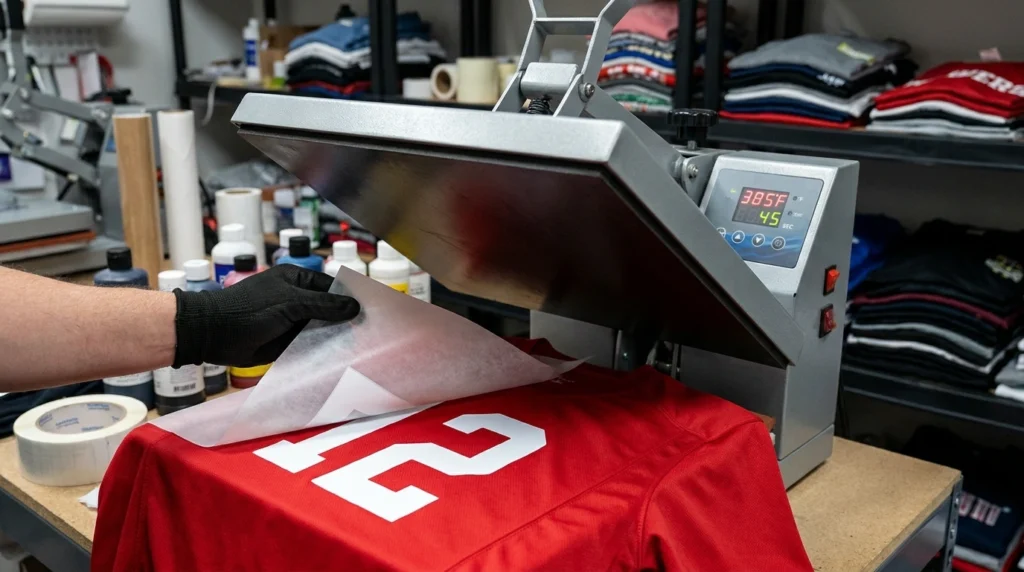
There are four main decoration methods used in the industry today. Each has a different look, cost, and life span.
- Dye sublimation. The design is printed on transfer paper with special dye, then pressed onto the fabric at close to 400 degrees Fahrenheit. The heat turns the dye into a gas that bonds inside the polyester fiber. The print becomes part of the fabric, adds no weight, and cannot crack, peel, or fade in the wash. It only works on polyester and shows best on light base colors. This process is called sublimation printing.
- Screen printing. Ink is pushed through a stencil and sits in a layer on top of the fabric. It costs less for simple designs, but thick ink layers can crack and fade over years of washing.
- Heat transfer vinyl. Letters and numbers are cut from colored vinyl and pressed onto the shirt. This method is common for small orders and single replacements because no printing setup is needed.
- Tackle twill and embroidery. Letters and numbers are cut from twill fabric and stitched onto the jersey. This is the heaviest and most durable method, and it gives the raised, layered look seen on traditional baseball and hockey jerseys.
Table 2. Decoration methods compared.
| Method | How It Works | Durability |
|---|---|---|
| Dye sublimation | Dye bonds inside polyester fiber under heat | Will not crack, peel, or fade |
| Screen printing | Ink layers sit on top of the fabric | Can crack and fade over years |
| Heat transfer vinyl | Cut vinyl pressed onto the shirt | Can peel at edges over time |
| Tackle twill | Fabric letters stitched onto the jersey | Most durable, decades of use |
How Jerseys Differ by Sport
- Basketball jerseys are sleeveless, which frees the arms for shooting and keeps players cool indoors.
- Baseball jerseys traditionally button up the front, a style carried over from the earliest flannel uniforms.
- Ice hockey jerseys are still called sweaters, a name from the wool era. They are cut loose to fit over shoulder pads and elbow pads.
- American football jerseys are cut wide in the body and short in the sleeve to fit over pads, with stretch panels to stop grabbing.
- In Australian rules football the sleeveless playing top is called a guernsey, named after another Channel Island.
- Traditional cricket clothing is called cricket whites, an all white outfit worn in the longer forms of the game.
- Cycling jerseys are a special case. They are made from light microfiber, with a zippered front, an elastic waist, and rear pockets for food and tools.
Special Jerseys in Cycling: The Tour de France
In the Tour de France, the jersey itself is the prize. After each stage, leaders of the race classifications wear special jerseys. The yellow jersey goes to the rider with the lowest total time, who leads the general classification. The green jersey goes to the points leader, usually the best sprinter. The polka dot jersey goes to the best climber in the mountains classification. The white jersey goes to the best young rider aged under 26.
Home and Away Jerseys
Most teams keep at least two jersey sets in contrasting colors. Baseball clubs began wearing separate home and road uniforms in the early 1900s, and the practice spread across all major sports. The contrast exists so that officials, players, and fans can tell the two teams apart at a glance. In many leagues the home team wears its primary color and the visiting team wears white or a light alternate. Third jerseys and special event jerseys are now common as well, driven by fan demand and merchandise sales. Teams planning two jersey sets should design both together, which we cover in our team uniform design guide.
Frequently Asked Questions
Why is it called a jersey?
The name comes from the Isle of Jersey in the Channel Islands, where knitters made stretchy wool sweaters for fishermen. The knit fabric took the island name, and sports shirts made from that fabric inherited it.
What are team jerseys made of?
Almost all modern team jerseys are made of polyester or a polyester blend. Polyester is light, dries fast, holds its shape, and is the only common fiber that accepts sublimation dye.
Which team wore numbers first?
Rugby and Australian football teams in Australia and New Zealand wore numbers first, starting in the late 1890s. In American sports, Drake and Iowa State wore the first football numbers in 1905, and the Yankees and Indians made baseball numbers stick in 1929.
What is the difference between a jersey and a uniform?
The jersey is only the shirt. The uniform is the complete outfit, which can include the jersey, pants or shorts, socks, and headwear.
Do sublimated names and numbers peel off?
No. Sublimation dye bonds inside the polyester fiber, so it becomes part of the fabric. It cannot peel or crack the way surface prints can, and it does not fade in normal washing. For full care steps, see our guide on how to wash a jersey.
References
- Britannica. Why Do Athletes Wear Numbered Jerseys. britannica.com/story/why-do-athletes-wear-numbered-jerseys
- National Baseball Hall of Fame. The Forgotten History of Numbering Players. baseballhall.org/discover/going-deep/the-forgotten-history-of-numbering-players
- Football Archaeology. The Origins of Player Numbers. footballarchaeology.com/p/todays-tidbit-the-origins-of-player
- Owayo Magazine. The History of Sports Jerseys. owayo.com/magazine/jersey-throughout-time-history-of-sports-jerseys-us.htm
- MasterClass. What Is Jersey Fabric. masterclass.com/articles/what-is-jersey-fabric
- Sewport. What Is Jersey Fabric: Properties, How It Is Made. sewport.com/fabrics-directory/jersey-fabric
- Wikipedia. Number (sports). en.wikipedia.org/wiki/Number_(sports)
- Cycling Weekly. Tour de France: The Jerseys. cyclingweekly.com/news/racing/tour-de-france/tour-de-france-the-jerseys-59552
- Shishoo, Roshan. Textiles in Sport. Elsevier, 2005. ISBN 9781845690885
Shinn, W.E. An Engineering Approach to Jersey Fabric Construction. Textile Research Journal, 1955