
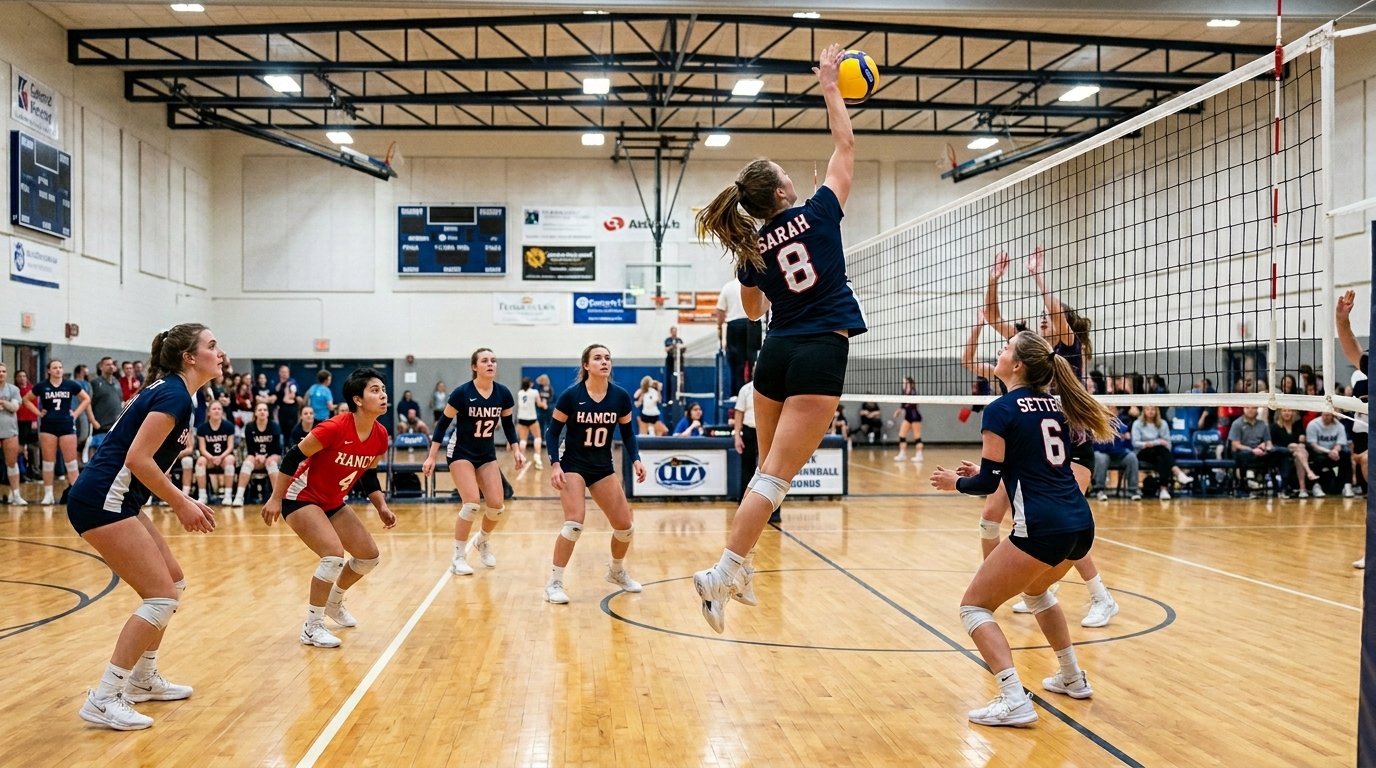
| Quick Answer Volleyball uses six players on the court, split into six roles: setter, outside hitter, opposite hitter, middle blocker, libero, and defensive specialist. The setter runs the offense, the hitters attack, the middle blocker leads the block, and the libero anchors back row defense in a different colored jersey. Players rotate clockwise, but each role has one clear job. Here is every position explained. |
Watch a volleyball rally for the first time and it looks like controlled chaos. Six players a side, everyone shifting and switching spots, one player in a different colored jersey, and somehow the ball keeps getting slammed back over the net. It is not chaos. It is six specific jobs being done at once. Before a team ever takes the court it picks a name and a look, and once the volleyball team names and jerseys are sorted, the real question is the one this guide answers: who does what, and why. This is volleyball positions explained for beginners and longtime fans alike, written from the ground up so the game finally makes sense.
Here is the part that trips people up. The position names are misleading. An opposite is not left handed by rule, a middle blocker does far more than block, and the libero plays by a completely different set of laws than everyone else, right down to a jersey rule written into the rulebook. We will get to that quirk, which is covered in full in our guide to volleyball uniform rules. First, the map. Volleyball positions on court explained starts with the six numbered zones and the rotation that moves players through them.
Volleyball Positions on the Court Explained
Every player stands in one of six numbered zones at the moment of serve. The three zones near the net are the front row, where players can jump and attack above the net. The three behind the attack line are the back row, where players defend and dig but cannot attack from above net height unless they take off from behind the three meter line. The zones are numbered 1 through 6, and after a team wins back the serve, all six players rotate clockwise by one zone. The diagram below shows the layout.
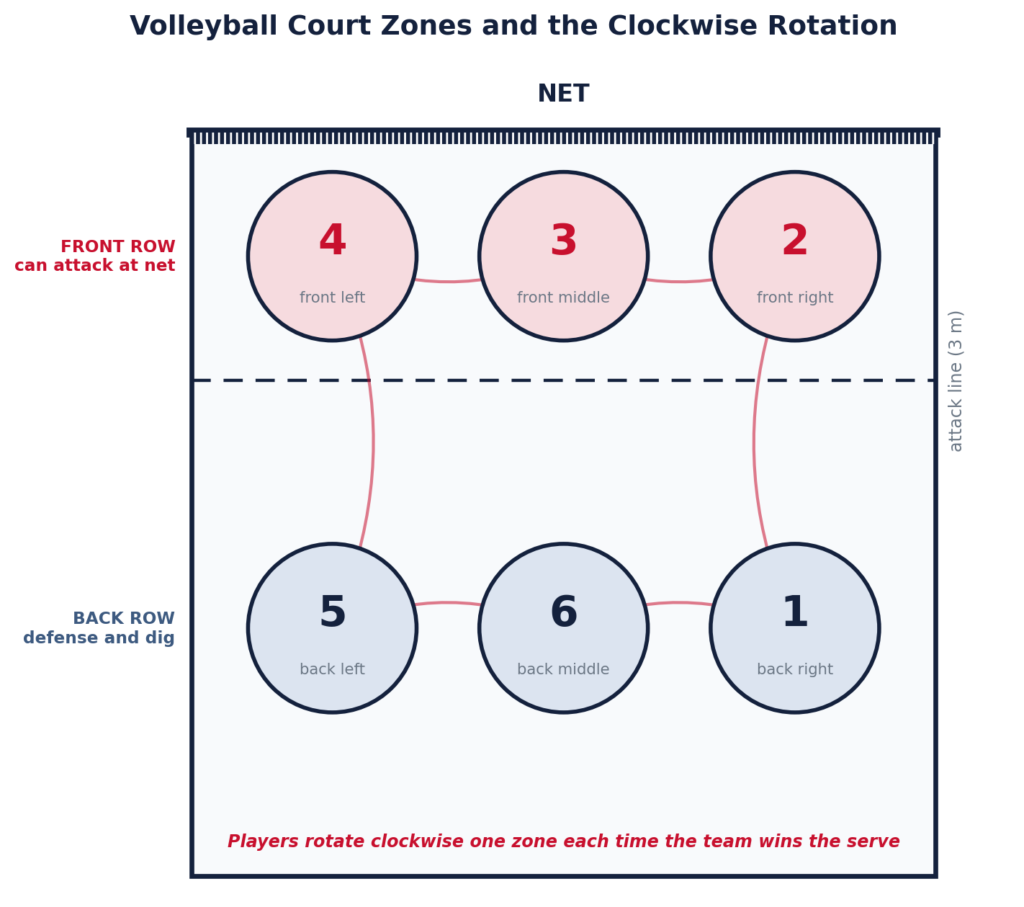
That rotation is the engine of the whole sport, and it is why every player has to do more than one thing. A middle blocker who rotates to the back row still has to survive a few rotations on defense before a substitute can rescue them. Keep the six zones in mind as we go, because every position is partly defined by where it lines up and where it is allowed to attack. Here is the quick version before the detail, with all volleyball positions explained at a glance.
| Position | Where They Line Up | Primary Job | Rows They Play |
| Setter | Right side (zone 2) | Runs the offense and delivers every set | Front and back (all six) |
| Outside hitter | Left side (zone 4) | Primary attacker, also passes serves | Front and back (all six) |
| Opposite hitter | Right side (zone 2) | Right side power and blocks the outside | Front and back (all six) |
| Middle blocker | Middle front (zone 3) | Leads the block, hits quick attacks | Mostly front, subbed in back |
| Libero | Back row | Serve receive and digging | Back row only |
| Defensive specialist | Back row | Back row defense through substitution | Back row |
One honest note before the breakdown. At youth and beginner levels, these roles blur. Players rotate through every spot and nobody specializes, which is healthy for development. Specialization sharpens as the level rises, so the clean job descriptions below describe competitive volleyball more than a first season rec team.
Setter (the Quarterback)
The setter is the brain of the offense, the volleyball version of a quarterback. The job is to take the team’s second contact and place the ball exactly where a hitter can attack it. A good set is not just accurate, it is a decision. In the half second the ball hangs in the air, the setter reads the other team’s blockers and chooses which hitter to feed, trying to create a one on one matchup or leave an attacker completely unblocked. Hands have to be quick and soft, footwork has to be fast enough to chase down bad passes, and the setter has to lead the huddle. They touch the ball more than anyone else on the court, usually on every single rally, so their consistency sets the ceiling for the whole team.
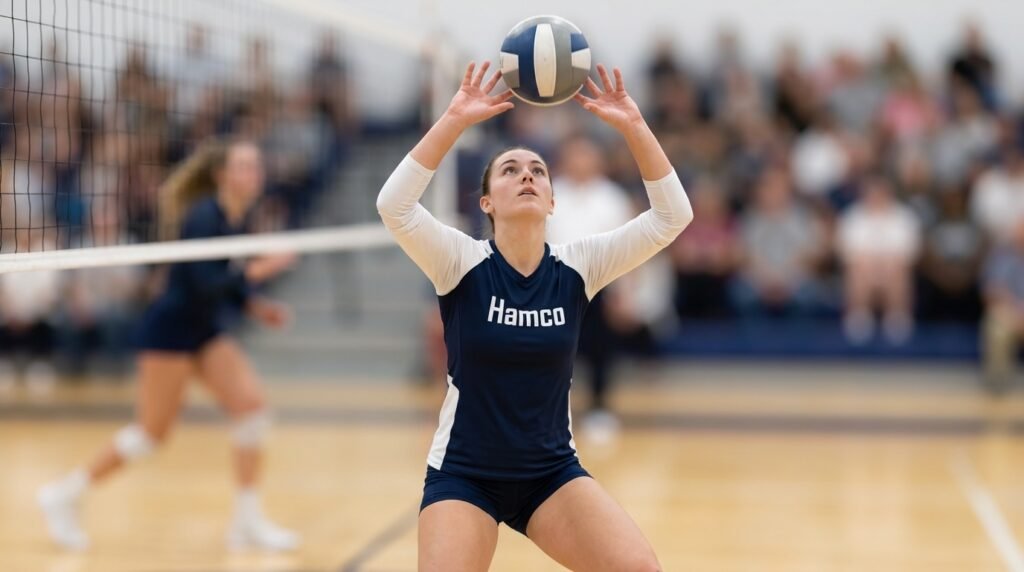
Most competitive teams run a system called the five one, meaning one setter who plays all six rotations and runs the offense for the entire match. The alternative, the six two, uses two setters who each set from the back row and swing as a hitter when they rotate to the front. The five one rewards chemistry and a single steady decision maker. The six two puts a third front row attacker at the net but asks two players to share the most demanding job on the team. Neither is wrong. The choice usually comes down to whether a team has one clearly best setter or two good athletes who can share the load.
Libero (the Back Row Specialist)
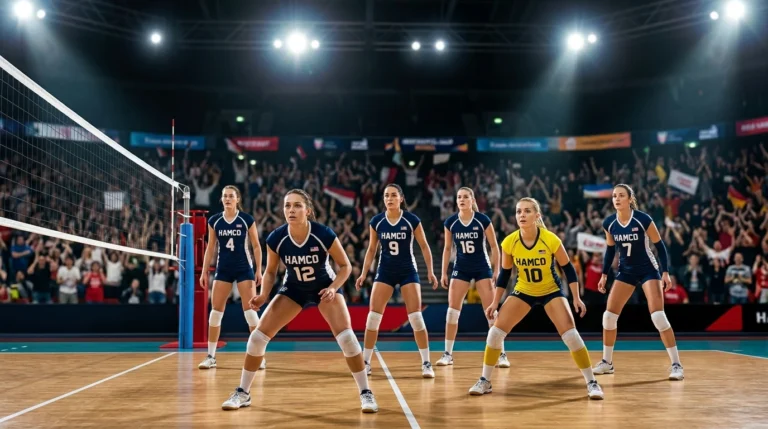
The libero is the player in the different colored jersey, and that jersey is not a style choice. It is required by rule so the referee can track a player who lives by a separate rulebook. The libero is a back row defensive specialist, built to pass serves and dig attacks better than anyone else on the team. The contrasting color is mandatory, which is one reason our custom volleyball uniforms let you order that one spot in a different shade from the rest of the set. Here is what makes the position strange. A libero can replace any back row player without it counting as a substitution, so they flow in and out all match long, usually swapping in for a middle blocker.
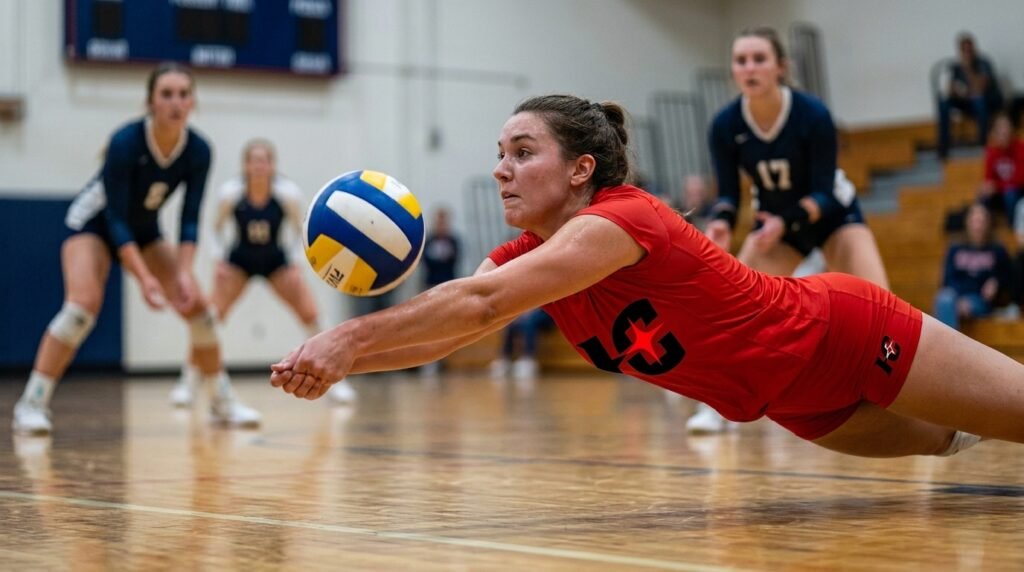
But the freedom comes with a long list of things a libero cannot do. They can never rotate to the front row. They can never block or even attempt to block. They can never complete an attack on a ball that is entirely above the height of the net. There is even a setting rule that surprises people. If the libero uses an overhand finger set while standing in front of the attack line, their teammate is not allowed to attack that ball above net height. A simple forearm bump set removes the restriction. And the serving rule changes depending on where you play, which trips up coaches constantly. Under USA Volleyball, NCAA women’s, and high school rules, the libero may serve, but only in one rotation per set. Under international FIVB rules, the libero cannot serve at all. Know your league before anyone steps behind the end line.
Outside Hitter (the Go To Attacker)
The outside hitter, also called the left side hitter because they attack from zone 4 on the left, is the engine of most offenses. When the pass is clean, the setter has options across the net. When the pass is bad, and it often is, the ball usually goes to the outside hitter anyway, because they are trained to hit the high, slow set that buys the team time to recover. That makes the outside the go to attacker and the most well rounded player on the court. They attack in the front row, pass serves in the back row, and play defense, so they are on the floor for all six rotations with nowhere to hide. Volume is the job. A good outside hitter takes the most swings on the team and has to keep scoring even when the entire defense knows the ball is coming their way.
Middle Blocker (the Wall)
The middle blocker, sometimes called the middle hitter, is the tallest piece of the defense and the first line at the net. The main job is blocking. They start in the middle of the front row and have to move sideways fast enough to help wall off the other team’s outside and opposite hitters, joining a teammate to form a block of four hands above the net. On offense they run quick attacks, short fast sets that beat the block before it can form, which forces the other team’s blockers to honor the middle and quietly opens up the outside hitters. The tradeoff is specialization. Middles are so focused on front row work that most teams substitute them out the moment they rotate to the back row, usually bringing in a libero or a defensive specialist to handle passing and defense. That is why you rarely see a middle blocker dig a ball in the deep corner. They are built for the net, not the floor.
Opposite Hitter (the Right Side Weapon)
The opposite hitter, also called the right side, lines up across from the setter in the rotation, which is exactly where the name comes from. It has nothing to do with being left handed, although left handed players do thrive there because their hitting arm lines up naturally with right side sets. The opposite is often the most powerful attacker on the team and carries a double load. On offense they attack from the right side, both in the front row and on back row sets launched from behind the attack line. On defense they are usually the primary blocker against the other team’s outside hitter, which tends to be the opponent’s best weapon.
The difference between an outside hitter and an opposite confuses a lot of new fans, so here is the short version. The outside hits from the left and handles the messy serve receive passes, while the opposite hits from the right and rarely has to pass serves, which frees them to focus on raw power. In a five one system the opposite also becomes the emergency setter, stepping in to set whenever the setter has to dig the first ball. It is a quietly demanding role that asks for power, blocking, and a backup brain all at once.
Defensive Specialist (the Rotation Hack)
The defensive specialist, or DS, is the libero’s cousin and the most misunderstood role on the team. Like the libero, a DS is a back row defender who comes in to pass and dig. Unlike the libero, a DS enters through a normal substitution, wears the same jersey as everyone else, and plays by the normal rules, which means they can serve from any rotation, attack, and move around the court freely. Coaches use the DS as a roster hack. By subbing a strong serving and passing DS in for a weak back row player, usually a middle blocker, a coach hides a defensive liability and keeps a tough server on the floor at the same time.
The catch is the math. Every DS move burns one of the team’s limited substitutions for the set, while libero swaps are unlimited and free. That single difference is the real tradeoff coaches manage all match long, deciding when a substitution is worth spending and when the libero can cover the same gap for nothing. Defensive specialists also live on the floor like liberos, diving and sliding rally after rally, so their uniforms take the same beating, and the same advice on caring for volleyball uniforms applies to keeping that gear game ready.
How Positions Rotate During a Match
This is where volleyball positions and rotations explained finally clicks. Players do not stay in one spot. Every time a team wins back the serve, all six players rotate clockwise by one zone, so the setter, the hitters, and the middles all cycle through front row and back row positions. That one rule forces specialization to bend. A setter who rotates to the front row can no longer just set. They can also attack, or more often tip the ball and block. A middle who rotates to the back row would have to pass and dig, which is the whole reason the libero and the DS exist, to come in and cover those back row rotations for the front row specialists.
Teams also play under overlap rules, which require all six players to keep their correct rotational order relative to their neighbors at the exact moment of serve. The instant the ball is served, they can release and sprint to their real playing positions, which is why it looks like everyone is suddenly running somewhere. The setter bolts to the net, the libero slides to the deep middle, the hitters fan out to their attack lanes. They are moving from their legal serving order into their playing position. Once you can see that handoff happening on every serve, the chaos turns into a pattern, and the entire match reads differently. That is the moment volleyball stops looking random and starts looking like the chess match it actually is.
Knowing the positions is step one. Looking like a team is step two. If you are weighing gear, our breakdown of how the top volleyball brands compare is a straight talking place to start, and when you are ready to build a set, our custom volleyball jerseys and uniforms handle the position quirks for you, including the contrasting libero jersey the rulebook demands. Dress the setter, the hitters, and the libero the way the game expects, and let the roles do the talking.
Frequently Asked Questions
Q: What are the six positions in volleyball?
A: Setter, outside hitter, opposite hitter, middle blocker, libero, and defensive specialist. The setter runs the offense, the hitters attack, the middle blocks, and the libero and DS handle back row defense.
Q: What is the hardest position in volleyball?
A: Most coaches point to the setter, because the setter touches almost every ball, makes split second decisions, and runs the offense under constant pressure.
Q: Why does the libero wear a different colored jersey?
A: By rule. The contrasting jersey lets referees instantly spot the libero, who plays by special rules the other five players do not.
Q: Can the libero serve in volleyball?
A: It depends on the league. In USA Volleyball, NCAA women’s, and high school play the libero can serve in one rotation. Under international FIVB rules the libero cannot serve at all.
Q: What is the difference between a libero and a defensive specialist? A: A libero swaps in and out freely without using substitutions but cannot rotate to the front row, block, or attack above the net. A DS uses a normal substitution, wears the team jersey, and plays by normal rules including serving.


1 thought on “Volleyball Positions Decoded: All Six Roles on the Court”