If you find college football overtime confusing, you are not behind, you are just paying attention. The NCAA has rewritten its overtime format more than once in recent years, and the version you learned a few seasons ago is probably not the one being played now. The good news is that the current rules are simple once someone lays them out in order. Here are the college football overtime rules as they actually stand today, the changes that got us here, and the honest story of the longest game ever played, which is not the one most fans think. Overtime also works differently at every level, from high school football up through the pros, so do not assume what you saw on Friday night matches Saturday.
The Original College Overtime Format
When overtime arrived in major college football in 1996, it fixed one specific problem: ties. Before that, college games could simply end deadlocked. The new system made sure someone always won.
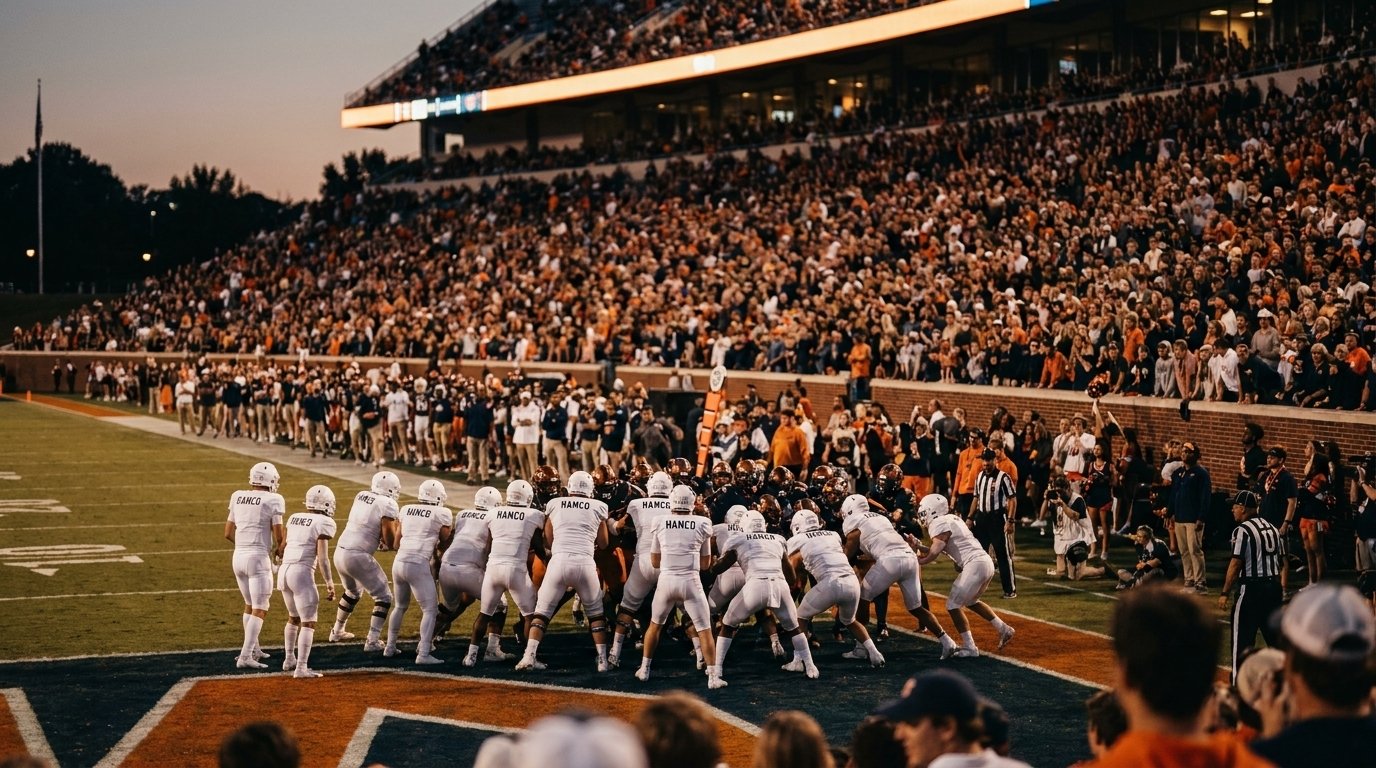
The format was straightforward. There is no game clock in college overtime, which is the first thing that surprises NFL fans. Instead, each team gets one possession starting at the opponent’s 25 yard line. A team keeps the ball until it scores, turns it over, or fails to get a first down. After both teams have had a possession, if the score is tied, you run it back and play another overtime period. Whoever is ahead at the end of a completed period wins. In that original version, a team could kick the extra point or go for two after a touchdown, entirely its choice, and play simply continued, period after period, until someone came out ahead.

That last part is exactly what caused the problem the NCAA has been chasing ever since.
The Two Point Conversion Rule and When You Must Use It
Because teams could trade touchdowns and extra points indefinitely, games occasionally spiraled into marathon sessions that left players exhausted and at real injury risk. The fix has been a series of rules forcing teams to go for two, applied earlier and earlier.
Here is the current rule. In the first overtime, you still have the choice to kick the extra point or go for two. Starting in the second overtime, if you score a touchdown, you are required to attempt a two point conversion. There is no kicking the easy point anymore. The whole purpose is to create a winner faster, because a missed two point try is far more likely to break a tie than a near automatic extra point kick.
The 2021 Change: Alternating Two Pointers From the Third Overtime
The biggest shift came in 2021, and it changed what overtime even looks like past the second period.
Starting with the third overtime, teams stop running full possessions from the 25 yard line entirely. Instead, they alternate single two point conversion attempts from the 3 yard line, one play each, back and forth, until one team converts and the other does not. It turns into a shootout, much like the way hockey settles games with penalty shots. This replaced an older rule where the two point shootout did not begin until the fifth overtime, which still allowed for those grueling marathons. Here is the current format laid out in full:
| Overtime Period | Where the Ball Starts | Scoring Rule |
| First overtime | Opponent’s 25 yard line | Score normally; kick the extra point or go for two, your choice |
| Second overtime | Opponent’s 25 yard line | Same drive format, but you must go for two after a touchdown |
| Third overtime and beyond | The 3 yard line | One play only: alternating two point attempts until someone wins |
What Changed in 2024 (Honestly, Not the Overtime)
This is where honesty matters, because plenty of articles imply the rules shift every single season. They do not. The overtime format you just read has held steady since 2021.
The headline rule changes for 2024 were elsewhere, things like helmet communication technology and timing adjustments, none of which touched the overtime structure. So if you learned the current format, you are good. The reputation college football overtime has for constant change is real, but it was earned mostly by the back to back tweaks in 2019 and 2021, not by a yearly overhaul. Here is the actual timeline of when the overtime rules changed:
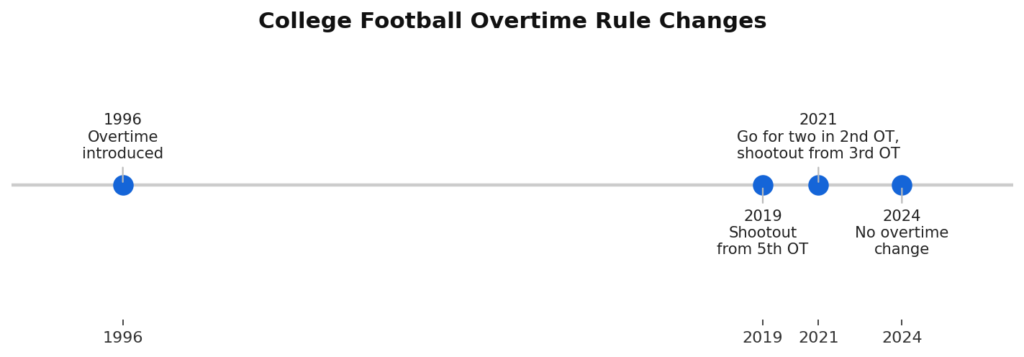
Timeline of college football overtime rule changes showing overtime introduced in 1996, the shootout from the fifth overtime added in 2019, the current format set in 2021, and no overtime change in 2024
Notice the gap. The format sat untouched for 23 years after 1996, then changed twice in three seasons. That burst is where the reputation comes from, and it has been stable since.
Why NFL Overtime Is Completely Different
If you are bringing NFL habits to a college game, throw them out, because the two systems share almost nothing.
NFL overtime runs on a clock. The regular season uses a single 10 minute period, and the playoffs use 15 minute periods. College has no clock at all. The NFL regular season can still end in a tie if neither team pulls ahead in those 10 minutes, which famously happened when Green Bay and Dallas finished 40 to 40 in 2025. College football, by design, never ends in a tie. And while the NFL now guarantees both teams a possession in overtime, a rule it extended to the regular season in 2025, teams there still drive the length of the field on a clock rather than trading snaps from the 25 and then the 3. The two share a word and little else, which is part of the college game’s distinct identity, right down to programs like Oregon and their famous rotation of football uniform looks that the buttoned up NFL would never run.
The Longest College Overtime Game Ever (It Is Not Seven)
Most fans will tell you the longest college football game was the seven overtime classic where Texas A&M beat LSU 74 to 72 in 2018, a five hour slog that stood as the highest scoring game in major college history and directly triggered the rule changes that followed. It is a great story. It is also no longer the record.
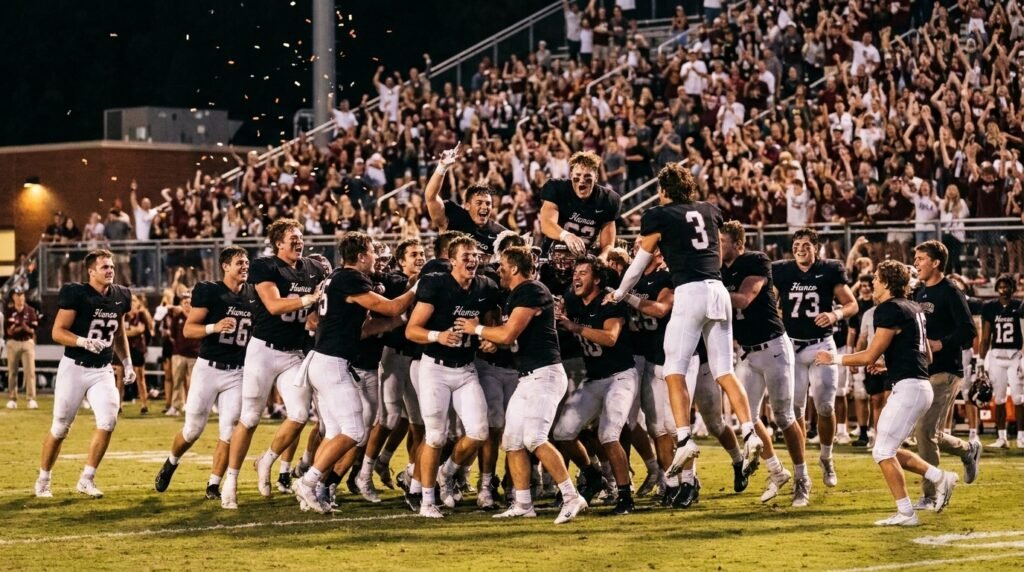
The actual longest game went nine overtimes, when Illinois upset seventh ranked Penn State 20 to 18 in 2021. The delicious irony is that it happened under the new rules that were specifically designed to prevent marathons. Tied 10 to 10 after regulation, the two teams traded two point misses for periods on end before Illinois finally converted and stopped Penn State. Only a small handful of games have ever reached even a seventh overtime, and the rule changes have made them rarer, but as Illinois proved, not impossible. The college game can still give you a marathon when two defenses dig in.
The Short Version
College football overtime gives each team a possession from the 25 yard line, forces a two point try starting in the second overtime, and turns into an alternating two point shootout from the third overtime on. It has no clock and never ends in a tie, which makes it nothing like the NFL’s timed format. The rules changed twice between 2019 and 2021 and have held since, and despite a system built to shorten games, one still went nine overtimes. Learn the three period structure above and you will never be lost in a college overtime again.
Frequently Asked Questions
What are the current college football overtime rules?
Each team gets a possession from the opponent’s 25 yard line in the first two overtimes, with a required two point conversion after any touchdown starting in the second overtime. From the third overtime on, teams alternate single two point attempts from the 3 yard line until one converts and the other fails.
When do teams have to go for two in college overtime?
A two point conversion is required after a touchdown starting in the second overtime. In the first overtime, teams can still choose to kick the extra point instead.
Does college football overtime have a clock?
No. There is no game clock in college overtime. Teams simply alternate possessions until a winner is decided, which is a major difference from the NFL’s timed overtime periods.
Can a college football game end in a tie?
No. Since overtime was introduced in 1996, college football games always play until one team wins. Only the NFL regular season can still end in a tie.
What is the longest overtime game in college football history?
Nine overtimes, when Illinois beat Penn State 20 to 18 in 2021. It passed the famous seven overtime Texas A&M win over LSU in 2018, even though the newer rules were designed to make long games shorter.
College overtime is a stage built for drama, and looking the part is half the battle, so our football jersey design guide is a good place to start a new team look.
When you are ready to order, our college style football uniforms come with custom numbers and a two week turnaround.
For warmups, fan gear, and everything beyond game day, browse the full range of football uniforms and apparel built for a long season.
College style football uniforms with custom numbers, two week turnaround.