If you have ever stood on a softball field for the first time, the whole thing can feel overwhelming. Nine players, a diamond, an outfield, and somehow everyone is supposed to know exactly where to go the moment the ball is hit. The good news is softball positions are actually pretty logical once someone breaks them down for you. The bad news is most explanations online are either too short to be useful or so packed with jargon that new players walk away more confused than when they started. This guide fixes that. Whether you are a player figuring out your role, a parent trying to understand what your kid is doing out there, or a coach building a lineup, by the end of this you will know what every position does, who tends to play it well, and why teams set up the way they do. If your team is also shopping for gear that actually fits the way each position moves, our Custom Softball Uniforms Collection has options built for real game conditions, not just product photos.
Background and Context
Softball started as an indoor version of baseball back in 1887, and it has grown into two main forms today: fastpitch and slowpitch. Both versions use the same nine fielding positions, but the speed of the game and the strategy behind each spot change a lot depending on which version you are playing. Fastpitch is what you will see in college and Olympic play, and it is dominated by pitching. Slowpitch is the recreational version most adults play in weekend leagues, and it usually adds a tenth fielder called a short fielder or rover.
The numbering system for softball positions matches baseball exactly. Pitcher is 1, catcher is 2, and the numbers continue around the infield, then out to the outfielders. Scorekeepers use these numbers when writing down plays, so a ground out from the shortstop to first base shows up as 6 to 3. Knowing the numbers is not just trivia. It helps you read scorebooks, follow game stats, and understand what coaches are talking about when they call out plays.
Core Concepts Explained
Here is each position, what they actually do, and what kind of player tends to thrive there.
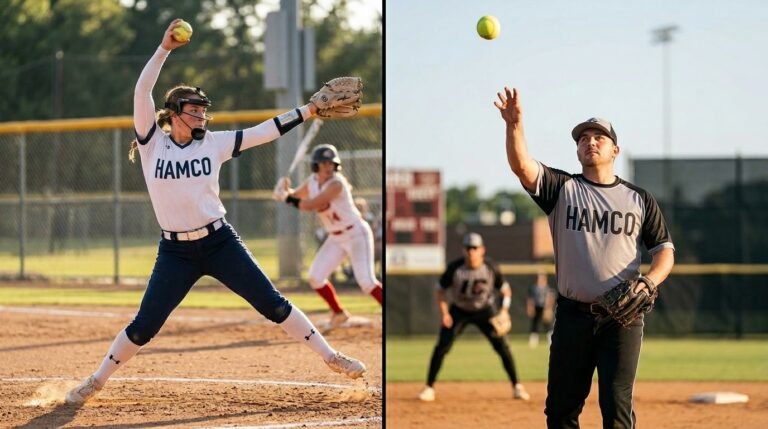
Pitcher (1). The pitcher controls the pace of the entire game. In fastpitch, this person throws underhand at speeds that can hit 70 miles per hour or more at the top levels. Pitchers need shoulder strength, mental toughness, and the ability to forget a bad pitch in two seconds flat. This is the most demanding position physically and mentally. If your pitcher melts down, the game usually goes with them.
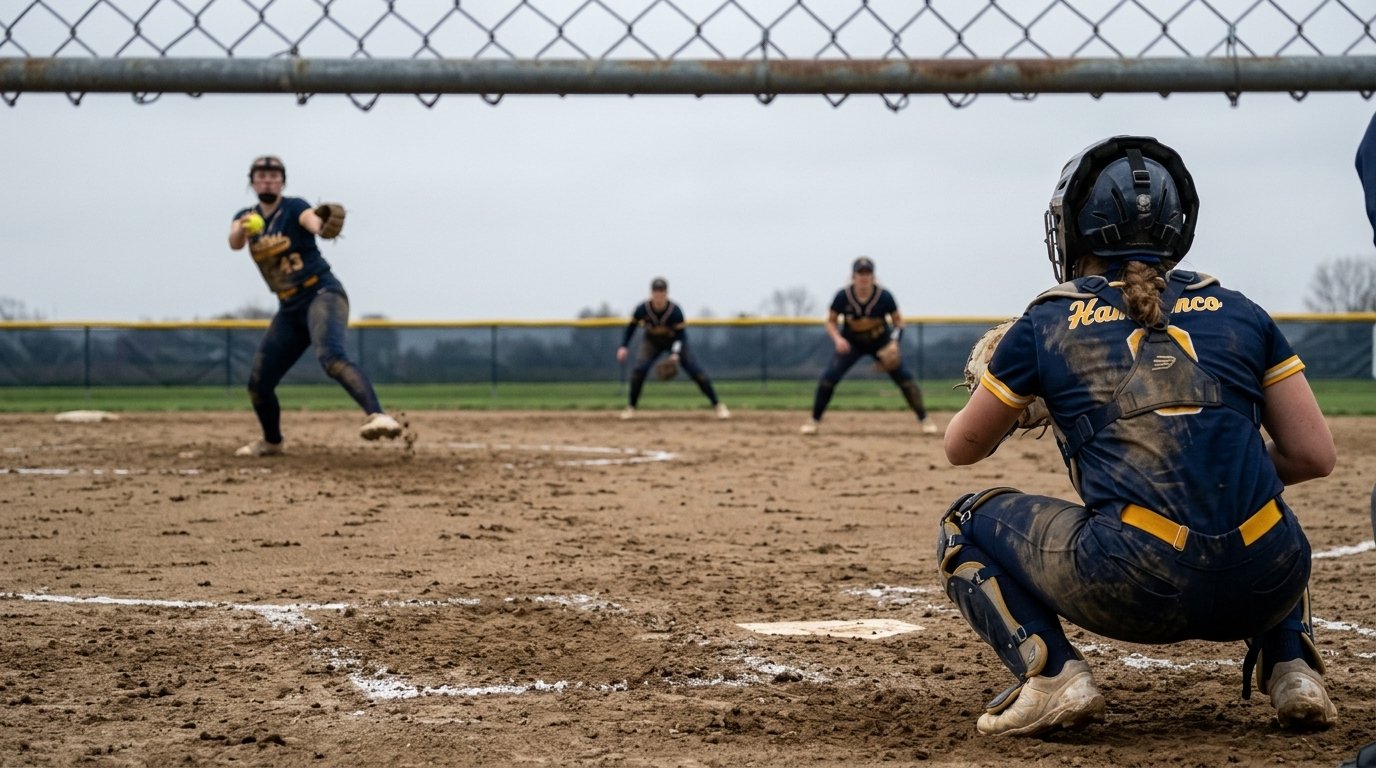
Catcher (2). The catcher squats behind home plate, calls pitches, blocks balls in the dirt, and throws out runners trying to steal. It is the second most demanding position on the field, and honestly the most underrated. Good catchers are leaders. They see everything because they face the whole field, and they quarterback the defense whether anyone gives them credit or not.
First Base (3). First base is where most ground ball outs end up. The player here needs soft hands to scoop low throws and the ability to stretch toward the throw without coming off the bag. Tall players often end up here, but quickness and reliability matter more than height. A first baseman who drops throws costs you outs every single inning.
Second Base (4). The second baseman covers the area to the right of second base from the fielder’s view. They turn double plays with the shortstop, cover the bag on steals, and back up throws constantly. Quick feet and a fast release matter more than a cannon arm here, since most throws are short.
Third Base (5). Third base is called the hot corner for a reason. Hard hit balls from right handed batters come screaming down the line, and there is almost no time to react. You need quick reflexes, a strong arm, and the willingness to take a ball off the body once in a while. If you flinch, this is not your spot.
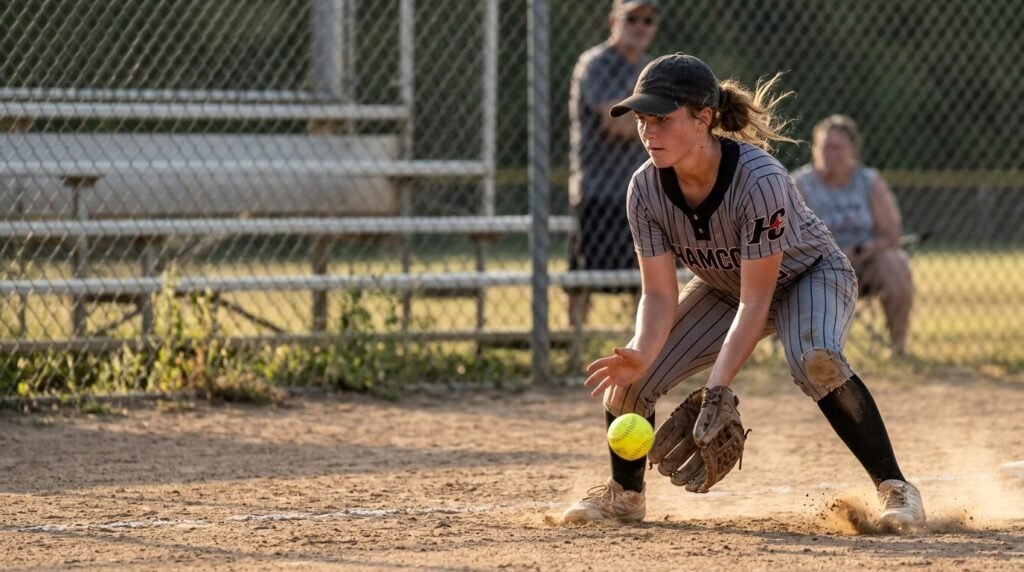
Shortstop (6). This is usually the best athlete on the team. Shortstops handle more balls than any other infielder, cover second on steals from the right side, and need to make every kind of throw from every kind of body position. If you can play shortstop well, you can probably play almost anywhere.
Left Field (7). Left fielders see a lot of action because most softball hitters are right handed and pull the ball that direction. You need a decent arm, but the bigger requirements are reading the ball off the bat fast and getting good jumps. Slow first steps will burn you out here.
Center Field (8). The center fielder covers the most ground in the outfield and is usually the fastest player on the team. They have priority on any ball they can reach, and they back up second base on throws from the catcher. Tall outfield grass and bad bounces are part of the job.
Right Field (9). Right field gets less action in youth ball, which is why coaches often hide weaker fielders there. At higher levels though, right fielders need the strongest outfield arm because they make the longest throw, all the way to third base. So the “easy spot” label fades pretty quickly as players get older.
Practical Application for Teams
When you are putting together a lineup, ignore the temptation to just match positions to body types. Fast equals outfield, tall equals first base, that kind of thinking. The best teams put their best decision makers up the middle (pitcher, catcher, shortstop, second base, center field) and let everything else fall into place. This is sometimes called the spine of the defense, and it is where most plays actually happen.
For youth teams, rotate kids through different positions during practice and early season games. Locking a nine year old into right field forever is how you lose players who might have become great shortstops if they had ever gotten a chance. Plus, players who understand multiple positions become smarter teammates because they know what everyone else is supposed to do. Coaches who refuse to rotate are usually protecting their own kid, and the team suffers for it.
If you are comparing softball to baseball as you think through positions, the field layouts are similar but not identical. We broke down all the real differences in our Softball Vs Baseball: Side by Side Comparison guide, and it is worth a read if you are coming over from baseball or trying to figure out which sport fits your kid better.
Examples and Case Studies
Look at any college softball team and you will see the spine principle in action. The pitcher and catcher do almost all the work behind every pitch. The middle infielders cover second on steals. The center fielder roams freely. The corner positions and corner outfielders fill in around them. This is not a coincidence. It is how winning teams are built.
Recreational slowpitch teams often add a short fielder, sometimes called a rover, who plays a shallow outfield position between the outfielders and infielders. This position exists because slowpitch hitters can place the ball more easily, and that gap between the infield and outfield gets exploited constantly without someone covering it. If your slowpitch league allows ten fielders and you are only using nine, you are giving away hits.
For youth fastpitch, a common mistake is putting the kid with the strongest arm at pitcher and never trying them anywhere else. Strong arms are great for pitchers, but pitching takes mental endurance, not just physical talent. Sometimes the best pitcher on your team is the one who can shake off a bad inning, not the one who throws hardest. Velocity is overrated at the youth level. Composure wins games.
Another real world example: pay attention to where your catcher is on Saturday morning by the third game of a tournament. If they look fine, you have a good one. Catching three games in a day is brutal. Teams that share the load between two catchers across a tournament almost always finish stronger than teams that run one catcher into the ground.
Frequently Asked Questions
How many positions are there in softball?
Standard softball uses nine defensive positions. Slowpitch leagues often add a tenth position called the short fielder or rover.
What is the hardest softball position to play?
Pitcher and catcher are tied for hardest. Pitching takes physical strength and mental endurance, while catching is the most physically demanding spot defensively.
What position should a beginner play in softball?
Start in the outfield, usually right field. It gives new players time to track the ball without the pressure of fast reaction plays in the infield.
What is the easiest softball position?
Right field in youth play sees the fewest balls, but no position is truly easy if you take it seriously. Every spot has skills to master.
What position do most lefties play in softball?
Left handed players are usually steered toward first base, pitcher, or any outfield spot. Throwing left handed makes some infield positions awkward to play well.
Summary and Action Items
Softball positions are not just slots on a field. Each one has its own rhythm, its own skill set, and its own personality. The spine positions (pitcher, catcher, shortstop, second base, center field) handle the bulk of the action. The corner positions add power and reach. The outfielders chase down what gets past the infield.
If you are a player, ask your coach to try you at two or three positions over the course of a season. You will learn the game faster, and you might discover a spot where you shine that nobody thought to put you. If you are a coach, build your team around the middle of the field first, then sort the rest. If you are a parent, the best thing you can do is encourage your kid to learn multiple spots rather than fighting for one specific position. Once your team knows where everyone is playing, make sure the gear actually holds up to whatever the field throws at it. Pitchers, catchers, and infielders all put their uniforms through different kinds of wear, and one type of fabric does not handle all of it well. Our Fastpitch Vs Slowpitch Softball Gear Guide walks through what each version of the game actually requires, so you are not spending money on equipment that will not survive the season.