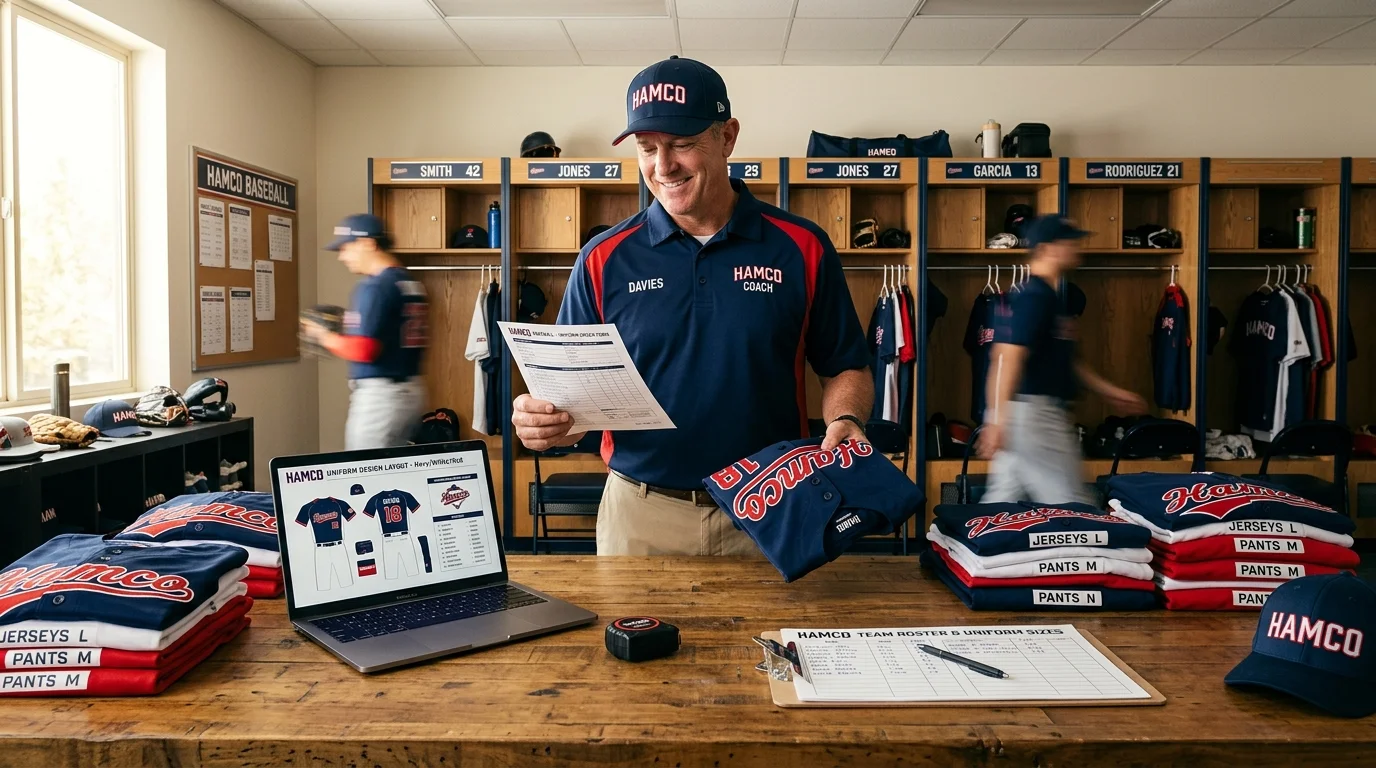
Figuring out how to order team uniforms in bulk can feel overwhelming the first time you go through it, but with the right process in place it becomes one of the most straightforward tasks in a coach’s administrative calendar. Whether you are outfitting a youth baseball squad, a high school program, or a competitive travel team, the principles are the same. Start with a supplier you can trust, understand your sizing needs, communicate your design requirements clearly, and give yourself enough lead time to avoid last minute panic. If you are looking for a reliable place to begin, custom baseball uniforms are a great example of what a professional uniform order looks like when all the details are handled correctly. This guide will walk you through every stage of the process from the very beginning so that you can place your next bulk order with total confidence.
Ordering uniforms in bulk is not simply a matter of picking a color and submitting a quantity. There are decisions to be made about fabric, fit, customization, sizing, timelines, and budget. Coaches who approach this process without a clear plan often end up with delays, sizing problems, or uniforms that do not hold up through a full season. The walkthrough below is designed to eliminate those mistakes before they happen.
Step 1: Define Your Uniform Requirements Before You Contact Anyone
The single biggest mistake coaches make when ordering team uniforms in bulk is reaching out to a supplier before they know exactly what they need. Contacting a supplier without a clear brief leads to back and forth communication, missed details, and wasted time. Before you make any calls or fill out any inquiry forms, sit down and answer the following questions.
How many uniforms do you need? Count your roster carefully and always add at least two to four extra pieces to account for late additions, size exchanges, and emergency replacements during the season.
What sport and position requirements exist? Different positions in many sports require different uniform styles or additional pieces. Make sure your list accounts for every player role, including any alternate uniforms if your program uses them.
What is your budget per unit? Knowing your budget ceiling early prevents you from falling in love with a design or fabric option that your program cannot afford. Most suppliers can work within a range once they know what it is.
When do you need the uniforms delivered? Work backward from your first game or practice date and build in at least two weeks of buffer for any corrections, shipping delays, or sizing exchanges.
Coach Tip: Create a simple one page brief that answers all of these questions before you contact a supplier. It will save you multiple rounds of emails and give the supplier exactly what they need to give you an accurate quote.
Step 2: Build Your Team Uniform Sizing Guide
This is the step that causes the most problems in bulk orders and the one that deserves the most attention. A well prepared team uniform sizing guide is the difference between a smooth delivery and a box of uniforms that do not fit half your roster.
Collect Measurements Properly
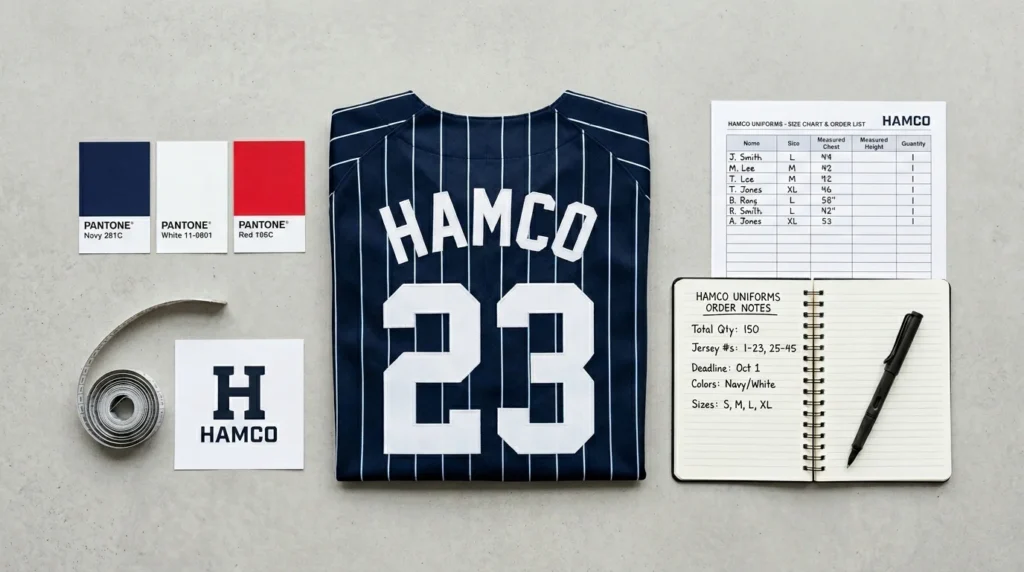
Do not rely on players or parents to self report their sizes. Self reported sizes are notoriously inaccurate, especially among youth athletes who may not know how athletic fit sizing works or who may want a size that looks cool rather than one that performs well. Organize a brief measurement session at practice and record the following for each player: chest circumference, waist circumference, hip circumference, height, and weight. Most uniform suppliers include a sizing chart that maps these measurements to their specific size runs.
Understand Athletic Fit vs Standard Sizing
Athletic fit uniforms are cut closer to the body to allow for unrestricted movement without excess fabric. Standard or relaxed fit uniforms offer more room throughout the torso and legs. Many players, especially younger athletes, are more comfortable in a relaxed fit, while older competitive players often prefer an athletic cut. Make sure you know which fit your supplier offers and communicate your preference clearly. For a deeper understanding of how apparel sizing and standardization works across the industry, you can refer to the overview of clothing sizes on Wikipedia as a general reference point.
Account for Growth and Seasonal Changes
If you are ordering uniforms for a youth program, consider that players may grow between the time of measurement and the end of the season. Ordering one size up for younger athletes in non performance critical dimensions is a widely accepted practice among experienced coaches. Just make sure the extra room does not interfere with safety equipment fit.
Coach Tip: Build your sizing spreadsheet with each player’s name, measurements, recommended size, and any special notes such as left handed cut or extended length requests. Share this spreadsheet directly with your supplier rather than relying on verbal communication.
Step 3: Choose the Right Supplier for Bulk Uniform Ordering
Not every uniform supplier is equipped to handle bulk orders well. Some are optimized for individual or small batch customization, while others have production lines designed specifically for team and institutional orders. Choosing the right partner for your bulk uniform ordering process is one of the most important decisions you will make.
What to Look for in a Bulk Uniform Supplier
Minimum order quantities: Some suppliers require a minimum number of units before they will process a custom order. Make sure their minimums align with your roster size.
Turnaround time: Ask specifically about production time, not just shipping time. A supplier may offer fast shipping but have a three to four week production window you were not expecting.
Customization capabilities: Confirm that the supplier can handle everything you need, including name and number printing, logo embroidery, custom color matching, and any specialized design elements your program requires.
Sample policy: A reputable bulk uniform supplier should offer the ability to order a sample or proof before your full order goes into production. Never skip the sample stage on a large order.
Reviews and references: Ask for references from other coaches or programs that have used the supplier for bulk orders. A supplier with a strong track record in team sports is far less likely to deliver surprises.
Coach Tip: Request a written quote that itemizes every cost including setup fees, printing charges, shipping, and any rush fees that might apply if your timeline is tight. Verbal quotes are not enough for a bulk purchase.
Step 4: Finalize Your Design and Customization Details
This is the creative stage of the coach uniform order process and it is where many coaches spend the most time. Getting your design details locked in before production begins is critical because changes made after production starts typically result in additional costs and delays.
Logo and Branding Files
Most suppliers require your logo and any other graphic elements in a vector format, typically an EPS or AI file. Raster images such as JPEGs and PNGs can lose quality when scaled up to uniform size. If your program does not have a vector version of its logo, you will need to have one created before placing your order. Many suppliers offer basic art services for an additional fee if you do not have access to a designer.
Color Selection
Uniform colors are matched to standardized color systems such as Pantone to ensure consistency across all pieces in your order. Simply saying navy blue or red is not specific enough. If your program has official colors defined by a parent institution such as a school district or league, get the exact color codes before you speak with your supplier. Inconsistent colors across different uniform pieces are one of the most common complaints in bulk orders, and they are entirely preventable with accurate color codes.
Name and Number Placement
Confirm exactly where names and numbers will be placed, what font will be used, and what size each element will be. If you have players with long last names, discuss how the supplier handles spacing and letter sizing adjustments so names do not run off the edge of the uniform. These are small details that matter enormously when the final product arrives.
Getting Approval on a Proof
Before your order goes into full production, your supplier should provide a digital proof showing exactly how the finished uniform will look. Review this proof carefully with attention to spelling, color accuracy, logo placement, and number formatting. Have at least one other person review it as well. Errors that are approved on a proof are the responsibility of the buyer, not the supplier.
Step 5: Place Your Order and Manage the Timeline
Once your design is approved and your sizing spreadsheet is finalized, it is time to formally place your order. This stage of the bulk uniform ordering process involves several important administrative steps that coaches sometimes overlook.
Get everything in writing. Your order confirmation should include the full itemized quantity breakdown, the confirmed design specifications, the agreed production timeline, the shipping method, the total cost, and the payment terms. Do not proceed until you have a written order confirmation that covers all of these elements.
Confirm your production schedule. Once your order is placed, ask for a specific date by which your uniforms will enter production and a date by which they will ship. Put these dates in your calendar and set a reminder to follow up a few days before each milestone.
Track your shipment. Most suppliers will provide a tracking number once the order has shipped. Monitor the shipment status proactively, especially in the two to three weeks before your delivery deadline.
Plan for a receiving inspection. When the shipment arrives, do not simply put the boxes in storage. Open every box immediately and check each item against your order. Verify quantities, check for damage, confirm name and number accuracy, and set aside any pieces that need to be exchanged or corrected. The sooner you identify problems, the sooner they can be resolved.
Coach Tip: Build a simple checklist that you can use at delivery to verify every item in the order. Going through the checklist systematically takes less than an hour and will catch any errors before they become game day emergencies.
Step 6: Handle Exchanges and Corrections Efficiently
Even with the best preparation, bulk uniform orders occasionally require adjustments after delivery. A player may have grown between measurement day and delivery, a number may have been printed incorrectly, or a size may have run differently than expected. How you handle these situations determines whether a small issue becomes a major problem.
Contact your supplier immediately when you identify an error or sizing issue. Most reputable suppliers have a defined process for handling post delivery corrections, and they will work with you as long as you communicate promptly and clearly. Document every issue with a photograph and a written description so there is no ambiguity about what needs to be corrected.
Keep your extra units in reserve specifically for size exchanges. The two to four additional pieces you ordered as part of your initial planning are your first line of defense against sizing problems. Having those reserves on hand means your players are never waiting for a correction to be processed before they can take the field.
Bulk Uniform Ordering Tips That Experienced Coaches Swear By
After working through hundreds of team uniform orders, experienced coaches tend to arrive at the same handful of lessons. Here are the bulk uniform ordering tips that consistently make the biggest difference.
Order earlier than you think you need to. The two most common causes of late uniform delivery are underestimating production time and ordering too close to the season start. Add three to four weeks to whatever timeline you think you need.
Keep a master order log. Document every bulk order your program places, including supplier name, quantities, costs, turnaround time, and notes on quality. This log becomes an invaluable reference for every future order.
Negotiate volume pricing upfront. If your program orders uniforms annually or across multiple teams, ask your supplier about volume discounts or preferred customer pricing. Many suppliers will offer meaningful discounts to repeat customers who consolidate their orders.
Standardize your sizing process. Create a uniform measurement protocol for your program and use it every season. Consistency in how you collect and report sizes reduces errors in every order going forward.
Build a relationship with one supplier. Jumping between suppliers chasing slightly lower prices costs more in the long run through inconsistent quality, repeated setup fees, and lost institutional knowledge about your program’s preferences.
Frequently Asked Questions
1. How far in advance should I place a bulk uniform order?
Most bulk orders require four to eight weeks from the time you place the order to the time the uniforms arrive. To be safe, start the process at least ten to twelve weeks before your first game, especially during peak ordering seasons in the spring and fall.
2. What is the best way to collect sizes for a team uniform sizing guide?
Organize a dedicated measurement session at practice and record chest, waist, hip, height, and weight for every player. Never rely on self reported sizes, as they are frequently inaccurate and lead to fit problems after delivery.
3. Can I add players to my order after it has been placed?
Some suppliers can accommodate additions to an active order if production has not yet started, but this is not guaranteed. Build two to four extra pieces into your initial order to cover late additions rather than relying on the ability to modify an order in progress.
4. What file format should I use to submit my team logo?
Submit your logo as a vector file in EPS or AI format. These formats scale without any loss of quality and are the standard requirement for most professional uniform suppliers.
5. How do I handle a uniform that arrives with an incorrect number or name?
Photograph the error immediately and contact your supplier in writing the same day. Most reputable suppliers will correct production errors at no charge as long as you report them promptly and the error was not present on an approved proof.
Conclusion
Knowing how to order team uniforms in bulk is a skill that pays dividends across every season of your coaching career. When you follow a clear process, from building an accurate team uniform sizing guide and choosing the right supplier to finalizing your design and managing your delivery timeline, the bulk ordering experience becomes predictable, efficient, and stress free. Use the steps in this walkthrough as your standard operating procedure, keep detailed records of every order, and build strong relationships with suppliers who understand the needs of competitive sports programs. Your players will take the field looking sharp, fitted properly, and ready to compete.