A Coach’s Complete Guide to Fabric, Fit, and Style Decisions for Every Roster
Introduction
Every season, coaches face a decision that affects far more than aesthetics: how to choose baseball uniforms for your team. The right uniform builds identity, boosts confidence, and keeps players comfortable through doubleheaders under brutal summer heat. The wrong one leads to complaints about chafing fabric, faded colors after a handful of washes, and a look that screams “generic.”
In 2026, the landscape of baseball uniforms has shifted. Fabric technology has advanced, sublimation printing has become the standard for vibrant customization, and athletes at every level expect gear that performs as well as it looks. Whether you’re outfitting a Little League squad or a competitive high school roster, the choices you make during the ordering process will live with your team for an entire season.
This guide walks you through every critical decision point: fabric composition, fit and sizing, jersey and pant style options, color strategy, customization methods, and budgeting. By the end, you’ll have a clear framework for ordering custom baseball team uniforms that your players are proud to wear and that hold up game after game.
1. Start with the Fabric: Performance Comes First
Before you think about colors, logos, or pinstripes, get the fabric right. Material is the foundation of every good baseball jersey, and it determines comfort, durability, and how the uniform looks after thirty games.
Polyester Mesh vs. Polyester Knit
Most modern baseball uniforms are constructed from 100% polyester or polyester-blend fabrics, and for good reason. Polyester is lightweight, resists shrinking, and dries quickly. Within that category, though, coaches need to choose between two primary options.
Polyester mesh features a perforated, open-weave construction that maximizes airflow. It’s the ideal choice for teams playing in hot or humid climates. The tradeoff is that mesh tends to feel slightly less substantial and can be more prone to snagging on belt buckles or rough surfaces.
Polyester knit offers a smoother, denser feel. It provides a more traditional appearance, holds printed designs with sharper detail, and tends to be more durable over repeated washes. For coaches who want a professional, clean look, knit is typically the better pick.
Moisture-Wicking Technology
In 2026, moisture-wicking capability is non-negotiable. Look for fabrics that actively pull sweat away from the skin and distribute it across the surface for faster evaporation. This matters tremendously during tournament play when athletes may spend eight or more hours in the same uniform. When selecting custom team uniforms baseball programs will rely on all season, confirm that the manufacturer uses wicking-treated polyester rather than untreated fabric. Hamcospo’s baseball uniform fabrics, for instance, come with built-in moisture management to keep players cool and dry.
Weight and Stretch
Fabric weight matters more than most coaches realize. Lighter-weight fabrics in the range of 140 to 170 GSM work well for jerseys, while pants generally require something heavier, around 200 to 260 GSM, to withstand sliding and field contact. A small percentage of spandex or elastane blended into the fabric gives players freedom of movement at the shoulders, elbows, and knees without the uniform losing its shape.
2. Getting Fit Right Across Your Entire Roster
Ordering for a full team is not the same as buying one uniform. Coaches typically manage rosters of 12 to 25 players with drastically different body types, and sizing mistakes lead to returns, delays, and unhappy athletes.
Athletic Fit vs. Relaxed Fit
Modern baseball uniforms are available in two general silhouettes. Athletic fit jerseys are more tapered through the torso and arms, providing a streamlined look that many older players and competitive programs prefer. Relaxed fit offers more room through the chest and midsection, which tends to be more comfortable for younger players or recreational leagues where comfort is the top priority.
Coaches should consider their roster’s age range and competitive level when choosing between these options. A high school varsity team will typically gravitate toward athletic fit, while a 10U recreational team benefits from the forgiving dimensions of a relaxed cut.
Sizing Strategy: Measure Before You Order
The single biggest mistake coaches make when ordering custom baseball team uniforms is skipping the measurement step. Schedule a 15-minute sizing session at practice and have each player measured at the chest, waist, and inseam. Record everything in a shared spreadsheet, then cross-reference those measurements against the manufacturer’s size chart. Hamcospo provides detailed sizing guides for every product line, which simplifies this step considerably.
Order a size up for players who fall between sizes. A slightly loose jersey always looks better than one that’s visibly tight, and pants can be hemmed if they run long. Avoid ordering extra-large for younger players hoping they’ll “grow into it”—an oversized jersey looks sloppy and interferes with movement.
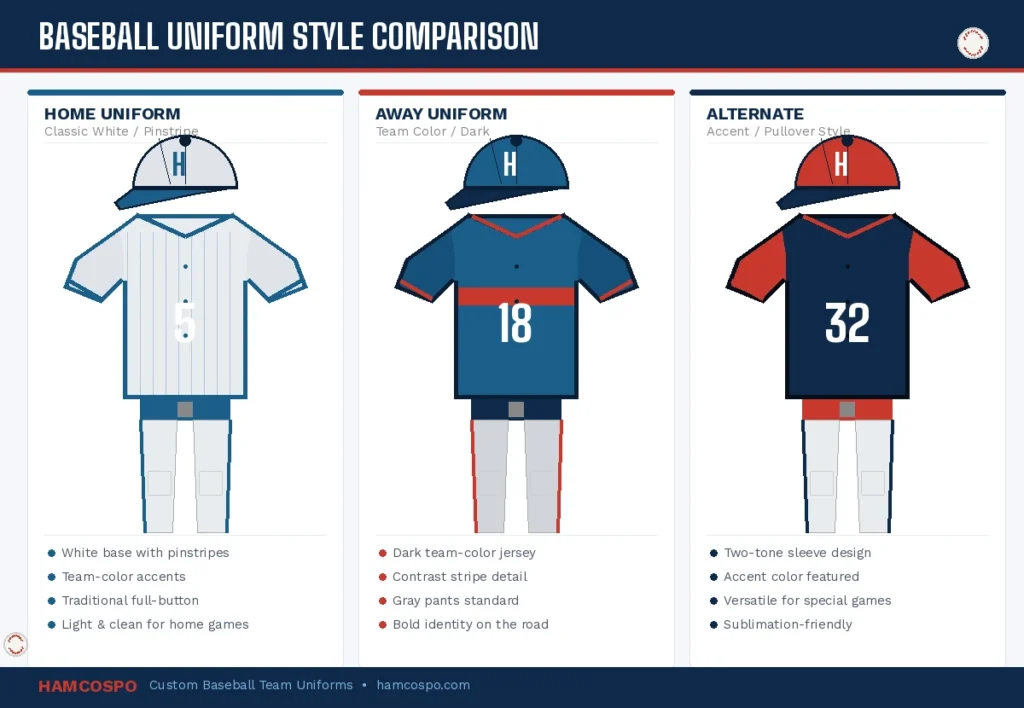
3. Choosing Your Jersey Style
The baseball jersey is the most visible piece of the uniform, and the style you choose sets the tone for your team’s visual identity.
Full-Button vs. Two-Button vs. Pullover
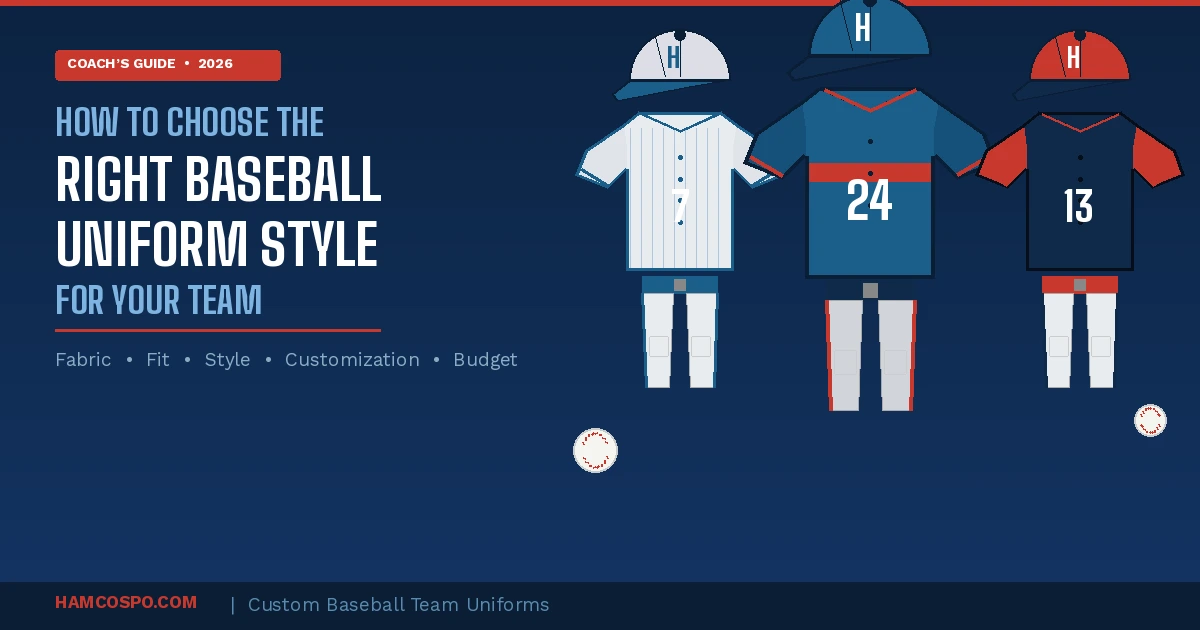
Full-button jerseys are the classic, professional look that runs from collar to waist. This is the standard for high school, college, and adult leagues. Two-button or henley-style jerseys offer a slightly more casual feel and are popular with travel ball programs because they’re easy to put on and remove. Pullover jerseys are the simplest option, gaining popularity for youth programs because of their low-maintenance durability. When deciding how to choose baseball uniforms for your team, think about the formality your league expects and what your players will actually feel comfortable wearing.
Collar Options
Collar style is a subtle detail with significant impact on appearance. Standard crew necks work with all jersey types and are the safest choice. V-neck collars create a more modern look and are common on two-button and pullover styles. Some manufacturers also offer banded collars with contrast piping for a refined, throwback feel.
Sleeve Length
Most baseball jerseys come in short-sleeve or three-quarter sleeve options. Short sleeves are standard and work for the widest range of body types and weather conditions. Three-quarter sleeves provide additional sun protection and a distinctive look, though they’re less common at the youth level.
4. Baseball Pants: Don’t Overlook the Bottom Half
Coaches often spend the bulk of their energy on jersey design and treat pants as an afterthought. That’s a mistake. Pants take more physical abuse than any other part of the uniform, and the wrong choice leads to blowouts, discomfort, and extra spending mid-season.
Open-Bottom vs. Knicker-Style vs. Traditional Long
Open-bottom pants are the most common style in 2026, sitting straight from the knee down over the cleat. Knicker-style pants taper and end just below the knee, favored by players who want to show off their socks and stirrups. Traditional long pants with elastic cuffs at the ankle remain a solid choice for programs that prefer a clean look without visible socks.
The best approach is to pick one style for the entire team. Mixed pant styles on the field look disjointed and undermine the unified appearance you’re trying to create.
Reinforced Knees and Sliding Pads
If your team plays on dirt infields or practices sliding regularly, prioritize pants with reinforced knee panels or integrated sliding pads. These features extend the life of the pants dramatically and reduce the number of mid-season replacements you’ll need to order.
5. Color Strategy and Design Identity
Your team’s color palette does more than look good—it communicates identity, tradition, and brand. Choosing the right combination requires both creative instinct and practical thinking.
Building a Color Palette
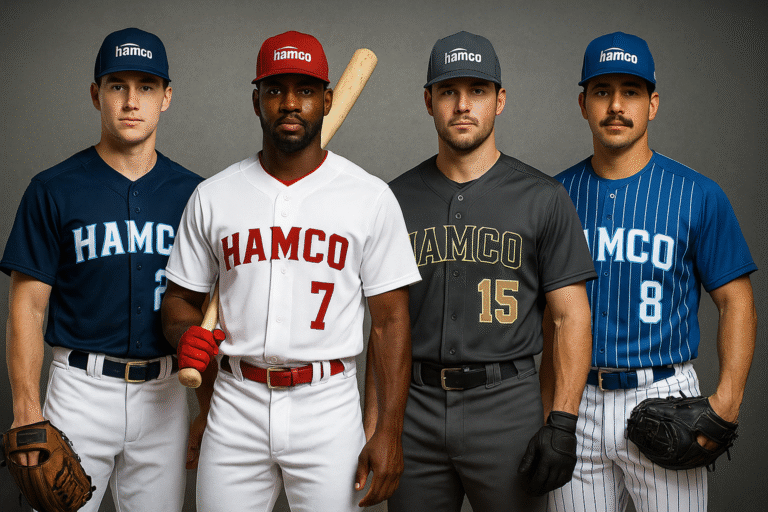
Start with one primary color and one secondary color. Add a third accent color only if it serves a clear purpose, such as piping or number outlines. Too many colors create visual clutter. Your home and away uniforms should share the same color family while being clearly distinct: a white-based home jersey with colored lettering and a dark away jersey with light-colored accents is the standard approach.
Sublimation vs. Screen Printing vs. Embroidery
The customization method you choose directly impacts color vibrancy, durability, and cost. Sublimation printing infuses dye directly into the polyester fibers, resulting in designs that never crack, peel, or fade. It allows unlimited colors and complex patterns with no added cost per color, making it the preferred method for custom team uniforms baseball coaches order in 2026. Screen printing applies ink on top of the fabric and is cost-effective for simple designs but can crack after repeated washing. Embroidery stitches the design into the fabric and works best for small details like cap logos. It adds a premium feel but is impractical for large graphics.
6. Customization Details That Matter
Once you’ve nailed the big decisions, the smaller customization choices determine whether your baseball uniforms look truly professional or just adequate.
Numbers and Lettering
Choose a font that’s legible from a distance. Scorekeepers, umpires, and fans need to read player numbers clearly from across the field. Block, varsity, and athletic fonts are the most reliable choices. Ensure that front numbers, back numbers, and any name lettering are consistent in style. Mismatched fonts across jersey elements look amateurish.
Logos and Branding
Your team logo should appear prominently but not overwhelm the jersey. Common placements include the left chest, center chest, or cap front. If you have sponsors, confirm placement compliance with your league’s uniform regulations. Provide your manufacturer with high-resolution vector files for the sharpest reproduction.
Accessories and Add-Ons
A complete baseball uniform goes beyond the jersey and pants. Consider matching socks or stirrups, belts, and caps as part of your order. Ordering all components from one supplier ensures color consistency across every piece. Mismatched shades of navy or red between a jersey and cap are immediately noticeable.
7. Budgeting and Ordering Timeline
Even the best-designed uniform is meaningless if it blows your team’s budget or arrives two weeks after the season starts.
Setting a Realistic Budget
When planning your budget for baseball uniforms, account for the full package: jerseys for home and away games, pants, caps, socks, and belts. Many coaches focus only on jersey cost and then scramble when accessories add up. Request quotes for the complete set from your supplier. Hamcospo offers competitive pricing on full uniform packages, which helps coaches stay within budget while still getting premium quality.
Order Timing
Custom baseball team uniforms typically require four to six weeks for production and delivery, plus another week for design revisions. Finalize your uniform design at least eight weeks before your first game. Rushing the timeline leads to errors and sizing problems that are entirely avoidable with basic planning.
8. Choosing the Right Uniform Manufacturer
Not all uniform providers are created equal. The manufacturer you partner with determines not just the quality of your baseball jersey and pants, but also the ordering experience, turnaround time, and after-sale support.
What to Look For
Prioritize manufacturers who specialize in custom team uniforms baseball programs rely on, rather than general apparel companies. Specialists understand the sport’s specific demands: reinforced stitching at stress points, athletic cuts designed for throwing and swinging, and printing methods that withstand dirt and repeated laundering.
Look for transparent pricing with no hidden setup fees. Ask about minimum order quantities, sample availability, and revision policies. A quality manufacturer will provide digital mockups before production so you can see exactly what you’re getting.
Hamcospo checks every one of these boxes. Their custom baseball uniforms are built specifically for team sports, with advanced sublimation technology, flexible sizing across full rosters, and a dedicated design team that works directly with coaches. From initial concept to final delivery, the process is streamlined to save you time and eliminate guesswork.
Quick-Reference Checklist for Coaches
Use this checklist before placing your uniform order to make sure every detail is covered.
- Confirm fabric type and weight: mesh vs. knit, appropriate GSM for jerseys and pants
- Select fit style for your roster: athletic or relaxed
- Conduct a team sizing session and record measurements
- Choose jersey style: full-button, two-button, or pullover
- Decide on collar type and sleeve length
- Select pant style: open-bottom, knicker, or long with cuffs
- Confirm reinforced knees or sliding pads if needed
- Finalize color palette: primary, secondary, and accent
- Choose customization method: sublimation, screen print, or embroidery
- Select font for numbers and lettering; confirm legibility
- Provide high-resolution logo files to manufacturer
- Order matching accessories: caps, socks, belts
- Set budget for full uniform package, not just jerseys
- Place order at least eight weeks before the first game
Frequently Asked Questions
What is the best fabric for baseball uniforms in 2026?
Moisture-wicking polyester is the top choice for modern baseball uniforms. It dries quickly, resists shrinking and staining, and holds printed designs exceptionally well. For maximum comfort, look for polyester blends that include a small percentage of spandex or elastane for stretch. Mesh polyester works best in hot climates due to its open-weave airflow, while knit polyester offers a denser, more traditional feel with sharper print quality. Whichever you choose, confirm that the fabric includes built-in moisture management rather than untreated polyester.
What is the difference between sublimation and screen printing for baseball jerseys?
Sublimation infuses dye directly into the polyester fibers using heat and pressure, creating a permanent design that will never crack, peel, or fade. It supports unlimited colors and complex patterns at no extra cost per color, and the finished baseball jersey feels lightweight because no ink layer sits on top of the fabric. Screen printing, by contrast, applies ink onto the surface. It’s cost-effective for simple, single-color logos and large bulk orders, but the ink can crack or peel after repeated washing. For teams that want vibrant, long-lasting custom baseball team uniforms, sublimation is the preferred method.
How many uniforms does a baseball team need for a full season?
At minimum, most teams need a home uniform and an away uniform. Travel ball and tournament teams often add a third alternate jersey for scheduling flexibility or to avoid color clashes with opponents. Some programs also order separate practice jerseys to preserve game uniforms. When budgeting, account for the full package: jerseys, pants, caps, socks, and belts for each set. Ordering a few extra jerseys in common sizes is also a smart move, especially for youth teams where players may lose or outgrow their uniforms mid-season.
How far in advance should I order custom baseball team uniforms?
Plan to finalize your uniform design at least eight weeks before your first game. Most manufacturers need four to six weeks for production once artwork is approved and roster details are confirmed. Add one to two additional weeks for design revisions, digital mockup approvals, and shipping. Ordering during peak season, typically January through March, may extend lead times further. The earlier you start, the more time you have to catch sizing errors and request corrections before opening day.
Should I choose full-button, two-button, or pullover baseball jerseys for my team?
The best choice depends on your team’s competitive level and player preferences. Full-button jerseys deliver the classic, professional look used in high school, college, and adult leagues. Two-button or henley-style jerseys are popular with travel ball and recreational programs because they are easy to put on and look sharp without the maintenance of a full-button front. Pullover jerseys are the simplest and most durable option, making them ideal for younger players in youth leagues. Consider your league’s uniform expectations and what your players will feel most comfortable wearing during long games.
Final Thoughts
Learning how to choose baseball uniforms for your team is not about chasing trends or copying what the pros wear. It’s about making deliberate, informed decisions that balance performance, appearance, durability, and budget. Every choice—from the polyester blend in the fabric to the font on the back of the jersey—contributes to how your players feel when they step between the lines.
Great uniforms don’t just look good in team photos. They handle the sweat of a July afternoon, survive headfirst slides, stay vibrant after dozens of wash cycles, and give every player on your roster a sense of belonging. If you’re ready to outfit your team with uniforms that meet that standard, explore Hamcospo’s full range of custom baseball uniforms and start building your team’s look for the 2026 season.