

Learning how to start a flag football league for kids is more relevant in 2026 than at any point in the sport’s history. Flag football is growing at a remarkable pace — it is scheduled to debut at the 2028 Los Angeles Olympics, NFL Flag programs operate in over seventeen thousand communities, and youth participation numbers have climbed steadily as parents seek safer alternatives to tackle football for younger children. If you want to bring flag football to your community, this complete guide covers every step from legal setup to ordering custom flag football uniforms that give your league a professional identity from day one.
The process of starting a flag football league shares many elements with starting any youth sports organization — legal structure, insurance, fields, coaches, and equipment — but flag football has several unique advantages. Startup costs are lower than tackle football because pads and helmets are not required. Fields are smaller and easier to obtain. Games move faster and are more accessible for new players. These factors make flag football one of the most community-friendly youth sports programs you can launch.
Why Flag Football Is Booming in 2026
The growth trajectory for flag football entering 2026 is extraordinary. USA Football reports that flag football now has more youth participants than tackle football at the under-ten age level. The Olympic inclusion decision has dramatically elevated the sport’s mainstream profile, generating sponsorship, media attention, and participation that organizers five years ago could not have imagined.
Parents of young children are drawn to flag football because the absence of blocking and tackling reduces contact injury risk substantially. Coaches appreciate the emphasis on skill development — route running, pass coverage, rushing patterns, and football IQ — over physical dominance. Communities benefit from lower equipment costs and smaller field requirements that make programs accessible in dense urban and suburban areas without large athletic facilities.
Choose Your League Format
Flag football leagues operate under several different formats, and your choice shapes everything from field requirements to team size to rule complexity. The three most common formats are 5v5, 7v7, and NFL Flag format.
5v5 flag football is the most accessible format for new leagues and young children. Small fields, faster-moving games, and simplified rules make it ideal for ages five through ten. 7v7 flag football introduces more positional complexity and is appropriate for ages ten and up. The NFL Flag format standardizes rules nationally and provides access to the NFL Flag championship structure that many competitive programs target.
Most successful leagues start with one format across all age groups and add complexity as they grow. Choose the format your community coaches are most familiar with and expand from there. Mixing formats across age divisions before you have experienced coaching staff creates confusion that undermines the player experience.
NFL Flag Affiliation vs Independent Operation
Affiliating with NFL Flag provides significant advantages for new leagues: access to established rules, equipment grants, insurance partnerships, coaching resources, and the national championship tournament structure. NFL Flag affiliation also gives your program immediate credibility with families who recognize the brand. Visit nflflag.com for current affiliation requirements and the application process.
Independent operation gives you maximum flexibility in rules, scheduling, and program design. Many thriving flag football leagues operate completely independently using USFTL or USA Flag Football rules frameworks. The tradeoff is building all infrastructure yourself without the support network that NFL Flag affiliation provides. For a first-year organizer, affiliation is almost always the better choice.
Legal Registration and Insurance
Register your flag football league as a 501(c)(3) nonprofit to access grant funding, tax-deductible donations, and reduced liability. File articles of incorporation with your state, obtain an EIN from the IRS, and draft bylaws. Insurance requirements for flag football are somewhat less complex than tackle football because the contact injury profile is lower, but liability and accident insurance remain mandatory.
Companies like K&K Insurance and Sadler Sports Insurance offer youth sports policies appropriate for flag football leagues. Annual premiums typically fall in the two-to-four-dollar-per-player range for combined liability and accident coverage. Some facilities and parks departments require specific minimum coverage limits before granting field access — confirm requirements before signing field agreements.
Field Setup and Equipment
Flag football fields are smaller than tackle football fields. Standard NFL Flag fields are thirty yards wide by seventy yards long for seven-on-seven and twenty yards wide by fifty yards long for five-on-five. Many communities use existing soccer fields, multipurpose athletic fields, or gymnasium floors for indoor flag football programs.
The equipment list for a flag football league is refreshingly short. You need flag belts and flags for every player, end zone pylons or cones to mark the field boundaries, a football appropriate for each age group, and sideline equipment like down markers. Footballs sized for youth ages six through eight are junior size, nine through twelve use youth size, and thirteen and up use adult or official size.
Custom flag football jerseys or pinnies help differentiate teams on the field and create team identity. Unlike tackle football, flag football players do not wear pads or helmets, so the jersey is the primary visual element of each team’s presentation.
Recruiting Coaches and Officials
Flag football coaches need a solid understanding of football concepts — formations, route trees, defense coverage types — but do not need tackle football coaching backgrounds. Many excellent flag football coaches come from backgrounds in basketball, soccer, or other sports where spatial awareness, team strategy, and player development skills are primary.
Flag football officials need to understand the specific rules of your format, particularly regarding contact rules, flag-pulling regulations, and scoring. NFL Flag and USA Flag Football both offer referee training resources. Even in recreational youth leagues, having trained officials rather than parent volunteers calling games reduces conflict and improves the player experience significantly.
Ordering Custom Flag Football Uniforms
Custom flag football uniforms give your league a professional presentation that parents and players immediately notice. Since flag football players do not wear pads or helmets, the jersey is the complete visual identity of each team. Custom sublimated flag football jerseys allow unlimited design freedom — team colors, logos, player names, and numbers in any configuration you choose.
Custom youth flag football jerseys should be lightweight, moisture-wicking, and sized appropriately for youth bodies. Sublimated fabric performs ideally for flag football because there are no printed graphics to crack or peel during the rapid lateral movement and direction changes that define the sport.
Order custom flag football jerseys for your league at hamcospo.com/custom-football-uniforms/ with free design mockups, bulk league discounts, and fast production timelines.
Building the Season Schedule
A flag football season for youth leagues typically runs eight to twelve games over six to eight weeks. The faster game pace and lower physical toll of flag football compared to tackle football allows more games per season without overwhelming young players. Most leagues run games on Saturday mornings with two games per team per weekend at peak schedule.
A championship tournament at the end of the regular season adds excitement and provides a compelling season-end goal for teams and players. Flag football tournament formats work well as single-elimination brackets or short round-robin groups followed by a final bracket. The faster pace of flag football means a well-run tournament can complete eight teams in a single day.
Registration and Marketing
Online registration through platforms like Sports Connect or TeamSnap makes the enrollment process seamless for families. These platforms handle registration forms, payment collection, and parent communication in one interface. Set up online registration at least six weeks before your season start date to allow adequate time to form balanced teams.
Market your flag football league at elementary schools, community centers, social media, and local youth sports Facebook groups. Partner with local businesses for team sponsorships. Reach out to existing tackle football parents as flag football has strong appeal for families of younger siblings who are not ready for contact sports.
Frequently Asked Questions
Frequently Asked Questions
Q: What age group is best to start a flag football league with?
A: Ages six through ten are the most natural entry point for flag football leagues because the non-contact format aligns perfectly with developmental readiness and parental comfort levels at these ages.
Q: How much does it cost to start a flag football league?
A: A basic flag football league can launch for one thousand five hundred to four thousand dollars covering insurance, flags and equipment, field rental if applicable, and custom flag football jerseys.
Q: Do flag football players wear any protective equipment?
A: Standard flag football requires only the flag belt and flags. Mouthguards are recommended and required by some organizations. No pads, helmets, or cleats are required, though athletic footwear with traction is standard.
Q: Can girls participate in youth flag football leagues?
A: Absolutely. Flag football has strong and growing female participation at all levels. Many leagues operate co-ed divisions, and girls-only flag football programs are expanding rapidly across the country.
Q: How do I get NFL Flag affiliation?
A: Visit nflflag.com for current affiliation application requirements. NFL Flag affiliation includes access to official rulebooks, equipment resources, coaching tools, and the national championship tournament pathway.
Starting a flag football league for kids is a project that pays dividends for your community for years to come. The sport is growing, the barriers to entry are lower than most youth sports, and the player experience it creates — fast-paced, skill-oriented, and genuinely fun — keeps kids coming back season after season. Build it right from the ground up and your league will outlast you.

Related Articles
High School Football Rankings 2026 | How Teams Get Ranked & What Matters
Understanding how high school football rankings work demystifies one of the most discussed and debated topics in prep sports. Every...
Custom Football Jersey Design Guide 2026 | Colors, Templates, Numbers & Trends
Creating a custom football jersey design that your team will be proud to wear requires more than picking favorite colors...
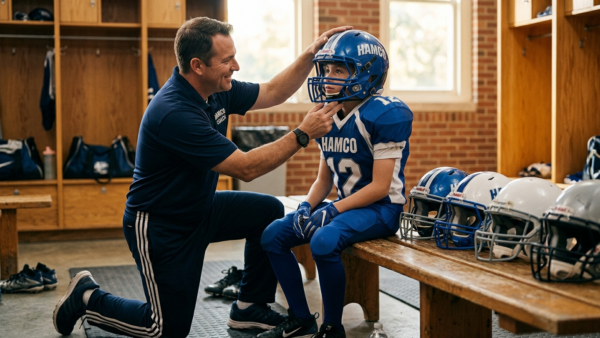
Youth Football Helmet Guide 2026 | Sizing, Safety Ratings & Top Brands by Age
Choosing the right youth football helmet is the single most important safety decision in youth tackle football. The helmet stands...