

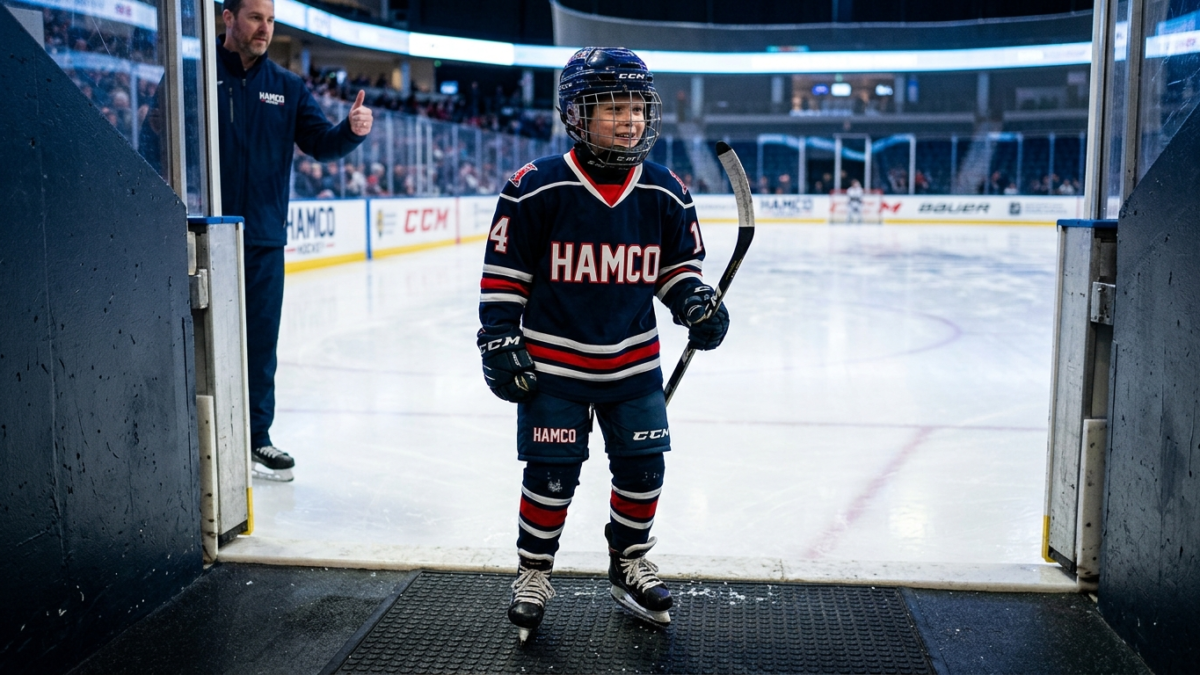
A complete youth hockey equipment checklist prepares new players for one of the most equipment-intensive youth sports available. Hockey requires more protective gear than virtually any other team sport, and the cost and complexity of that gear is the primary barrier to participation for many families. This guide walks through every item on the youth hockey equipment checklist — from skates and helmets through sticks and custom ice hockey uniforms — with sizing guidance, safety certification information, and realistic budget ranges to help families make confident equipment decisions for their young players.
Ice hockey is one of the fastest-growing youth sports in the United States, with USA Hockey reporting steady increases in youth registration particularly in non-traditional markets outside the traditional northern tier states. The sport’s combination of skating skill development, team strategy, and physical challenge attracts players who want an athletic experience unlike any other team sport. Getting the equipment right makes the difference between a player who falls in love with the game and one who struggles and disengages.
Youth Hockey Equipment Overview: What You Need
A complete youth hockey equipment set includes skates, a helmet with cage or visor, shoulder pads, elbow pads, gloves, shin pads, a jockstrap or pelvic protector, hockey pants or girdle, a neck guard, a mouthguard, and a stick. Goalies require entirely different and more extensive gear including a specialized mask, chest protector, blocker, trapper, leg pads, and goalie stick.
USA Hockey mandates HECC-certified helmets for all players in sanctioned youth programs. Full wire cage visors are required for players through age fifteen in most USA Hockey-affiliated programs. This comprehensive mandatory coverage is one of the reasons hockey has a strong safety record despite its physical nature. Visit USA Hockey for complete equipment regulations and certification requirements.
Ice Skates: The Most Important Youth Hockey Purchase
Ice skates are the most important and most personal piece of equipment in the youth hockey equipment checklist. Poorly fitted skates make skating harder, slower, and more frustrating than well-fitted skates. They also cause blisters, pressure points, and foot pain that make practice miserable for young players.
Hockey skate sizing runs approximately one to one-and-a-half sizes smaller than street shoe size. A player wearing a size four shoe will typically fit in a size two or two-and-a-half hockey skate. Always have young players fitted in person at a hockey pro shop rather than ordering online based on shoe size alone. The heel should sit firmly in the heel pocket with minimal heel lift when the ankle is flexed, and the toe should have minimal wiggle room without feeling cramped.
For entry-level youth players, mid-range skates in the one hundred to two hundred fifty dollar range provide appropriate stiffness and durability for learning. Skates that are too stiff do not allow the ankle flex necessary for developing proper skating mechanics. Skates that are too soft offer inadequate ankle support for stopping, turning, and crossovers.
Helmets and Face Protection for Youth Hockey
HECC (Hockey Equipment Certification Council) certification is mandatory for all helmets used in USA Hockey sanctioned programs. Full wire cage face protection is required through age fifteen. The helmet must fit snugly with padding making firm contact around the entire circumference of the head. Helmets should not rock when shaken from side to side.
Hockey helmets should be recertified every two years by a certified reconditioning service. Any helmet involved in a severe impact should be removed from use immediately and inspected before returning to play. Replace helmets that show visible cracks, deformed shells, or deteriorated padding.
Shoulder and Elbow Pads
Youth shoulder pads for hockey cover the shoulder caps, upper chest, and back to protect against contact with the boards, pucks, and opposing players. Shoulder pads should fit snugly without restricting arm movement. The shoulder cap should sit centered on the shoulder and the back panel should align with the shoulder blade area.
Elbow pads protect the elbow joint from impact with the ice, boards, and other players. The hard plastic elbow cap should center exactly on the point of the elbow with foam padding extending up the lower forearm and down the upper forearm. Properly fitted elbow pads do not slip out of position during play.
Hockey Gloves and Hand Protection
Hockey gloves protect the hands and wrists from puck impacts, slash injuries, and contact with the ice. Youth hockey gloves are sized by overall length from cuff base to finger tip. A properly fitting glove allows the fingers to curl naturally around the stick without bunching in the palm or leaving the wrist exposed above the cuff.
Glove break-in period is real in hockey as in baseball. New gloves are often stiff and interfere with stick handling feel. Use your gloves in stick handling drills before wearing them in games to soften the palm and get the feel of the stick through the glove material.
Shin Pads and Lower Body Protection
Hockey shin pads protect the knee, shin, and calf from puck impacts, stick contact, and falls to the ice. Shin pad sizing uses the measurement from the center of the knee cap to the top of the skate tongue. This measurement in inches corresponds to the shin pad size. Properly fitted shin pads extend from the boot of the skate upward with the knee cap centered in the knee protector.

Hockey pants or a padded girdle system protects the hips, thighs, tailbone, and kidney areas. Youth hockey pants come in sizes calibrated by waist measurement and typically run large to accommodate layers underneath. A protective cup or pelvic protector is mandatory for male players and strongly recommended for female players.
Custom Ice Hockey Uniforms
Custom ice hockey uniforms complete the youth player’s game day appearance. A regulation hockey uniform set includes a game jersey, hockey pants (or a separate pant shell over a girdle), team socks, and a helmet in team colors. Custom ice hockey jerseys made with sublimated fabric provide unlimited design freedom — team colors, logos, player numbers, and names — in a durable construction that withstands the rigors of hockey play.
Custom hockey jerseys traditionally feature a V-neck or lace-up collar, raglan sleeve construction, and a longer back panel that stays tucked into pants. Sublimated designs on polyester hockey jersey fabric look sharp, hold color permanently, and photograph beautifully against ice arenas’ white backgrounds.
Order custom ice hockey uniforms at hamcospo.com/custom-hockey-uniforms/ with free design mockups, bulk team pricing, and production timelines that keep your program on schedule.
Frequently Asked Questions
Frequently Asked Questions
Q: How much does a complete youth hockey equipment set cost?
A: A new entry-level complete youth hockey equipment set runs eight hundred to sixteen hundred dollars. Used equipment programs through many hockey associations can reduce this by forty to sixty percent for beginning players.
Q: How often do youth hockey skates need to be sharpened?
A: Skates should be sharpened every ten to twenty hours of ice time. Beginning skaters may need more frequent sharpening as they develop proper edge usage. Most pro shops charge five to ten dollars per sharpening.
Q: Can I use inline hockey equipment for ice hockey?
A: Some pieces overlap, but ice hockey and inline hockey equipment are not interchangeable. Skates are entirely different. Helmets certified for ice hockey may be used for inline hockey but not vice versa in USA Hockey sanctioned events.
Q: Are custom hockey jerseys required or can teams use generic jerseys?
A: Custom hockey jerseys are standard for all organized team play including youth leagues. Team identity through matching custom ice hockey uniforms is expected at every level of organized youth hockey from beginner through competitive.
Q: What is the most expensive piece of youth hockey equipment?
A: Skates are typically the most expensive single piece of youth hockey equipment. Quality entry-level youth hockey skates run one hundred fifty to four hundred dollars. This investment is non-negotiable for safe skill development.
Youth hockey equipment represents a meaningful investment that pays for itself in a sport that builds lifelong athleticism, discipline, and passion. Use this checklist to ensure no safety item is missed, fit every piece carefully before purchasing, and complete your player’s game day presence with custom ice hockey uniforms that reflect the quality of the program they are proud to be part of.
