

Learning how to start a youth baseball league is one of the most rewarding things a community leader can undertake. Baseball shapes character. It teaches children how to handle failure, celebrate success, and work as a unit toward a shared goal. If you have been thinking about building a program from the ground up, this guide gives you everything you need to launch successfully — from registering your nonprofit to ordering custom baseball uniforms that give every kid a sense of belonging on day one.
Knowing how to start a youth baseball league means understanding that the process has several distinct phases. You do not need to figure everything out before you begin. Start with structure and legal groundwork, then layer in equipment, uniforms, and promotion. Most successful leagues launched with a single determined organizer who refused to quit. That organizer can be you.
Define Your League Structure and Age Divisions
Every sustainable youth baseball league starts with a clear organizational model. Will you run a recreational program where every child plays equal time, or will you build a competitive structure with tryouts and standings? Most organizers find that starting recreational and expanding into travel baseball once demand grows is the safest path forward.
Age divisions provide the backbone of your structure. T-Ball serves players ages four to six, focusing on fun and basic motor skill development rather than competition. Coach Pitch covers seven- and eight-year-olds who are developing hand-eye coordination. Minor League handles ages nine and ten with player pitching under supervision. Major Division, the classic youth baseball experience, covers eleven and twelve-year-olds. Intermediate and Junior divisions bridge younger players toward the full diamond dimensions used in high school programs.
Decide early how many teams you want in your inaugural season. Four to six teams per division gives you a competitive but manageable schedule. More than ten teams in a first season often overwhelms first-year organizers. Grow deliberately, not rapidly.
Handle Legal Requirements and Insurance
Registering your youth baseball league as a 501(c)(3) nonprofit is a critical early step. This designation lets you accept tax-deductible donations from local businesses, apply for community grants, and operate without paying federal income tax on league revenues. File articles of incorporation with your state, obtain an Employer Identification Number from the IRS, and draft bylaws that define how your board makes decisions.
Insurance is non-negotiable. At minimum, you need general liability coverage to protect the league if a parent is injured in the stands, accident insurance for player injuries during games and practices, and directors and officers coverage for your board. Companies like Sadler Sports Insurance and K&K Insurance specialize in youth sports policies and can bundle all three at roughly three to five dollars per player per season. Some organizations, including Little League International, include insurance as part of their affiliation packages.
Registration fees typically fall between fifty and one hundred fifty dollars per player depending on what is included. Build scholarship programs funded by business sponsorships so that no child is excluded due to financial hardship. Leagues that demonstrate community commitment attract more sponsorship and more families over time.
Secure Fields and Facilities
Contact your city parks and recreation department first. Municipal baseball fields are often available to nonprofits at minimal cost, particularly during spring and summer months when school leagues are not using them. Elementary and middle schools with baseball fields are excellent alternatives, especially during summer break.
Before committing to a field, check the following: proper field dimensions for each age division you plan to run, condition of the infield and outfield, availability of bleachers or seating for families, concession space if you plan to sell snacks, adequate parking for game nights, and lighting for evening games. Plan to invest in basic field maintenance including dragging the infield, lining the batter’s boxes, and maintaining the mound. A well-maintained field signals to families that your league takes the game seriously.
Budget for certified umpires at forty to sixty dollars per game per umpire. Two-umpire systems significantly improve game management for older age divisions. Training a few dedicated parent volunteers as backup umpires for younger divisions keeps costs down while ensuring coverage when your certified officials have scheduling conflicts.
Recruit Coaches and Volunteers
Coaches are the heartbeat of your youth baseball league. A well-coached team remembers the experience for decades. A poorly-coached one never comes back for a second season. Recruit coaches early by posting on community Facebook groups, reaching out to local high school and college baseball programs, and asking veteran youth sports parents who have been through the process.
Require all coaches to pass background checks before working with children. Most states offer these through their department of education or nonprofit services at low cost. Create a coaches orientation covering your code of conduct, playing time policies, pitch count rules, and communication expectations with parents. Coaches who understand the rules from day one handle parent disputes with far more confidence and consistency.
Volunteers fill dozens of roles beyond coaching: scorekeepers, concession workers, field maintenance crews, registration coordinators, and social media managers. Build a volunteer database from your first registration form. Ask every family to commit to at least one volunteer shift per season. Communities that participate together stay invested in the league’s success long-term.
Order Custom Baseball Uniforms for Every Team
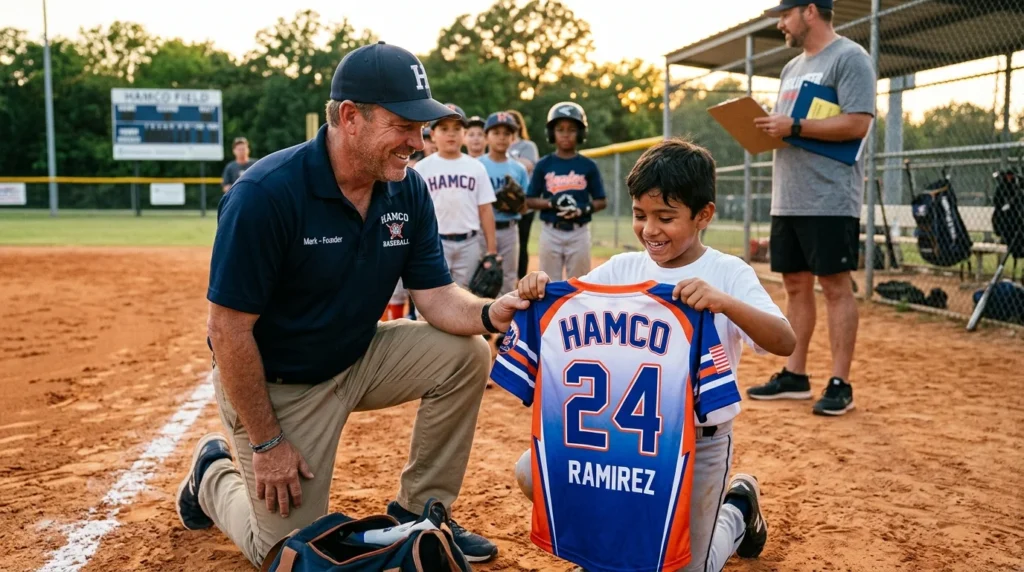
Nothing transforms a group of kids into a real team faster than stepping onto the field in matching custom baseball uniforms. The visual identity of your program matters more than most organizers initially realize. When a child puts on a jersey with their team name and number for the first time, something clicks. They belong to something. That feeling is the foundation of lifelong sports participation.
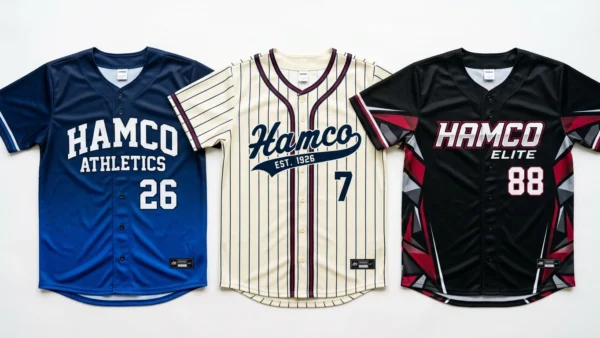
For youth leagues, a complete custom youth baseball uniform set includes a jersey, pants, and cap at minimum. Custom sublimated baseball jerseys have become the clear standard in 2026 because the designs are infused directly into the polyester fabric rather than printed on top. This means the graphics never crack, peel, or fade, even after a full season of slides and a hundred washes. Sublimated baseball jerseys also allow unlimited colors and design complexity at no extra cost compared to simpler screen-printed options.
When ordering baseball uniform packages for a league, prioritize providers that offer bulk league discounts, free design mockups within a day or two, no minimum order requirements for smaller teams, and responsive customer service. Custom youth baseball uniforms typically run forty to eighty dollars per set depending on the customization level and quantity. Ordering all team uniforms together through a single provider almost always qualifies for meaningful bulk pricing.
HAMCO Sports offers free custom design mockups in six to twelve hours, bulk league discounts, and no minimum order requirements. Design your custom baseball jerseys, pants, and caps at hamcospo.com/custom-baseball-uniforms/ and have your league looking professional from opening day.
Build Your Season Schedule and Rules
A well-designed schedule balances competitive fairness with family convenience. Aim for ten to fourteen regular season games per team followed by a championship playoff tournament. Schedule games on weekday evenings and Saturday mornings to maximize family participation. Avoid Monday nights, which tend to have the lowest attendance across most communities.
Distribute a written rulebook before opening day covering: required playing time per player, pitch count limits and mandatory rest days, code of conduct for coaches and parents, postponement and rainout policies, and tiebreaker rules for playoff seeding. Leagues that operate with clear, written rules experience dramatically fewer parent conflicts than those that rely on verbal policies.
Adopt pitch count standards aligned with Little League International recommendations or USA Baseball’s pitch count guidelines. Protecting young arms is a non-negotiable responsibility for any youth baseball league organizer. Review these guidelines annually as sports medicine research continues to evolve.
Market and Promote Registration
Post registration flyers at every elementary and middle school in your coverage area, community centers, sporting goods stores, libraries, and pediatric medical offices. Create an online registration system using platforms like Sports Connect, TeamSnap, or LeagueApps. These tools handle registration forms, payment processing, and team communication in one place, saving organizers dozens of hours per season.
Partner with local businesses for team sponsorships where the sponsor’s name or logo appears on custom baseball jerseys or outfield banners. A typical team sponsorship at the youth recreational level runs three hundred to six hundred dollars, covering the cost of uniforms and generating revenue for field maintenance. Businesses love the community visibility and the goodwill that comes from supporting youth sports.
Social media presence on Facebook and Instagram helps enormously. Post game photos, team spotlights, and registration deadline reminders regularly throughout the season. Word-of-mouth from satisfied families is your most powerful marketing tool. Make sure every family leaves opening day feeling glad they chose your league.
Budgeting and Fundraising
A realistic first-season budget for a six-team recreational youth baseball league falls between three thousand and eight thousand dollars. Major expense categories include insurance premiums, field preparation and maintenance, umpire fees, equipment for the league (catcher gear sets, batting helmets, bases, game balls), custom baseball team uniforms, and administrative costs like website hosting and registration platform fees.
Most leagues recover the majority of startup costs through registration fees in their first season. Business sponsorships, concession sales, and end-of-season tournaments generate additional revenue. Some leagues hold fundraising events like a golf outing, a family fun run, or a silent auction to build a reserve fund for capital expenses like new equipment or field improvements.
Opening Day Preparation
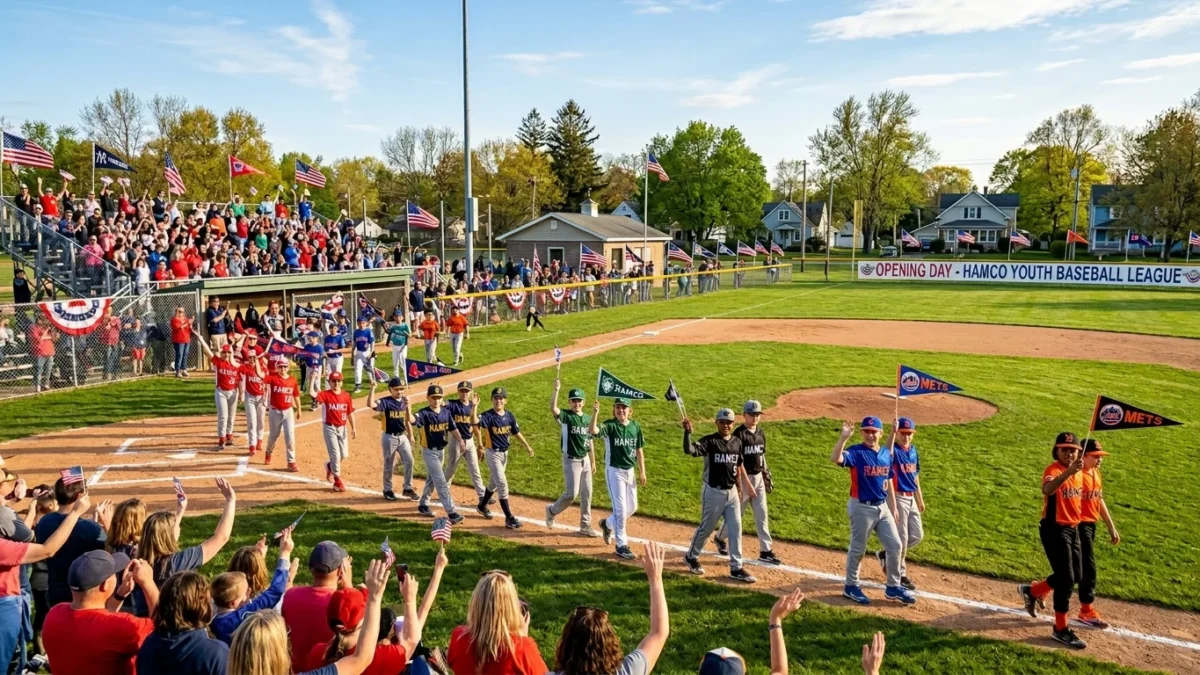
Opening day sets the tone for your entire season. Plan a ceremony that makes families and players feel the occasion matters. A brief parade of all teams in their custom baseball uniforms, an introduction of each team, and a ceremonial first pitch from a local leader creates a memory that families will talk about. Have your fields perfectly prepared. Make sure every player received their uniform well before opening day — last-minute uniform drama is stressful and entirely avoidable with advance planning.
Send a welcome email to all families the week before opening day with the schedule, rulebook, volunteer assignments, and contact information for the board. The more organized and communicative you are, the more trust you build with families from the very start of the season.
Frequently Asked Questions
Q: How many players do I need to start a youth baseball league?
A: You need at minimum four teams, roughly forty-eight to sixty players. Most leagues target six to eight teams in their inaugural season to create a competitive and financially sustainable schedule.
Q: How much does it cost to start a youth baseball league?
A: Startup costs typically run three thousand to eight thousand dollars covering insurance, field prep, equipment, and custom baseball uniforms. Most programs recover the majority through registration fees and business sponsorships in the first season.
Q: What equipment does the league need to provide?
A: Leagues provide catcher gear sets, batting helmets, bases, and game balls. Individual players bring their own gloves, bats, and cleats. Leagues also provide custom youth baseball jerseys and uniform sets for every player.
Q: When should I start planning for a spring season?
A: Begin planning in October or November for a March or April start. This timeline provides five to six months to secure fields, recruit coaches, order custom baseball jerseys, and open registration with enough lead time to fill your rosters.
Q: Do I need to affiliate with Little League International?
A: Affiliation is optional but provides access to insurance, coaching resources, and the Little League tournament structure. Independent leagues have more flexibility but must build all infrastructure independently. Visit Little League International at https://www.littleleague.org/ for affiliation details.
Starting a youth baseball league is one of the most impactful investments a community leader can make. Every child who learns to field a grounder, hit a pitch, and run the bases with their teammates is building skills and memories that last a lifetime. Put in the groundwork, stay organized, and remember that your real product is not wins and losses — it is the experience you create for every player who wears your league’s custom baseball uniforms.

Related Articles
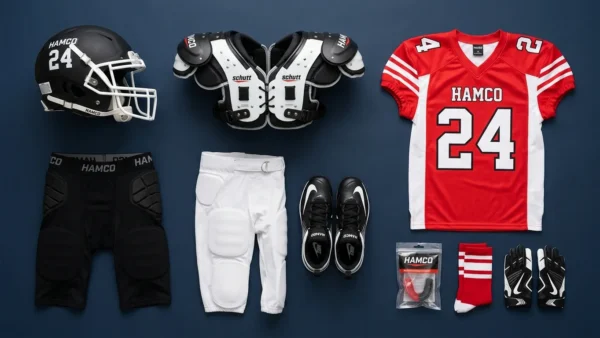
Youth Football Equipment Checklist 2026: Complete Gear Guide for Tackle & Flag
A thorough youth football equipment checklist ensures that every player takes the field properly protected and ready to perform. Whether...
Custom Baseball Jersey Ideas 2026: Colors & Trending Styles
Great custom baseball jersey ideas are the starting point for any team or league that wants to build a visual...
Best Travel Baseball Tournaments in 2026: USSSA, Perfect Game & State Guide
Travel baseball tournaments represent the highest level of youth competitive baseball outside of high school programs, and navigating the landscape...